
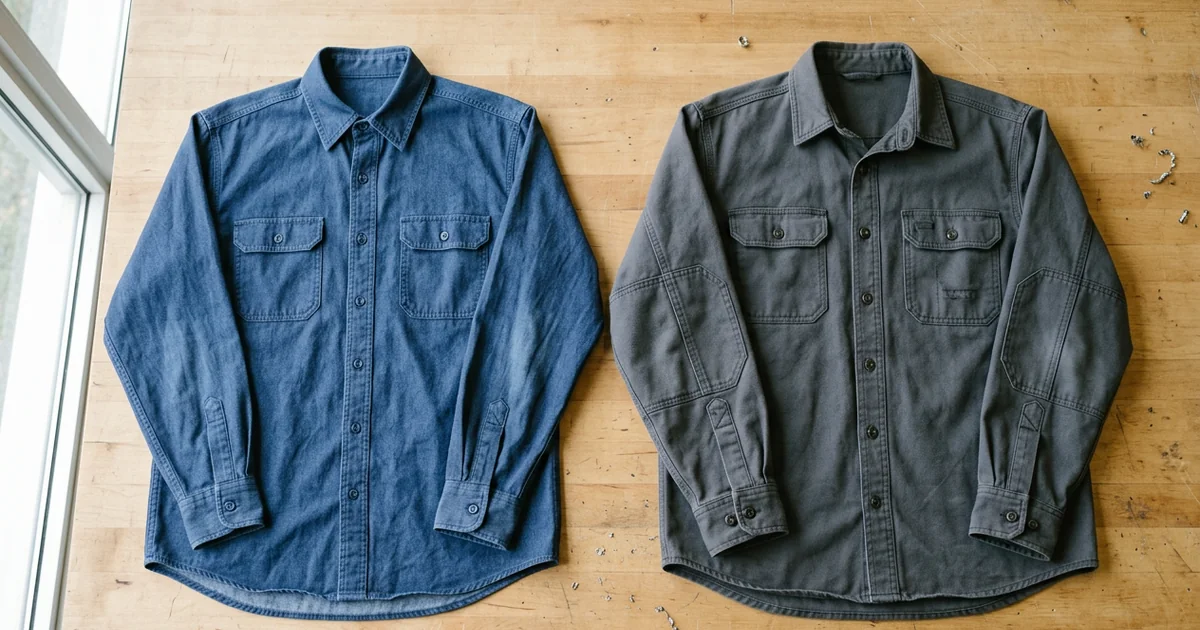
Bocomal vs. LAPCO FR comes down to one honest question: how much certainty do you want for your money? LAPCO FR is the safer pick for most budget buyers — its flagship 7 oz. FR cotton shirt publishes a real arc rating (ATPV 8.7 cal/cm²) and is UL Classified to both NFPA 2112 and ASTM F1506, so you're paying a value-legacy price for verifiable protection. Bocomal is the rock-bottom-price gamble: an Amazon-native import brand whose shirts list NFPA 2112 on the title but whose lab paperwork and durability claims are the brand's own, not independently published. Flame-resistant (FR) clothing is fabric that resists ignition, self-extinguishes, and won't melt onto your skin — it is not "fireproof," and being "FR" does not automatically mean a garment is arc-rated. Below is exactly where each brand wins, what I could verify from live listings, and who should buy which.
Key Takeaways
- LAPCO is the safer certified-value pick. Its 7 oz. FR cotton uniform shirt lists a published ATPV of 8.7 cal/cm² (CAT 2) and is UL Classified to NFPA 2112 and ASTM F1506 — a stated arc rating plus flash-fire classification, on the listing, for around $82.
- Bocomal is the cheapest-price gamble. Its shirts run roughly $40–$60 and list NFPA 2112 on the title, but the certification and durability details lean on brand marketing, not published third-party lab data.
- Both are treated cotton, not inherent. Neither is inherent-fiber FR like Nomex — the flame resistance is a finish, so laundering it correctly is what keeps you protected. See inherent vs. treated FR.
- "NFPA 2112" is flash-fire only. It is not an arc rating. LAPCO's shirt publishes an ATPV; most Bocomal listings do not — if your task has an electrical arc hazard, that gap matters.
- Verify the tag either way. There is a real difference between a garment marketed as "compliant" and one that carries a third-party (UL) classification mark — read how to spot fake FR clothing before you trust either brand.
The real decision: cheapest Amazon-native vs. value-legacy
This isn't premium-vs-budget — both of these are budget FR brands. The split is about where the trust comes from. LAPCO (Louisiana Protective Apparel) is a long-running value-legacy brand with an established certification program: on its flagship shirt it publishes a specific arc rating and states a UL classification to the governing standards, the way a spec-transparent brand does. Bocomal is the newer, Amazon-native model — it sells direct at prices legacy names can't touch, but its NFPA 2112 claims sit mostly in listing titles and brand copy rather than in published third-party lab data. Neither approach is automatically "fake." The question is how much verification burden you're willing to carry yourself for a lower price.
The distinction between a garment that's marketed as compliant and one that's independently certified is the whole ballgame in FR, and it's worth understanding before you spend a dollar — I break it down in the NFPA 2112 compliant vs. certified explainer. For the single-brand deep dives, see my LAPCO FR review and my Bocomal FR review.
| Factor | Bocomal FR | LAPCO FR |
|---|---|---|
| Model | Amazon-native import brand, sold direct | Value-legacy brand (Louisiana Protective Apparel) |
| Flagship shirt | 7.5 oz snap welding shirt / 5.5 oz henley | 7 oz. 100% FR cotton twill uniform shirt |
| NFPA 2112 | Listed on title (brand self-claim) | UL Classified (stated on listing) |
| ASTM F1506 / arc | Not published on most listings — "—" | UL Classified; ATPV 8.7 cal/cm² (CAT 2), stated |
| FR type | Treated FR cotton / canvas | Treated FR 100% cotton twill |
| Certification transparency | Leans on marketing; verify tag yourself | Published rating + UL classification on listing |
| Price | ~$40–$60 per shirt | ~$82 (7 oz. uniform shirt, brand site) |
| Where to buy | Amazon / bocomalfr.com | Working Person's Store / lapco.com |
Certification transparency: the deciding factor
For a YMYL safety purchase, this is the category that should decide it — and it's where the two brands genuinely diverge. On LAPCO's 7 oz. FR uniform shirt listing, the brand states a specific arc rating (ATPV 8.7 cal/cm², putting it at NFPA 70E PPE CAT 2), calls it NFPA 70E compliant, and says it is UL Classified to NFPA 2112 and ASTM F1506. That's the profile of a certified garment: a flash-fire classification and a published arc number, from a named third-party classifier. It also uses Nomex sewing thread and color-matched FR buttons — the construction details fake FR usually cuts.
Bocomal's listings put "NFPA2112" in the product title and its marketing states the line is tested to NFPA 2112 and NFPA 70E at CAT 2. That's a meaningful claim if it's true — but the third-party lab paperwork isn't published on the listings the way LAPCO's is, and I found the transparency uneven across SKUs. Bocomal's 5.5 oz henley title, for example, says "UL NFPA2112 CAT2," while its own 8.5 oz canvas welding shirt product page states no certification at all. That inconsistency is exactly why I treat Bocomal's cert as a starting point you verify, not finished proof. With either brand, when the box arrives, do what I'd do: read the sewn-in tag for the named standard and a third-party/UL classification mark. The how to spot fake FR clothing guide walks through that exact check.
The honest framing: FR being "FR" does not make it arc-rated. NFPA 2112 covers short-duration flash fire; an arc rating is a separate ATPV figure in cal/cm² under NFPA 70E, labeled to ASTM F1506. LAPCO publishes both on its flagship shirt; Bocomal generally publishes neither an ATPV nor a third-party lab reference on-listing. If your job has an electrical arc-flash hazard, that difference alone is decisive — read what ATPV means before you shop.
Fabric, weight, and value
Both brands are treated FR cotton — the flame resistance is a chemical finish engineered onto the fabric, not built into the fiber like inherent modacrylic or aramid. That's not a knock; plenty of legitimate FR is treated cotton, and treated cotton can certify to NFPA 2112. But it means laundering matters: no chlorine bleach, no fabric softener, no starch, and keep the garment from getting saturated with grease or oil (a fire hazard on any brand). See how to wash FR clothing to keep the protection you paid for.
On weight, both give you range. Bocomal spans from a ~4.5 oz summer-weight up to an 8.5 oz heavyweight canvas welding shirt, so a crew can match the season. LAPCO's volume garment is a 7 oz. 100% cotton twill — a sensible mid-weight all-rounder. On price, Bocomal is genuinely cheaper: roughly $40–$60 per shirt versus around $82 for LAPCO's 7 oz. uniform shirt on the brand site. That gap is the entire case for Bocomal. The case for LAPCO is that the extra spend buys you a published arc rating and a UL classification you can point to — which, on a safety garment, is a lot of what you're actually paying for. For more ways to stretch an FR budget without gambling on protection, see cheap FR clothing on a budget.
LAPCO 7 oz. FR Uniform Shirt — the safer certified-value pick
This is the garment that earns LAPCO its reputation and the one I'd point most budget buyers to. It's a 7 oz., 100% FR cotton twill shirt with a moisture-management finish, and the listing states an ATPV of 8.7 cal/cm² (PPE CAT 2), NFPA 70E compliant, and UL Classified to both NFPA 2112 and ASTM F1506. That combination — a published arc rating plus a third-party flash-fire classification — is exactly what you want on a daily-wear FR shirt, and at LAPCO's price it's a genuinely strong value. The honest trade-off is that it's treated cotton, so its FR depends on correct laundering over many industrial washes, where inherent fibers don't carry that dependency. The specific SKU's price on the brand site was $82.22 when I checked; confirm the current label and rating on the unit you receive.
- Pros: published ATPV 8.7 cal/cm² (CAT 2); UL Classified to NFPA 2112 and ASTM F1506; Nomex thread and FR buttons; comfortable 7 oz. cotton; value price.
- Cons: treated (not inherent) FR; CAT 2 is everyday FR, under-rated for higher incident-energy tasks; pricier than Bocomal.
Bocomal FR — the rock-bottom-price gamble
Bocomal earns its place on price and summer-weight breathability. If your priority is the lowest possible spend on a listed-NFPA 2112 shirt — a welder who keeps wrecking shirts, a crew building a starter FR rotation — these are the two I'd actually consider. Just go in knowing the verification burden is yours.
BOCOMAL 7.5 oz Snap Welding Shirt (NFPA 2112) — best cheap everyday all-rounder
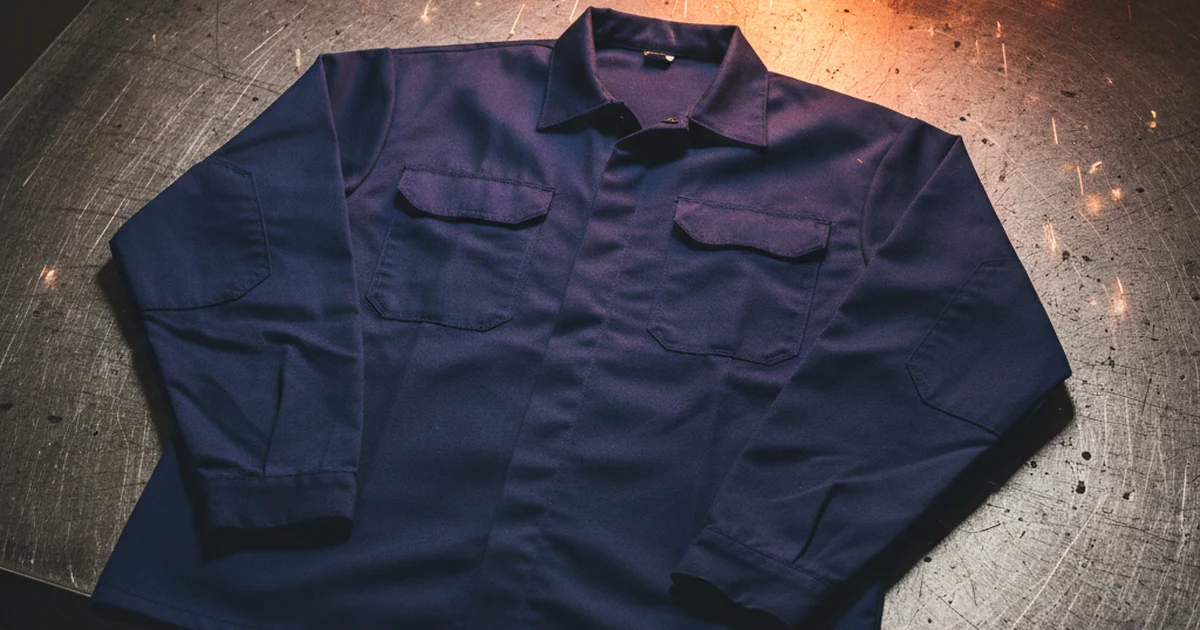
The 7.5 oz navy snap shirt is the one that defines what Bocomal is for: a mid-weight FR work shirt at the cheap end of the category, with the NFPA 2112 claim on the title and FR snaps and thread called out in the brand's copy. It splits the difference between summer breathability and cold-weather coverage. The honest catch: the listing leans on marketing more than published third-party lab data, and it's treated cotton — so read the tag for the standard and a UL mark, and launder it right.
- Pros: versatile mid-weight; FR snaps/thread per brand copy; one of the lowest prices for a listed NFPA 2112 shirt.
- Cons: certification leans on marketing over published third-party data; no published ATPV; treated finish fades if laundered wrong.
BOCOMAL 5.5 oz Lightweight FR Henley — best for summer heat
If heat is your enemy, this is the niche Bocomal genuinely owns. It's a 5.5 oz 100% cotton henley, and its title states "UL NFPA2112 CAT2" — the more transparent of Bocomal's cert claims I found, though I'd still confirm the UL mark on the tag. A light treated-cotton henley breathes far better than a heavyweight, and the price means you can rotate two and wash often. For summer welding or hot indoor work where guys are tempted to ditch FR entirely, a cheap, light, listed-FR shirt is the one that actually stays on your back.
- Pros: among the lightest listed-FR shirts at this price; breathable for hot work; title states UL NFPA2112 CAT2; cheap enough to rotate.
- Cons: light treated cotton fades faster; CAT 2 is everyday FR, not a high arc rating; verify the UL mark on the tag.
As an Amazon Associate, I earn from qualifying purchases.
Who each brand is for
Buy LAPCO if you want the safer certified-value pick: a published arc rating (8.7 cal/cm², CAT 2) and a UL classification you can point to, at a value-legacy price. It's the better call for electrical or oilfield work where you may need to document PPE, for outfitting a crew you want traceable specs on, or for anyone who'd rather pay ~$82 than carry the verification burden themselves. Buy Bocomal if price is the hard constraint and you're willing to do your own tag-check: a welder burning through shirts, a hot-weather worker who wants a cheap light henley, or someone building a starter FR rotation on the tightest budget. The honest line is that LAPCO is usually the safer pick and Bocomal is the price gamble — both real FR, but you pay for certainty with LAPCO and pay for it in verification effort with Bocomal.
If you need a real arc rating and neither of these is enough, don't shop by price at all — read what ATPV means and step up to a brand with consistently published cal/cm² across its range. My best FR clothing brands guide maps the full field.
Frequently Asked Questions
Is Bocomal or LAPCO FR safer?
For most buyers, LAPCO is the safer pick. Its 7 oz. FR uniform shirt publishes a specific arc rating (ATPV 8.7 cal/cm², CAT 2) and states UL Classification to NFPA 2112 and ASTM F1506 on the listing. Bocomal lists NFPA 2112 on its titles but its third-party lab data is less transparent and inconsistent across SKUs. Both are treated cotton, so verify the standard and a UL mark on the garment tag either way.
How much cheaper is Bocomal than LAPCO?
Bocomal shirts generally run about $40 to $60, while LAPCO's 7 oz. FR uniform shirt was around $82 on the brand site when I checked. So Bocomal is meaningfully cheaper per shirt. The extra LAPCO spend buys a published arc rating and a UL classification you can point to, which on a safety garment is much of what you are actually paying for.
Are both Bocomal and LAPCO NFPA 2112 certified?
Both list NFPA 2112, but the transparency differs. LAPCO's 7 oz. shirt states it is UL Classified to NFPA 2112 and ASTM F1506, with a published ATPV. Bocomal lists NFPA 2112 on its titles as a brand claim, but the third-party lab paperwork is not published on most listings and is inconsistent across SKUs. NFPA 2112 covers flash fire only — it is not an arc rating. Confirm the standard and a UL mark on the tag.
Does either brand give me an arc rating?
LAPCO's 7 oz. uniform shirt publishes an arc rating of ATPV 8.7 cal/cm² (PPE CAT 2). Most Bocomal listings do not publish an ATPV at all. Being flame-resistant does not automatically make a garment arc-rated — arc protection is a separate figure in cal/cm² under NFPA 70E, labeled to ASTM F1506. If your task has an electrical arc-flash hazard, confirm a stated ATPV before buying, which favors LAPCO here.
Are Bocomal and LAPCO inherent or treated FR?
Both are treated FR — the flame resistance is a chemical finish on cotton, not built into the fiber like inherent Nomex or modacrylic. Treated FR is legitimate and can certify to NFPA 2112, but it depends on correct laundering to last: no chlorine bleach, no fabric softener, no starch. Inherent FR keeps its flame resistance for the life of the fabric regardless of washing, which is why it costs more.
Why Trust This Guide
This comparison is written and reviewed by Wes Calder, an independent flame-resistant-workwear reviewer. Every recommendation is built on the published standards (NFPA 2112, NFPA 70E, ASTM F1506), manufacturer spec sheets and garment tags, hands-on handling, and what tradespeople actually report — and we tell you when a number is a manufacturer claim versus an independent standard, and when a garment is FR but not arc-rated. We earn an affiliate commission if you buy through some of our links, at no extra cost to you, and we never rank by commission over safety — see our affiliate disclosure.