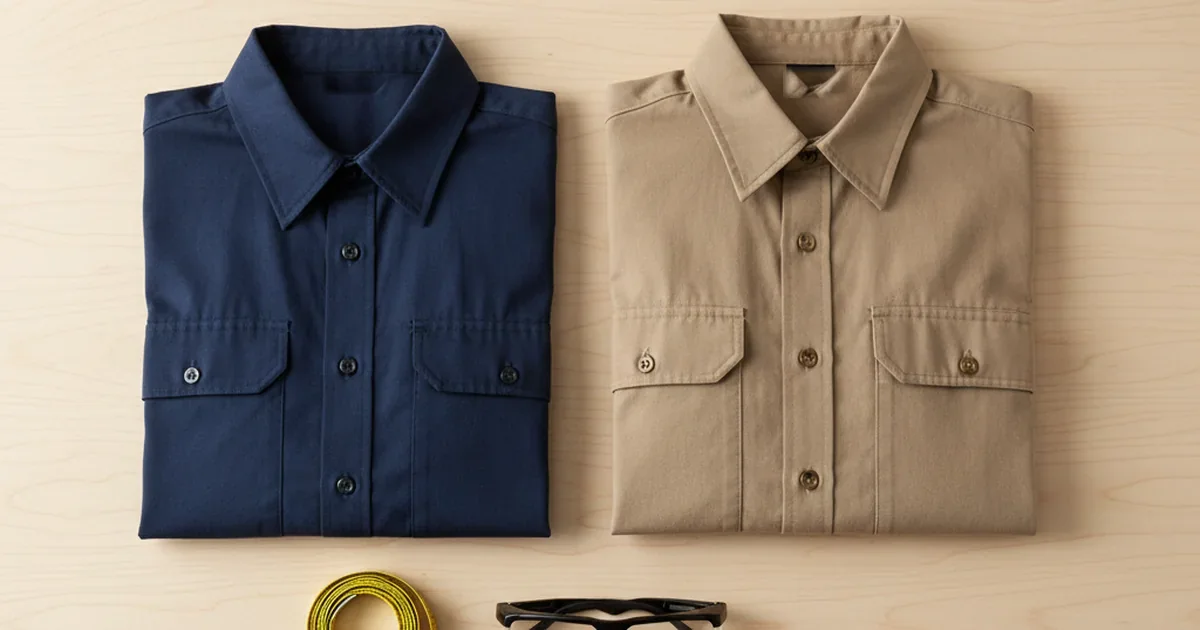

FR clothing should fit "reasonably loose, but not baggy." That sounds vague until you know why: flame-resistant clothing protects partly through the insulating air gap between the fabric and your skin. Too tight and you collapse that gap, so heat reaches skin faster and burns are worse. Too loose and the extra fabric snags, rides up, and exposes skin. Getting the fit right isn't comfort — it's how the garment does the job it's rated for. The "air gap" is the thin layer of air between FR fabric and your skin; because air is a poor conductor, it buffers heat during a flash fire or arc — which is why a garment worn too tight protects worse than one that fits.
Key Takeaways
- Not too tight, not too baggy. Tight FR "minimizes the insulating air gap… increasing the likelihood and severity of burns"; baggy FR "can catch on equipment… and may shift or ride up, leaving areas of your body exposed."
- It's the law. OSHA requires employers to "select PPE that properly fits each affected employee" (29 CFR 1910.132(d)(1)(iii)), and NFPA 70E says arc-rated apparel "shall fit properly" and tight- fitting clothing "shall be avoided."
- Pants: no cuffs, worn over the boot. The welding safety standard AWS Z49.1 (ANSI Z49.1:2012) is explicit — trousers "should not have cuffs" and "should overlap shoe tops."
- Measure once, buy across brands. Sizing varies maker-to-maker; take your measurements, match each brand's own chart, allow for shrinkage, and buy where exchanges are easy.
The one principle: the air gap
Every fit rule below comes back to this. As the FR maker Tyndale explains, FR clothing "should create an insulating air gap. This air gap enhances the garment's protective performance if exposed to heat or flame." Lapco puts the same point the other way: garments "too tight… may not provide enough air space between the fabric and your skin," while with too-loose clothing "extra material can shift, exposing areas that should be covered." MWG's version: FR should be "snug but relaxed — not too tight or loose."
The standards say it directly. NFPA 70E, in its care-and-use provisions, states: "Tight-fitting clothing shall be avoided. Loose-fitting clothing provides additional thermal insulation because of air spaces. Arc-rated apparel shall fit properly such that it does not interfere with the work task." And OSHA 29 CFR 1910.132(d)(1)(iii) requires employers to "Select PPE that properly fits each affected employee," with 1910.132(c) adding that all PPE "shall be of safe design and construction for the work to be performed." Proper fit is a requirement, not a preference.
How each FR garment should fit
FR shirts
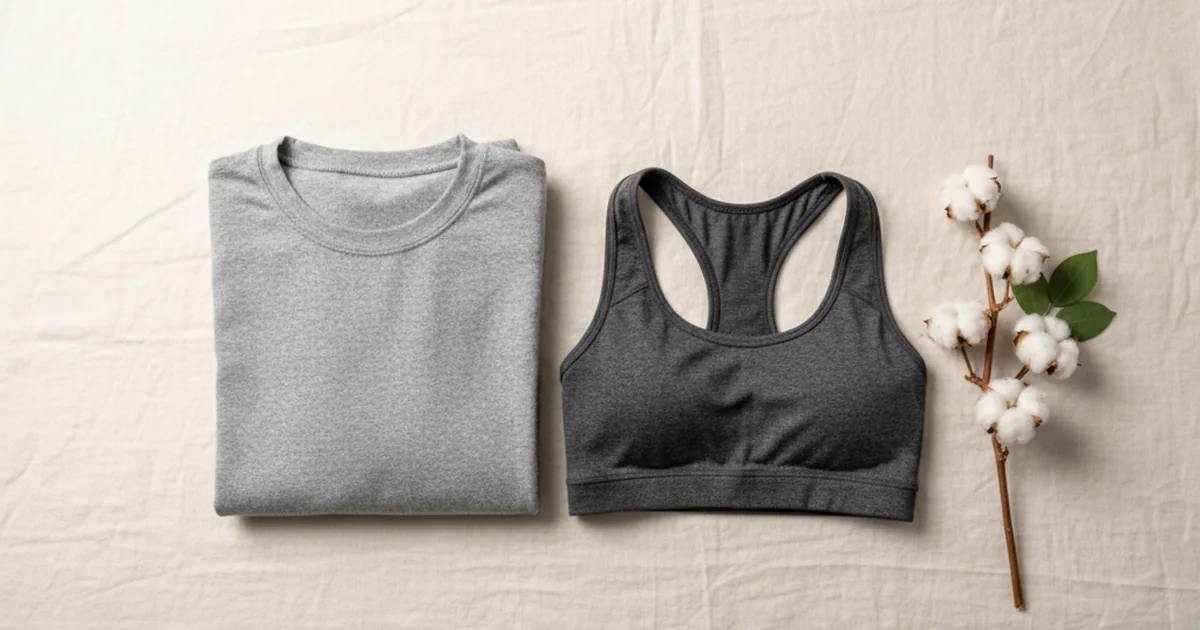
Sleeves should reach the wrist and stay down — never rolled. As TenCate advises, "never roll your sleeves up," "button or snap the cuffs of your sleeves at your wrists," and "keep your shirt tails tucked in at all times." As Lapco adds, rolling sleeves "reduces the amount of protected surface area." Leave room for a base layer — but that base layer must itself be FR or non-melting (cotton), never synthetic: a non-FR or meltable inner layer can ignite or melt against the skin if enough heat breaks through the outer garment (TenCate warns synthetic athletic base layers "will melt and cause significant injury").
FR pants
The welding standard AWS Z49.1 is blunt: "Sparks may lodge in rolled-up sleeves, pockets of clothing, or cuffs of overalls or trousers… Trousers or overalls should not have cuffs and should not be turned up on the outside. Trousers should overlap shoe tops to prevent spatter from getting into shoes." So: no cuffs, and the hem should break over the boot rather than tuck in. Because the FR hem can't be altered safely, buy the right inseam grade (Short / Regular / Long) instead of hemming — one electrician found their pants "in a 'short' size… when I wear boots they are actually perfect."
Welding gear (the geometry matters)
For welding, fit is about closing the gaps sparks fall through. Your sleeve and glove must overlap with no gap when you move: "No skin or shirt fabric should show between the glove cuff, sleeve, and jacket." Test it before you strike an arc — "check sleeve fit with gloves on. Bend the wrist, reach forward, and raise the arm into the actual work position." If a gap opens in the raised-arm position, the sleeve is too short or the cuff too loose. Keep the collar closed and the shirt "buttoned, zipped, or snapped all the way up… as high as possible up the chest," because overhead work drops sparks straight down onto your arms and neck.
FR coveralls
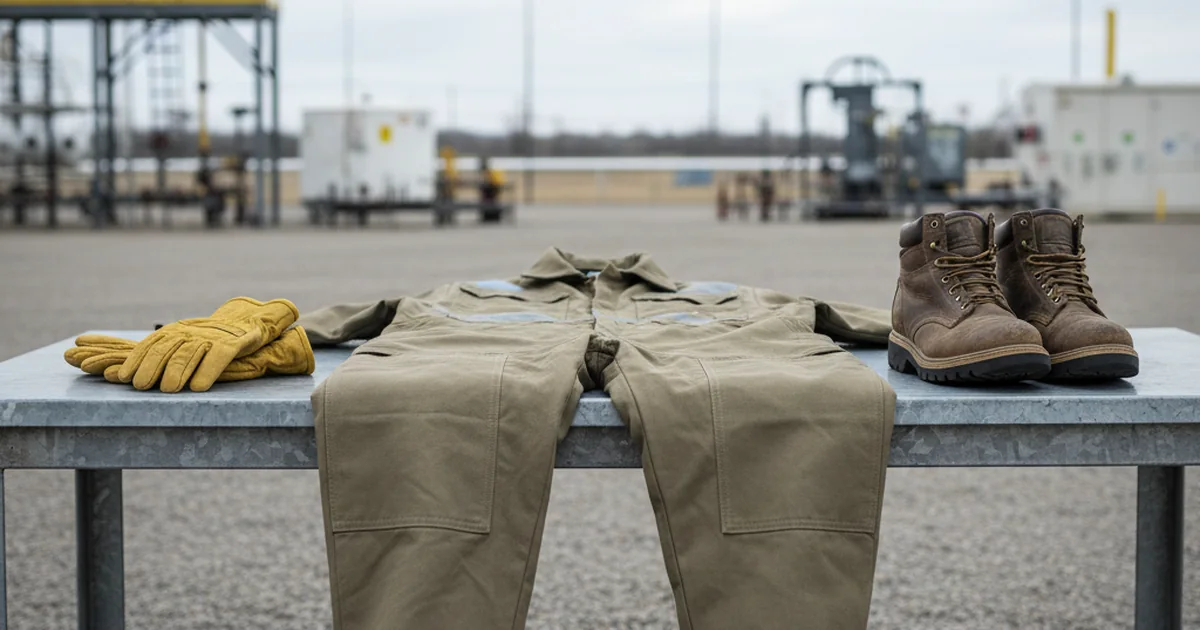
A coverall needs enough seat, crotch, and knee room to bend, kneel, and climb without pulling tight (which kills the air gap) or leaving a gap at the back when you crouch. Look for extra crotch depth, articulated knees, and an action back. A too-high crotch is "rarely solved by going up a standard size; the real fix is… a 'Tall' or 'Long' version of your regular size." (More in our FR coveralls guide.)
FR outerwear & layering
Every layer worn over FR must also be FR — a non-FR jacket "can continue burning and transfer heat through to your FR layer." Size the outer layer for a thin air layer over what's underneath without going baggy across the shoulders and arms. See how to layer FR for cold weather for the full stack.
A note on women's fit
Most women can't get FR to fit because it's cut on a men's or unisex block — "a smaller version of a men's FR shirt still has shoulder seams in the wrong place, chest room that pulls across the front, and a torso length that does not account for a different hip-to-waist ratio," and it leaves "coverage gaps at the wrists, waist, and ankles." A true women's cut fixes that by removing excess fabric — not by tightening. The goal is contoured to your body but never compressive: shaped enough to close the gaps, loose enough to keep the air gap. That's the same air-gap rule, applied to a woman's frame. We cover it fully in do women need women's-specific FR clothing?
How to measure and size yourself
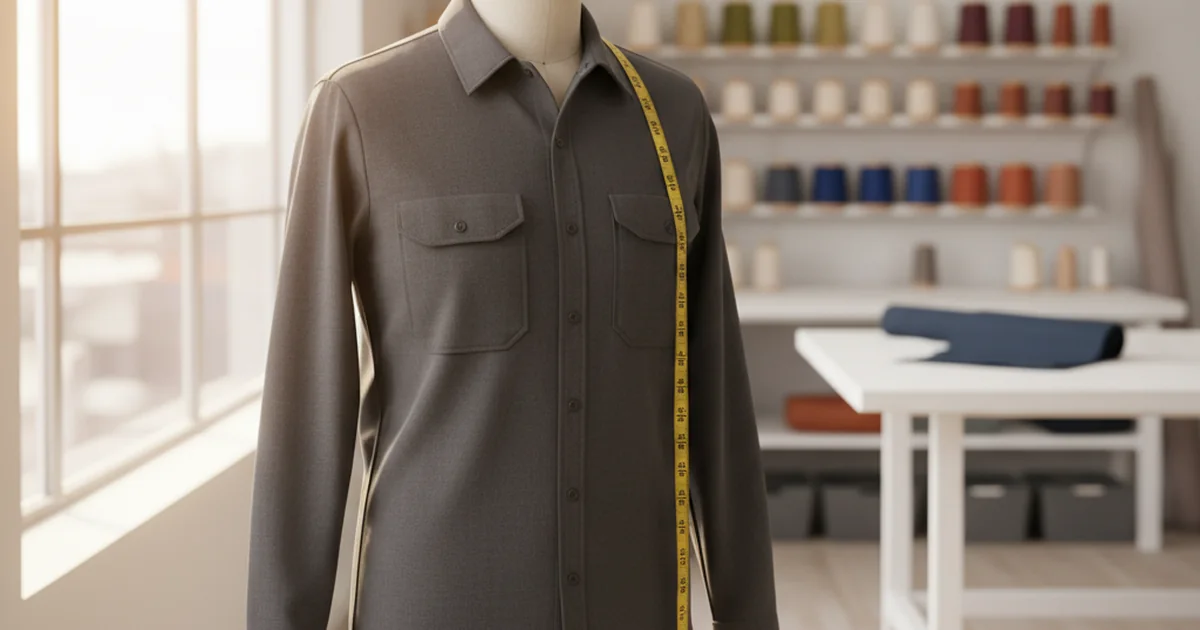
Fit varies a lot between makers — as Tyndale says plainly, "sizing may vary across manufacturers." So the move is to measure yourself once, then check each brand's own chart rather than assuming your usual size:
- Chest/bust: the fullest part, tape level across the back.
- Waist: your natural waistline, where pants ride.
- Hips: the fullest part.
- Inseam: crotch to just below the ankle bone — measure in your work boots so the leg breaks over the boot.
- Sleeve: elbow bent, hand on hip, from center-back of the neck across the shoulder to the wrist bone.
- Allow for shrinkage: FR garments "are susceptible to shrinkage and should be ordered to accommodate this" — size up per the maker's shrinkage note, especially on FR cotton.
Then buy where returns and exchanges are easy, because you'll likely fine-tune between brands.
The fit mistakes owners actually report
Real-world reviews show the dominant failure is oversizing, not tightness. Carhartt's looser FR lines run big — reviewers routinely report their usual size arriving a full size or more too large, and recommend sizing down. Ariat FR pants skew the other way — large in the waist and long on the leg; one reviewer noted "I usually wear 38x32 and each pair is like 38x34 or 38x36," and another advises "whatever you normally wear in length, go shorter." Smaller-framed workers report "swimming in most gear." All of it maps back to the same safety point: baggy FR snags and exposes, and the fix is the right cut and inseam grade — not the wrong size. Buy by your measurements, and if a garment only fits after you roll, pin, or cuff it, it isn't being worn the way it was tested.
Frequently Asked Questions
Should FR clothing be tight or loose?
Neither — it should be reasonably loose but not baggy. Too tight collapses the insulating air gap and makes burns worse; too loose snags and rides up, exposing skin. NFPA 70E says to avoid tight-fitting clothing and that arc-rated apparel must fit properly.
Can FR or welding pants have cuffs?
No. The welding standard AWS Z49.1 says trousers "should not have cuffs" and "should overlap shoe tops," because cuffs trap sparks and molten metal. Buy the correct inseam length rather than cuffing or hemming FR pants.
Should I size up in FR clothing?
Order to the maker's size chart and allow for wash shrinkage on FR cotton — but don't just buy big. Many FR lines (especially Carhartt's relaxed fits) already run large, so oversizing creates the baggy, snag-prone fit that undermines protection. Measure yourself and match each brand's chart.
How much room should I leave for a base layer?
Enough for a thin layer and the air gap, without going baggy. Crucially, the base layer itself must be FR or a non-melting fiber like cotton — never synthetic — because a meltable or flammable inner layer can ignite or melt to skin if heat breaks through the outer garment.
Why Trust This Guide
This guide is written and reviewed by Wes Calder, an independent flame-resistant-workwear reviewer. Every recommendation is built on the published standards (NFPA 2112, NFPA 70E, ASTM F1506), manufacturer spec sheets and garment tags, hands-on handling, and what tradespeople actually report — and we tell you when a number is a manufacturer claim versus an independent standard, and when a garment is FR but not arc-rated. We earn an affiliate commission if you buy through some of our links, at no extra cost to you, and we never rank by commission over safety — see our affiliate disclosure.