If you want flame-resistant workwear that protects you without the Nomex price tag, LAPCO FR's 7 oz. 100% FR cotton line is the brand's strongest argument — UL-classified to NFPA 2112 and ASTM F1506 with published arc ratings, at a price that undercuts the big names. The honest catch: this is treated-cotton FR, not inherent fiber, and the specific garments aren't currently stocked at every major retailer. So this is a brand verdict, not a list of "buy it here" links. What is FR clothing? Fabric that resists ignition, self-extinguishes, and won't melt onto skin — not "fireproof." Below is who LAPCO is genuinely good for, who should skip it, and exactly where the brand falls short.
Key Takeaways
- LAPCO is a value brand done right. It hits the same NFPA 2112 flash-fire bar as premium lines using treated FR cotton instead of inherent fiber — read the trade-offs in my inherent vs treated FR explainer.
- Buy by the label, not the logo. Only some LAPCO garments publish an arc rating (ATPV in cal/cm²); a NFPA 2112 tag covers flash fire, not arc flash — confirm both if your task needs both.
- Best for welders, oilfield, and budget-conscious crews outfitting whole teams. For a broader field, see my best FR clothing brands guide.
- Skip it if you need the lightest, longest-lasting FR. Inherent brands (Nomex, some Bulwark lines) hold their FR longer over a garment's life.
- Verify stock before you commit a crew. Availability shifts by retailer — I could not confirm live inventory at one major store while writing this, so buy from a seller that shows current stock.
How I ranked these (protection first, not commission)
I rank LAPCO's garments on merit: the standard each one is actually certified to, the arc rating the manufacturer publishes (if any), fabric weight and construction, and real-world value for the wearer. I only quote a spec when LAPCO's own product documentation states it — everything else gets a "—". Where a garment publishes no arc rating, I say so rather than borrowing a number from a different model. The flagship 7 oz. cotton line is the spec I could verify directly from LAPCO; the other garments are grouped by use case with honest "not stated" gaps where the brand doesn't publish a figure. No ranking here is influenced by what pays — and on this particular review I have no live affiliate placement to bias it anyway.
| Pick | Fabric / weight | Arc rating (if stated) | Best for | Price |
|---|---|---|---|---|
| 7 oz. FR Uniform Shirt | 100% FR cotton twill, 7 oz., moisture-management finish | ATPV 8.7 cal/cm² (CAT 2) | Everyday shop, electrical, oilfield | Budget |
| FR Cotton Work Pants | FR cotton / twill (weight varies by style) | — | Pairing with the uniform shirt | Budget |
| FR Coveralls | FR cotton / blend (weight varies) | — | Oilfield, full-coverage tasks | Budget–mid |
| FR Welding Apparel | FR cotton / treated, welding-cut | — | Welders, spark/slag exposure | Budget |
1. LAPCO 7 oz. FR Uniform Shirt — best for everyday verified protection
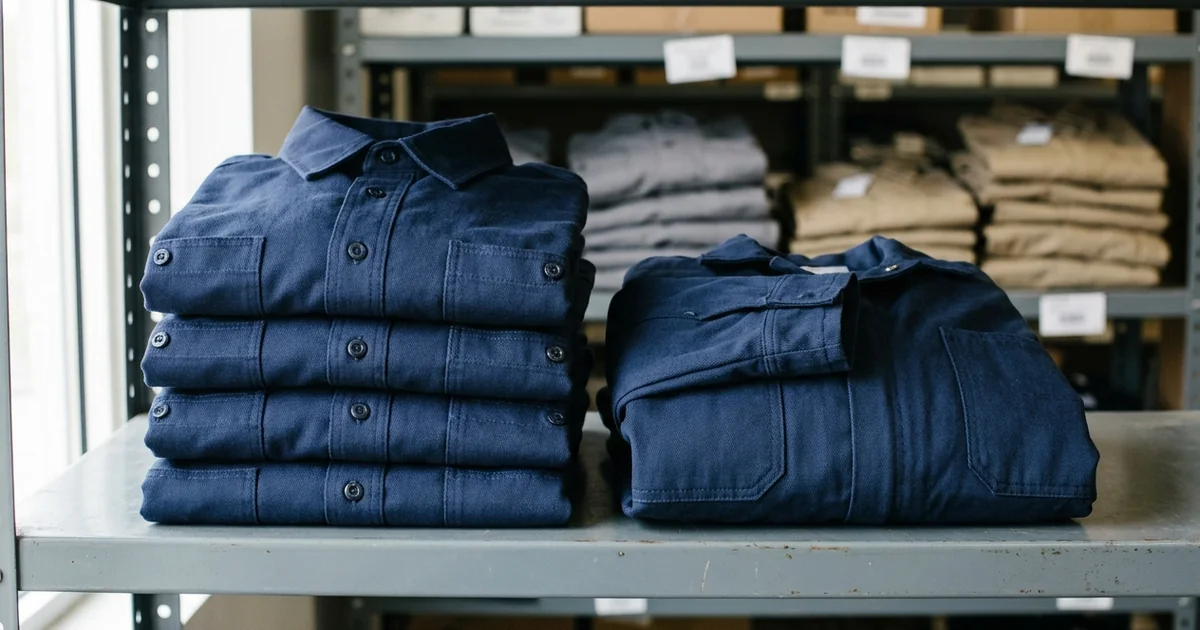
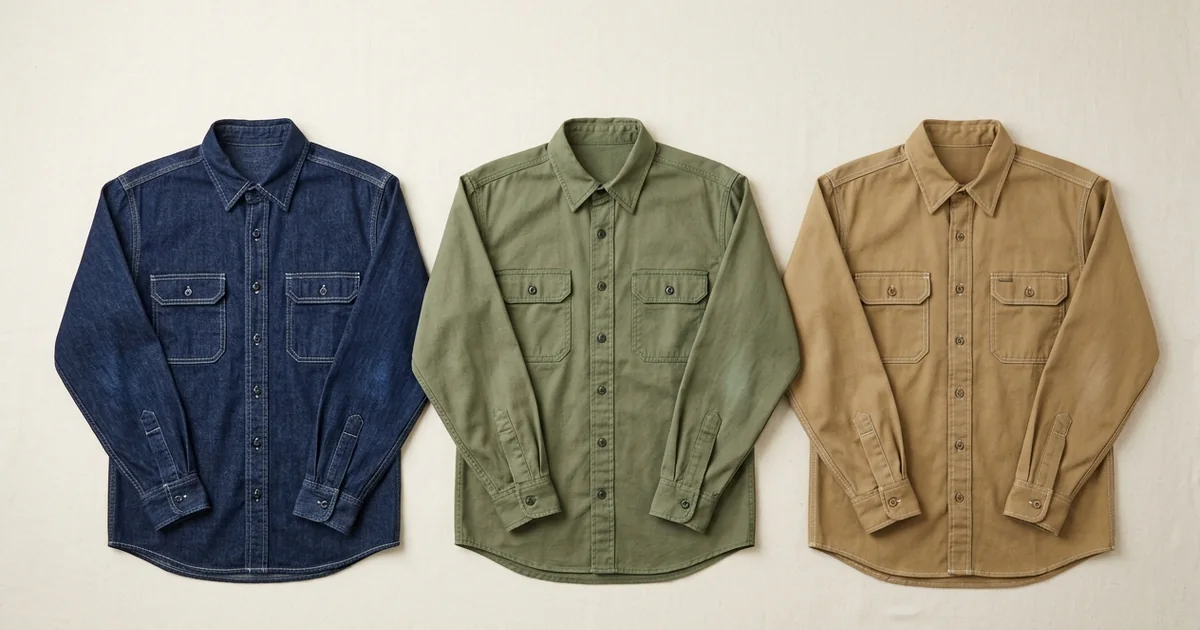
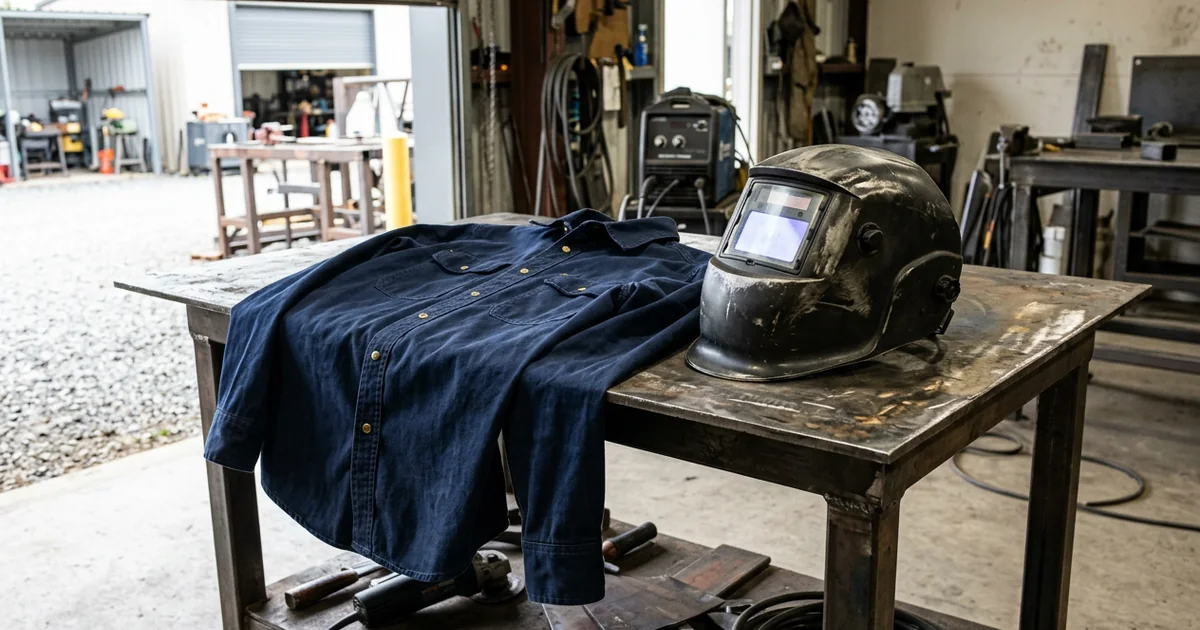
This is the garment that earns LAPCO its reputation and the only one I can cite hard numbers for. LAPCO markets it as a 7 oz., 100% FR cotton twill shirt with a moisture-management finish, rated at ATPV 8.7 cal/cm² — which puts it at NFPA 70E PPE CAT 2 (the 8 cal/cm² minimum) — and the brand states it is UL Classified to both ASTM F1506 and NFPA 2112. That combination — a stated arc rating plus a flash-fire classification — is exactly what you want on a daily-wear FR shirt, and at LAPCO's price it's a genuinely strong value. The honest trade-off: it's treated FR cotton, so it breathes and feels like a normal work shirt, but its flame resistance depends on the fabric chemistry holding up over many industrial washes, where inherent fibers don't have that dependency.
- Pros: Stated ATPV 8.7 cal/cm² (CAT 2); UL Classified to ASTM F1506 and NFPA 2112; comfortable 7 oz. cotton; budget price.
- Cons: Treated (not inherent) FR; arc rating sits at CAT 2, so it's under-rated for higher incident-energy tasks; spec is from LAPCO's own listing, so confirm the current label on the unit you buy.
Buy direct from LAPCO or a retailer showing live stock — I could not confirm this exact SKU in stock at one major store while writing, so verify availability before ordering for a crew.
2. LAPCO FR Work Pants — best for completing the kit
The matching FR cotton work pants are the logical second buy: same fabric family, same budget bracket, built to pair with the uniform shirt so your whole base layer is FR. The honest trade-off is that LAPCO does not publish a single arc rating across the pant range — weights and ratings vary by style — so I won't quote a cal/cm² figure here. Treat any arc-rating claim as garment-specific and read the F1506 tag on the actual pant. For most shop, oilfield, and electrical wearers, an FR cotton pant in this class does its job; just don't assume it carries the same 8.7 cal/cm² as the shirt.
- Pros: Coordinates with the uniform shirt; FR cotton comfort; budget pricing for full-kit buys.
- Cons: Arc rating not stated across the range (—); confirm the F1506 label per style; treated FR.
Check the garment tag and a live-stock seller before buying. For how pants factor into a full FR loadout, see my best FR shirts guide for the shirt half of the pairing.
3. LAPCO FR Coveralls — best for full-coverage oilfield work
Coveralls are where LAPCO's value really shows for crews who need head-to-ankle coverage without buying a separate shirt and pant. The line runs in FR cotton and blends across several weights. The honest trade-off: again, LAPCO doesn't publish one universal arc rating for the coverall range, so I list it as "—" rather than invent one — and a NFPA 2112 flash-fire classification is not the same as an arc rating, so if your task has an electrical hazard, confirm the coverall's ATPV on its own label. As full-coverage flash-fire protection for oilfield and industrial work, LAPCO coveralls are a sensible budget choice; just match the specific style's certifications to your hazard.
- Pros: Full-body coverage in one garment; FR cotton/blend options across weights; strong value for oilfield crews.
- Cons: Arc rating not stated range-wide (—); flash-fire classification ≠ arc rating; treated FR; sizing/weight varies by style.
Confirm the exact style's NFPA 2112 and any arc rating on the label, and buy from a seller showing current stock. My best FR coveralls guide covers how LAPCO stacks up against other coverall makers.
4. LAPCO FR Welding Apparel — best for spark and slag exposure
LAPCO has deep roots in welding apparel, and that heritage shows in cuts designed for spark and slag rather than office-style FR. For welders, the FR cotton construction self-extinguishes and won't melt — the core reason you wear FR at the bench. The honest trade-off: welding gear is selected for the physical hazard (sparks, slag, heat) more than for a published cal/cm² number, and LAPCO does not state a uniform arc rating across welding pieces, so I leave it at "—". If your welding task also carries an arc-flash hazard, that's a separate selection problem — read the garment's F1506 tag, don't assume welding cut equals arc protection.
- Pros: Purpose-built welding cuts; FR cotton that self-extinguishes and won't melt; long brand track record in welding; budget price.
- Cons: Arc rating not stated (—); welding suitability ≠ arc-flash rating; treated FR; verify the specific piece's certifications.
Buy from a retailer showing live inventory and check the label on the actual piece. For the full brand landscape, see my best FR clothing brands guide.
Who LAPCO FR is for — and who should skip it
Buy LAPCO if you're outfitting a crew on a budget, you want NFPA 2112 flash-fire protection at a price below Nomex-based lines, and you prefer the breathable feel of FR cotton for shop, oilfield, electrical, or welding work. The 7 oz. uniform shirt in particular is a strong, verifiably-rated daily driver. Skip LAPCO if you need the lightest possible FR, the longest FR lifespan over hundreds of washes, or a single high arc rating (CAT 3–4) across an entire product line — that's where inherent-fiber brands like the Nomex-based options pull ahead.
Where the brand falls short: two honest gaps. First, LAPCO publishes arc ratings inconsistently — the uniform shirt states 8.7 cal/cm², but many other garments don't list an ATPV at all, so you're reading labels SKU-by-SKU. Second, it's treated FR: the flame resistance is engineered into cotton rather than the fiber itself, which is fine for most wearers but means wash care and garment life matter more than they do with inherent fabrics. Neither is a dealbreaker — they're just the trade-offs you accept for the price.
Frequently Asked Questions
Is LAPCO FR good quality?
Yes, for a value brand. LAPCO's flagship 7 oz. FR cotton uniform shirt is UL Classified to NFPA 2112 (flash fire) and ASTM F1506, with a stated arc rating of 8.7 cal/cm² (PPE CAT 2). It uses treated FR cotton rather than inherent fiber, which keeps the price down while still meeting the same flash-fire standard as premium lines.
How does LAPCO compare to Carhartt FR and Bulwark?
LAPCO generally undercuts Carhartt FR and Bulwark on price and competes well on flash-fire protection. Where Carhartt and Bulwark pull ahead is inherent-fiber options and more consistently published arc ratings across their ranges. If budget and FR cotton comfort matter most, LAPCO is competitive; if you need the longest FR lifespan or high arc ratings line-wide, the premium brands have the edge.
Is LAPCO FR inherent or treated?
LAPCO's core line is treated FR — the flame resistance is engineered into cotton fabric rather than the fiber itself. Treated FR breathes well and costs less, but its protection depends on proper wash care over the garment's life. Inherent FR (like Nomex) keeps its flame resistance for the life of the fabric regardless of washing.
Does NFPA 2112 mean it's arc-rated?
No. NFPA 2112 certifies protection against short-duration flash fire. Arc-flash protection is measured separately as an Arc Thermal Performance Value (ATPV) in cal/cm² under NFPA 70E, with garments labeled to ASTM F1506. A garment can be NFPA 2112 classified without publishing an arc rating, so confirm both if your task involves an electrical arc hazard.
Where can I buy LAPCO FR?
Availability varies by retailer and shifts over time. Buy from a seller that shows current, in-stock inventory — including LAPCO direct — and confirm the certification label on the actual garment before committing for a crew. I could not verify live stock at one major store while writing this review, so check current availability before ordering.
Why Trust This Guide
I'm Wes Calder, and I review flame-resistant workwear independently for FR Gear Lab. I grounded every spec in this review in LAPCO's own published product documentation and the governing standards (NFPA 2112, NFPA 70E, ASTM F1506) — I never invented an arc rating or borrowed one model's number for another, and where LAPCO doesn't state a figure I wrote "—" instead of guessing. FR Gear Lab earns a commission on some outbound links, but I never rank by commission over safety, and this particular review carries no live affiliate placement to bias it. See our affiliate disclosure.