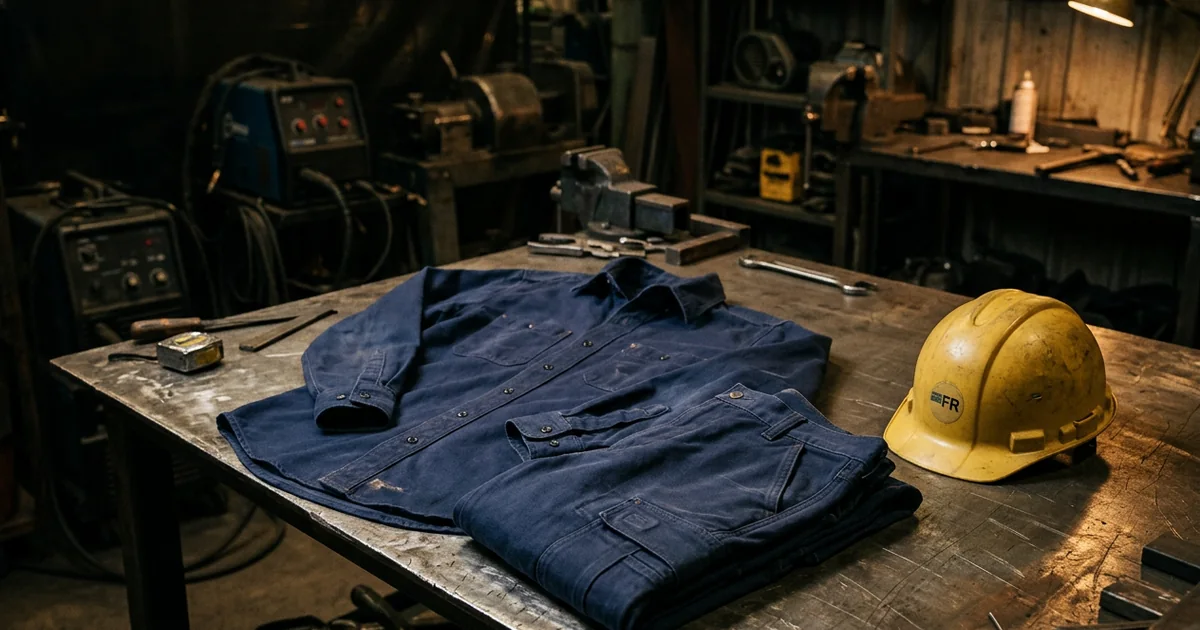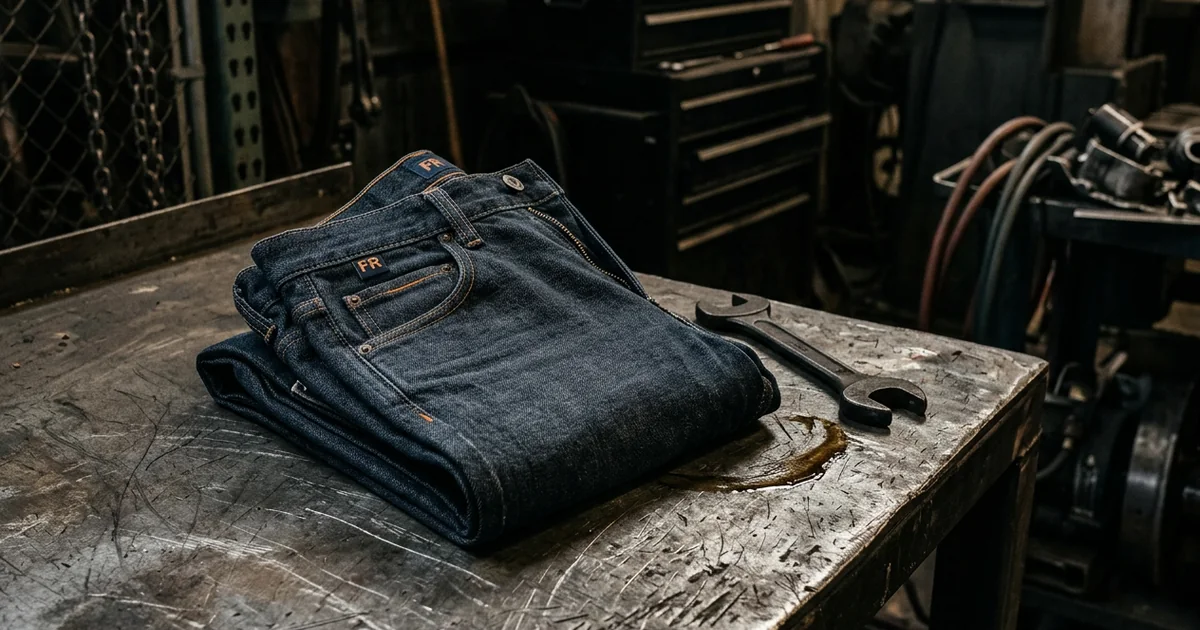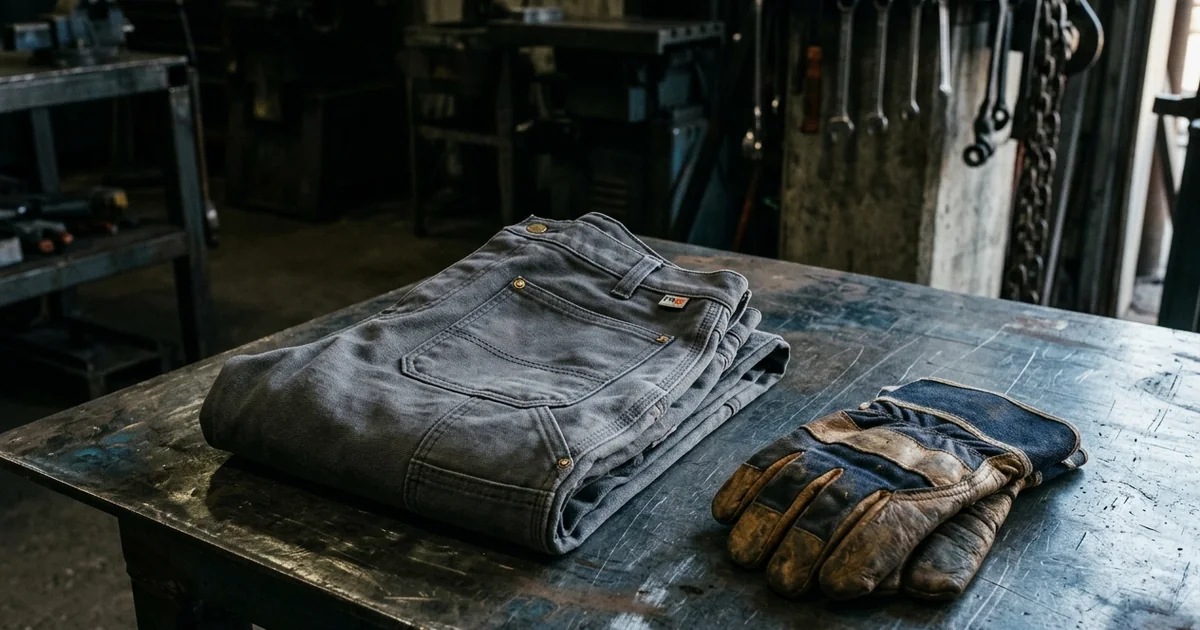
If you want the short answer: the best value in cheap FR clothing right now is the MCR Safety LST1N long-sleeve shirt at $69.99 for a top, and the Bulwark PEW2 navy pant at $66.49 for the lowest certified bottom. But "best" depends entirely on the hazard you're dressing for — flash fire, arc flash, or both — and on whether you need the highest arc rating or just the lowest price that's still legitimately certified. What is FR clothing? Fabric engineered to resist ignition, self-extinguish when the flame source is removed, and not melt onto skin — it is flame-resistant, not "fireproof." The one rule I won't bend in this guide: never trade certification for price. Every pick below is genuinely NFPA 2112, and I only quote a spec the product listing actually states.
Key Takeaways
- Cheapest certified pant: $66.49. The Bulwark PEW2 is the lowest-priced NFPA 2112 pant I found — see how it stacks up against pricier options in my best FR pants guide.
- Best value shirt: MCR LST1N at $69.99. It's the only shirt here that publishes NFPA 2112, NFPA 70E, and ASTM F1506 together — compare it in my best FR shirts guide.
- NFPA 2112 ≠ an arc rating. 2112 covers flash fire; the cal/cm² arc number is a separate test, and only some listings publish it.
- Brand matters less than the cert. MCR, Bulwark, and Wrangler all make legitimate cheap FR — the right pick is the one that matches your job, not the biggest name. See how brands compare in my FR clothing brands guide.
- Cheap is fine; uncertified is not. A $66 garment that's genuinely tested beats a $40 garment that just says "fire resistant" on the tag.
How I ranked these (protection first, not commission)
I ranked these five garments on protection first, value second, and fit/comfort third. "Protection" here means: is it genuinely NFPA 2112 certified, and what arc rating does the listing actually publish? I only quote a number the manufacturer's listing states. Where a listing doesn't state NFPA 70E, ASTM F1506, an ATPV value, or whether the FR is inherent or treated, I write "not stated" or use "—" — I never borrow one model's number for another, and I never invent a cal/cm² figure to fill a gap. For reference: CAT 1 needs ≥4 cal/cm², CAT 2 needs ≥8, CAT 3 needs ≥25, and CAT 4 needs ≥40. Every garment below clears CAT 2 on the numbers its listing publishes. I don't rank by what pays me — I rank by what protects you, and I tell you where the data is thin.
| Pick | Fabric / weight | Arc rating (if stated) | Best for | Price |
|---|---|---|---|---|
| 1. Bulwark PLW2 NV pant | 88% cotton / 12% nylon twill, 9 oz | 12.2 cal/cm², HRC 2 | Highest-protection budget pant | $75.99 |
| 2. MCR LST1N Navy shirt | 100% FR cotton, 6.5 oz | 10.6 cal/cm² ATPV, CAT 2 | Best overall value shirt | $69.99 |
| 3. MCR LST1T Tan shirt | 100% FR cotton, 6.5 oz | 10.6 cal/cm² ATPV, CAT 2 | Same shirt, lighter color | $69.99 |
| 4. Bulwark PEW2 NV pant | 100% cotton twill (Excel-FR), 9 oz | 10.6 cal/cm², HRC 2 | Lowest-priced certified pant | $66.49 |
| 5. Wrangler FR3W5 GY shirt | 100% cotton twill, weight — | 8.5 cal/cm² ATPV, HRC2 | Riggs cut, name-brand shirt | $75.99 |
1. Bulwark PLW2 NV Navy Work Pants — best for highest budget protection
This is the most protective garment in the guide on the numbers, and it's still under $76. The 88% cotton / 12% nylon ComforTouch twill publishes a 12.2 cal/cm² arc rating at HRC 2 — the highest here — and the blend wears noticeably softer and more durable than straight cotton, which matters on a 10-hour shift. The honest trade-off: the listing confirms NFPA 2112 and the arc rating, but doesn't spell out NFPA 70E or ASTM F1506, so I won't claim them.
- Pros: Highest stated arc rating in the guide (12.2 cal/cm², HRC 2); 88/12 ComforTouch blend is more comfortable and durable than 100% cotton; NFPA 2112 certified; Excel-FR treatment.
- Cons: Priciest pant here at $75.99; NFPA 70E and ASTM F1506 not stated on the listing; FR is treated, not inherent.
Check price at Working Person's Store →
2. MCR Safety LST1N Navy Shirt — best for overall value
If I could only recommend one cheap FR shirt, this is it. The LST1N is the only top here that publishes the full certification stack — NFPA 2112 UL Certified, NFPA 70E CAT2 protection, and ASTM F1506 electric arc protection — alongside a 10.6 cal/cm² ATPV, all for $69.99. The 6.5 oz 100% FR cotton breathes reasonably for warm-weather work, and the listing notes a lifetime FR guarantee. The one gap: it doesn't state whether the FR is inherent or treated, so I treat it as treated.
- Pros: Most complete cert stack of any shirt here (NFPA 2112 + 70E + ASTM F1506); 10.6 cal/cm² ATPV, CAT 2; lifetime FR guarantee; $69.99.
- Cons: Inherent-vs-treated not stated; 100% cotton runs warmer than a blend in extreme heat.
Check price at Working Person's Store →
3. MCR Safety LST1T Tan Shirt — best for a lighter color
This is the same shirt as the LST1N — identical 6.5 oz 100% FR cotton, identical NFPA 2112 / NFPA 70E / ASTM F1506 stack, identical 10.6 cal/cm² ATPV at CAT 2, identical $69.99 — just in tan. Pick it if your crew runs a lighter color to stay cooler in direct sun, or if you want a second shirt in a different shade to rotate. Everything I said about the navy applies, including that the listing doesn't state inherent vs treated.
- Pros: Same complete cert stack and 10.6 cal/cm² ATPV as the LST1N; lighter color for heat; $69.99.
- Cons: Identical caveat — inherent-vs-treated not stated; tan shows dirt faster on grimy jobs.
Check price at Working Person's Store →
4. Bulwark PEW2 NV Navy Work Pants — best for lowest price
At $66.49, this is the cheapest genuinely certified garment in the entire guide and the lowest-priced NFPA 2112 pant I found on the FR pants category page. It runs 9 oz Excel-FR 100% cotton twill with a 10.6 cal/cm² arc rating at HRC 2 — a legitimate CAT 2 pant for the money. The honest trade-off versus the pricier PLW2: 100% cotton is warmer and stiffer than the ComforTouch blend, and the listing doesn't state NFPA 70E or ASTM F1506. But if your budget is the hard constraint, this is the floor that doesn't compromise the cert.
- Pros: Lowest price in the guide ($66.49); NFPA 2112 certified; 10.6 cal/cm² arc rating, HRC 2; rugged 9 oz twill.
- Cons: 100% cotton runs warmer and stiffer than a blend; NFPA 70E and ASTM F1506 not stated; FR is treated (Excel-FR), not inherent.
Check price at Working Person's Store →
5. Wrangler Riggs FR3W5 GY Shirt — best for the Riggs cut
A real certified shirt from a name crews already trust. The FR3W5 is 100% cotton twill that meets NFPA 2112, NFPA 70E, and ASTM F1506, with Nomex FR thread used in all garment seams — a genuine quality touch. Two honest reasons it lands last: its 8.5 cal/cm² ATPV is the lowest in this guide (it still clears CAT 2 at HRC2, but with the thinnest margin), and at $75.99 it's the priciest shirt while delivering the lowest arc number. Buy it if you specifically want the Riggs fit; otherwise the MCR shirts give you more rating for less money.
- Pros: Meets NFPA 2112, NFPA 70E, and ASTM F1506; Nomex FR thread in all seams; trusted Riggs Workwear cut.
- Cons: Lowest arc rating here (8.5 cal/cm²); priciest shirt at $75.99; fabric weight and inherent-vs-treated not stated.
Check price at Working Person's Store →
Is cheap FR clothing actually safe?
Cheap FR can be perfectly safe — as long as "cheap" describes the price and not the testing. The danger isn't a low price tag; it's an uncertified garment marketed with vague language like "fire resistant" or "flame retardant coating" and no standard behind it. Every pick in this guide is genuinely NFPA 2112 certified, which means it passed a real flash-fire test, and most publish an arc rating on top of that. What you give up at this price point is usually comfort and extra features — lighter or blended fabrics, more pockets, inherent (vs treated) construction — not the core protection. So buy on the cert and the arc rating, ignore the marketing adjectives, and a $66 pant will protect you exactly as its label says it will.
Frequently Asked Questions
What is the cheapest genuinely certified FR garment here?
The Bulwark PEW2 navy work pant at $66.49 is the cheapest genuinely NFPA 2112 certified garment in this guide, and the lowest-priced certified pant I found on the FR pants category page. It's 100% cotton Excel-FR twill with a 10.6 cal/cm² arc rating at HRC 2.
Does NFPA 2112 mean the garment has an arc rating?
No. NFPA 2112 is a flash-fire standard. An arc rating — measured in cal/cm² as an ATPV — comes from a separate test, and only some listings publish it. A garment can be NFPA 2112 certified while its listing doesn't state an arc rating, so check for the cal/cm² number specifically if arc flash is your hazard.
Which cheap FR shirt is the best value?
The MCR Safety LST1N at $69.99. It's the only shirt in this guide that publishes NFPA 2112, NFPA 70E, and ASTM F1506 together, plus a 10.6 cal/cm² ATPV at CAT 2. The tan LST1T has identical specs at the same price if you prefer a lighter color.
Is inherent FR worth paying more for than treated FR?
Inherent FR is built into the fiber and can't wash out, while treated FR relies on a chemical finish. Inherent often lasts longer but usually costs more. Most of the budget garments here are treated or don't state which they are; what matters most is that the certification holds for the garment's rated life and you follow the wash instructions. Don't pay extra for "inherent" unless a listing actually states it.
Do these picks meet HRC/CAT 2?
Yes. CAT 2 requires at least 8 cal/cm². Every garment in this guide clears that on the numbers its listing publishes — from the Wrangler shirt at 8.5 cal/cm² up to the Bulwark PLW2 pant at 12.2 cal/cm². Always confirm your job's required arc rating against your site's hazard assessment before you buy.
Why Trust This Guide
This guide was written and reviewed by Wes Calder, an independent flame-resistant-workwear reviewer at FR Gear Lab. I rank garments on protection and value, and I only quote a specification a product listing actually states — where a cert, fabric weight, arc rating, or inherent-vs-treated detail isn't published, I say so rather than guess. FR is safety gear: getting a spec wrong can get someone burned, so I never invent certifications or cal/cm² numbers. We earn a commission on some links, but we never rank by commission over safety — see our affiliate disclosure.