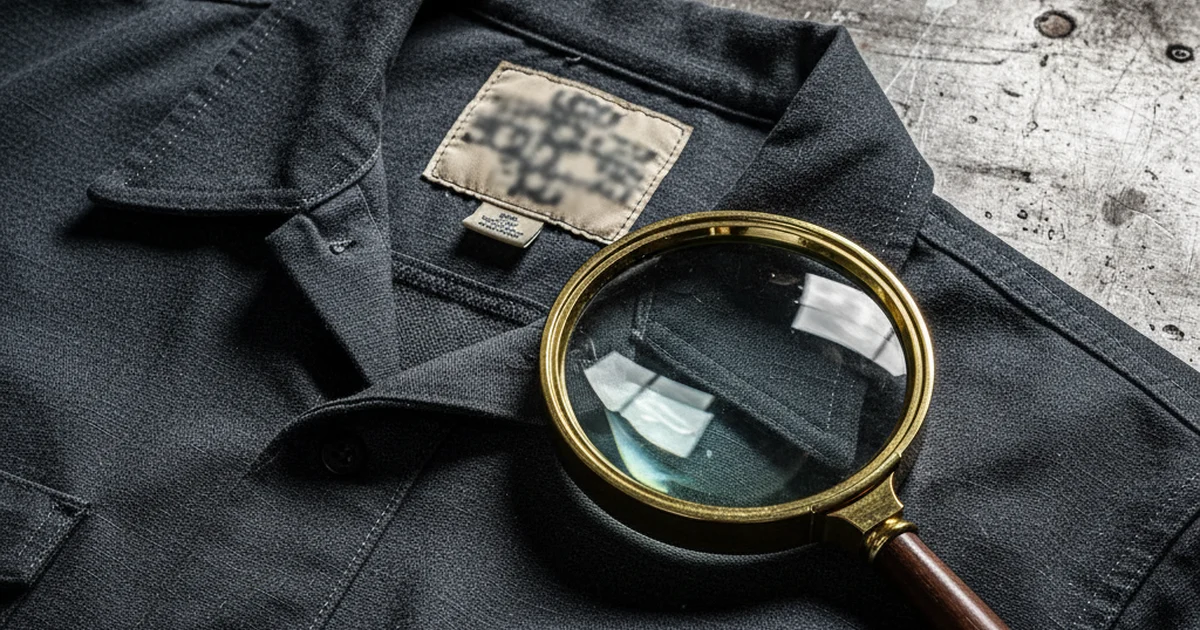
To spot fake or non-compliant FR clothing, check the garment's own tag for a named standard — NFPA 2112 for flash-fire work or ASTM F1506 (with an arc rating in cal/cm²) for electrical work — plus a third-party certification mark. A garment that states no standard, shows no arc rating where you face an arc-flash hazard, or sells far below the price of certified FR is the gear to be wary of. Genuine FR clothing resists ignition, self-extinguishes, and won't melt onto skin — it is not "fireproof," and a shirt that merely looks the part protects no one.
This matters because the failure is invisible until the worst possible moment. A "FR-look" garment hangs on the rack identical to the real thing; the difference only shows up when it meets flame — and by then the bill is a burn, not a refund. So you verify before you wear it, not after.
Key Takeaways
- The tag is the proof: genuine FR clothing names a standard on its own label — NFPA 2112 (flash fire) and/or ASTM F1506 (electrical) — alongside a third-party certification mark.
- Arc work needs a number, not a word: for an arc-flash hazard, "FR" alone isn't enough — you need an arc rating in cal/cm². All arc-rated clothing is FR, but not all FR is arc-rated.
- No standard stated = treat it as not FR: a garment that lists no standard, no rating, and a suspiciously low price is the classic profile of fake or mislabeled gear.
- Price is a tell: certified FR carries the cost of certified fabric. A price far below real FR is a red flag, not a bargain.
- Mislabeled beats counterfeit for danger: outright fakes are rarer than gear that's genuinely sold as "FR" but never carries a real standard or rating.
What "fake" actually means here
"Fake FR" covers two different problems, and it helps to separate them. The first is a true counterfeit — a garment dressed up to mimic a known FR brand that isn't FR at all. The second, and far more common, is the mislabeled or non-compliant garment: it's marketed with the letters "FR" or vague "fire-resistant" language, but it never carries a real, named standard or a verifiable certification. The seller leans on the look and the abbreviation; the protection isn't there.
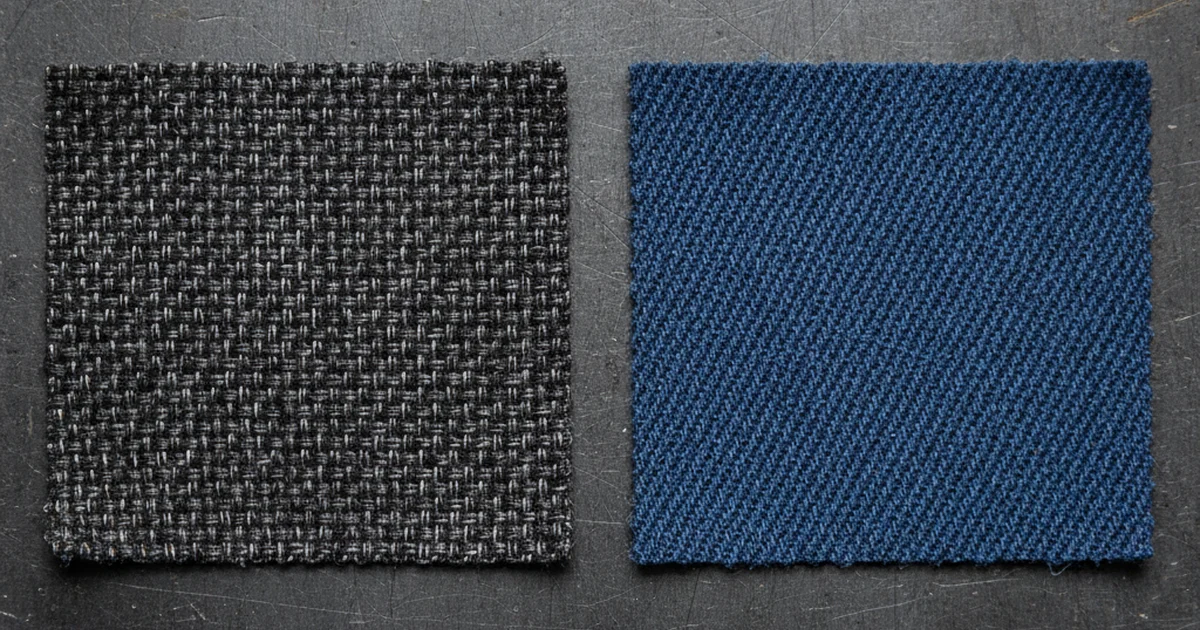
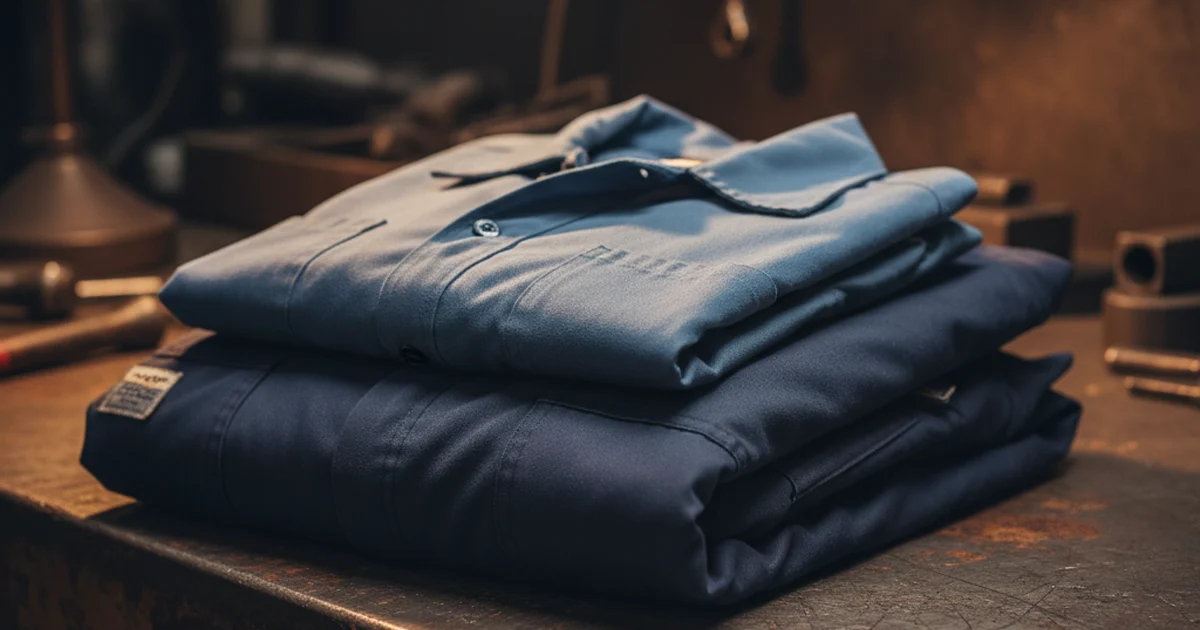
The reason this works on buyers is that FR clothing is a safety promise you can't see. A regular cotton shirt and a certified treated-cotton FR shirt can look and feel nearly identical on the rack. The protection lives in the fabric chemistry and the certification behind it — not in the color, the cut, or the word printed on the hangtag. That's exactly why the tag and the cert, not the marketing, are what you check.
Step one: read the garment tag
The single most reliable move is to read the label sewn into the garment. Genuine FR clothing states the standard it's built to meet right on its own tag. The two you'll see most:
- NFPA 2112 — the flash-fire garment standard used in oil and gas. It's a garment-level certification, and compliance is proven by the ASTM F1930 manikin (instrumented-mannequin) burn test. If a flash-fire garment is genuine, NFPA 2112 belongs on the tag.
- ASTM F1506 — the fabric/apparel spec for flame-resistant, arc-rated clothing worn by electrical workers. Where there's an electrical-arc hazard, this is the standard to look for, and it travels with an arc rating in cal/cm².
A garment can be FR for flash fire and not arc-rated — those are different hazards and different standards. So match the tag to your job. If the label is silent on any named standard and just says "FR" or "fire resistant," treat that as a garment that has not demonstrated compliance with anything. The absence of a standard is the answer.
Step two: check the certification and the arc rating
A standard printed on a tag should be backed by a third-party certification — look for a UL or comparable independent classification mark, not just the brand's own say-so. Third-party certification is what separates "we tested this ourselves" from "an independent body verified it." When a garment claims a standard but shows no independent mark, slow down.
For any job with an arc-flash hazard, you need more than the word "FR" — you need the arc rating in cal/cm². That rating is the garment's ATPV (Arc Thermal Performance Value) or EBT (Energy Breakopen Threshold); when both are reported, the garment's rating is the lower of the two, and higher is more protective. If the electrical-safety program at your site assigns PPE Categories under NFPA 70E, the rating has to clear the category minimum — CAT 1 ≥ 4, CAT 2 ≥ 8, CAT 3 ≥ 25, CAT 4 ≥ 40 cal/cm². A garment sold for arc work that shows no cal/cm² number at all cannot be matched to a category, which means it can't be verified as adequate — a serious red flag for that hazard. (The older "HRC" labels were renamed "PPE Category/CAT" in the 2015 edition of NFPA 70E, so newer gear should speak in CAT and cal/cm².)
Inherent vs. treated isn't a fake-vs-real test
One point that trips up buyers: "treated" FR is not a synonym for "fake." There are two legitimate ways a fabric becomes flame-resistant. Inherent FR means the fiber itself is flame-resistant — modacrylic or aramid — so the protection doesn't wash out. Treated FR means a flame-resistant chemical finish is applied to a base like cotton; that protection lasts the life of the garment when it's laundered correctly. Both can be certified to NFPA 2112. The trade-offs between them are cost, hand-feel, and durability — not whether the garment is genuine.
So don't disqualify a garment just because it's treated cotton. Disqualify it because it names no standard, shows no certification, or can't produce a rating where the hazard demands one. The fake-detection test is the paperwork on the tag, not the fiber technology.
The red-flag checklist
Run a suspect garment through these. Any one of them is reason to dig deeper; several together mean walk away:
- No standard named on the tag — no NFPA 2112, no ASTM F1506, just "FR" or "fire resistant" as marketing.
- No third-party certification mark — only the seller's own claim, with no independent (UL-type) classification.
- No arc rating in cal/cm² on a garment being sold for electrical or arc-flash work.
- A price far below certified FR — certified fabric costs money; a deep discount on "FR" gear is a warning, not a win.
- Vague or hedged language — "fire-resistant style," "FR-look," or fireproof claims (real FR is never marketed as fireproof).
- Care instructions that ignore FR rules — genuine FR comes with care guidance that warns against chlorine bleach, fabric softener, hydrogen-peroxide bleach, and starch, because those degrade the protection. A tag silent on all of that is suspect.
If you've confirmed the standard and the rating and you're keeping the garment, protect what you paid for: launder it the right way so the FR performance survives the wash. Grease or oil saturated into the fabric is its own fire hazard regardless of certification, so a contaminated FR garment stops being protective even if the tag is perfect.
Frequently Asked Questions
How do I verify a garment is genuinely FR?
Check the garment's own tag for a named standard — NFPA 2112 for flash-fire work and/or ASTM F1506 for electrical work — and look for a third-party certification mark such as a UL classification rather than only the seller's claim. Where there's an electrical hazard, confirm an arc rating in cal/cm². If the label names no standard and shows no rating, treat the garment as not verified FR.
Is "FR" the same as arc-rated?
No. All arc-rated clothing is flame-resistant, but not all FR clothing is arc-rated. Arc rating is a specific value in cal/cm² (the garment's ATPV or EBT) proving how much arc-flash energy the garment withstands. If your job has an arc-flash hazard, "FR" alone isn't enough — you need that cal/cm² number to match an NFPA 70E PPE Category.
Why is some "FR" clothing so cheap?
Certified FR fabric — inherent fibers like modacrylic and aramid, or properly treated cotton — costs more than ordinary work cloth, and third-party certification adds cost too. A price far below real certified FR usually means the garment skipped the certification, or it's "FR-look" gear that names no standard. Cheap is a red flag here, not a bargain.
Does "treated" FR mean it's fake or lower quality?
No. Treated FR is a flame-resistant chemical finish on a base fabric like cotton, and it lasts the life of the garment when laundered correctly. Inherent FR has the protection built into the fiber. Both can be certified to NFPA 2112, and both are genuine — the differences are cost, hand-feel, and durability, not whether the garment is real FR.
If a garment says "fireproof," is that a sign it's better?
It's a warning sign, not a selling point. FR clothing is not fireproof — genuine FR resists ignition, self-extinguishes, and won't melt onto skin, but it does not make you immune to fire. Sellers who lean on "fireproof" language are describing something that doesn't exist for workwear, which often signals marketing over real certification. Look for a named standard instead.
Why Trust This Guide
This guide is written and reviewed by Wes Calder, an independent flame-resistant-workwear reviewer. Every recommendation is built on the published standards (NFPA 2112, NFPA 70E, ASTM F1506), manufacturer spec sheets and garment tags, hands-on handling, and what tradespeople actually report — and we tell you when a number is a manufacturer claim versus an independent standard, and when a garment is FR but not arc-rated. We earn an affiliate commission if you buy through some of our links, at no extra cost to you, and we never rank by commission over safety — see our affiliate disclosure.