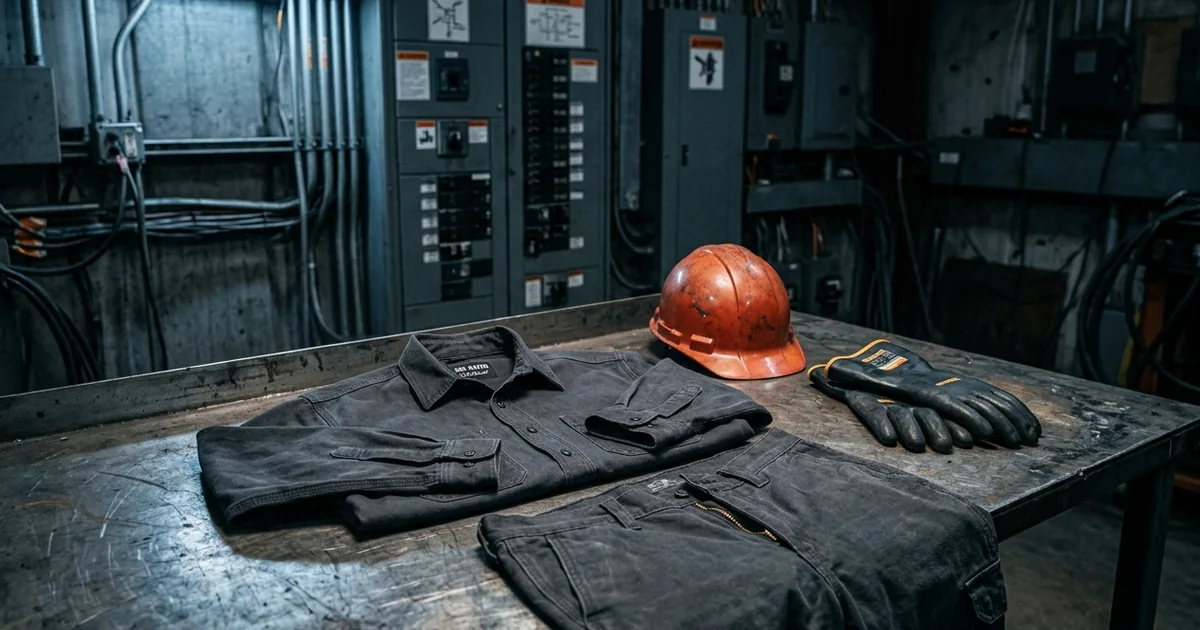

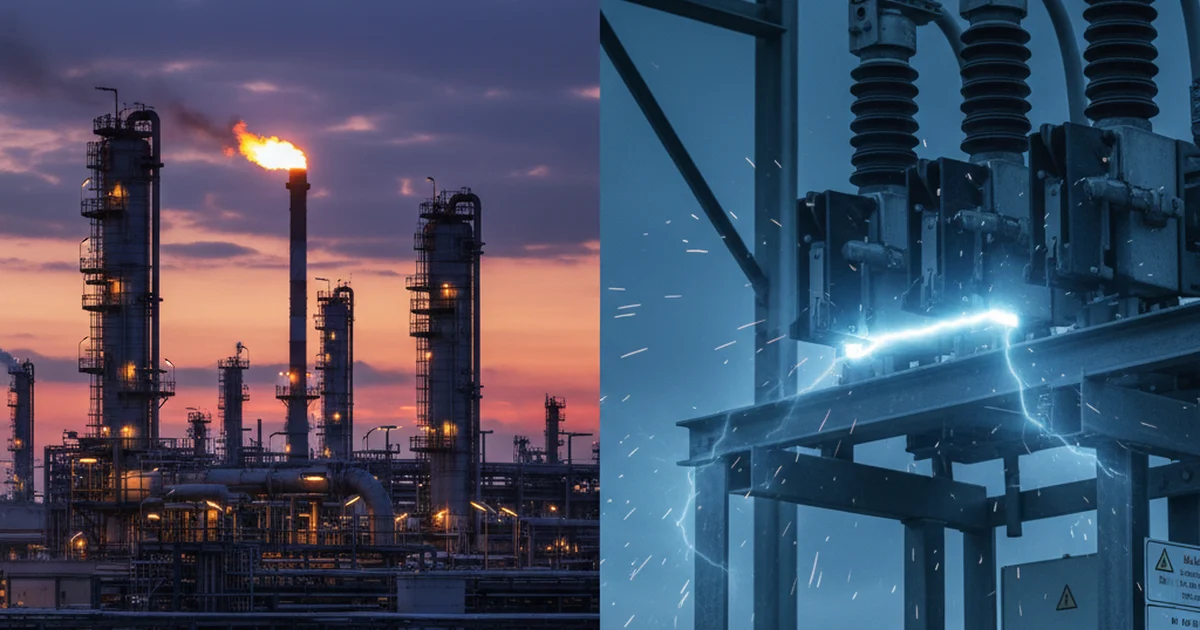
Short answer: NFPA 2112 covers flash fire and NFPA 70E covers arc flash — two different hazards, two different ways to choose FR clothing. If you're shopping for NFPA 2112 FR clothing because someone told you to "get FR," the first thing to nail down is which hazard you actually face. Buy a flash-fire-rated coverall for an arc-flash job and you're protected on paper but not in reality — and the reverse trap is just as real. Flame-resistant (FR) clothing is fabric that resists ignition, self-extinguishes, and won't melt onto skin — it is not "fireproof."
Key Takeaways
- Different hazards: NFPA 2112 is a flash-fire garment standard (oil & gas, petrochemical); NFPA 70E is the electrical arc-flash standard that defines PPE Categories. Match the garment to the hazard.
- FR is not always arc-rated: all arc-rated (AR) clothing is flame-resistant, but not all FR clothing is arc-rated. An arc-flash job needs an arc rating in cal/cm², not just the word "FR."
- The cal number lives on the tag: NFPA 70E sets minimum arc ratings by PPE Category — CAT 1 ≥4, CAT 2 ≥8, CAT 3 ≥25, CAT 4 ≥40 cal/cm². The garment's rating is the lower of its ATPV and EBT.
- ASTM F1506 is the fabric/apparel performance spec behind arc-rated workwear for electrical workers — it's the partner spec to NFPA 70E.
- Inherent vs treated is a durability/cost/feel question, not a "which standard" question — both can certify to NFPA 2112.
- One tag can carry both: a garment can be NFPA 2112-certified and arc-rated at the same time — but you have to see both claims printed, not assume one from the other.
NFPA 2112 and NFPA 70E protect against two different fires
This is the whole ballgame, so I'll say it plainly: these standards are not interchangeable, and they are not "beginner" versus "advanced." They cover different hazards.
NFPA 2112 is a flash-fire standard. A flash fire is a brief, intense wall of flame — the kind of event you guard against around hydrocarbons, on a rig, in petrochemical plants, around well sites. It's a garment-level certification: the finished piece of clothing is tested and certified, not just the cloth. The test behind it is the ASTM F1930 thermal-manikin test, where an instrumented dummy is engulfed in flame and the burn injury is measured. So when a coverall says "NFPA 2112," it means the garment passed a flash-fire protocol.
NFPA 70E is a different animal. Its full name is "Electrical Safety in the Workplace," and it deals with arc flash — the explosive electrical event that happens when current jumps across a gap, releasing enormous heat in a fraction of a second. NFPA 70E is where the arc-flash PPE Categories (CAT 1 through CAT 4) come from. It tells an electrician or lineman how much protection they need for a given task.
Here's the trap that makes this article worth your time: a flash-fire-rated garment is not automatically rated for arc flash, and an arc-rated garment is chosen by a completely different number. If your job is electrical and you grab a coverall that only says "NFPA 2112," you have no idea whether it'll hold up to an arc, because that's not what 2112 measures. Match the garment to your hazard — don't assume "FR" is one thing.
The cleanest way to keep them straight: 2112 asks "did this garment survive a flash fire?" and answers yes or no. 70E asks "how big an arc can this garment take?" and answers with a number in cal/cm². One is a pass/fail certification on the finished piece; the other is a measured protection level you compare against the hazard at your specific task. They aren't ranked against each other — a flawless 2112 coverall and a 40-cal arc suit are simply built for different fires.
| NFPA 2112 | NFPA 70E | |
|---|---|---|
| Hazard | Flash fire | Arc flash (electrical) |
| Who it's for | Oil & gas, petrochemical | Electrical workers, linemen |
| What it is | A garment standard | A workplace electrical-safety standard |
| What it certifies | The garment (flash-fire performance) | Arc-flash PPE Categories (CAT 1–4) |
| Key test / spec | ASTM F1930 thermal-manikin test | Arc rating in cal/cm² (paired with ASTM F1506 fabric spec) |
| The number you check | Certified / not certified | ATPV or EBT in cal/cm² (use the lower) |
| Category system | None — it's pass/fail | CAT 1 ≥4, CAT 2 ≥8, CAT 3 ≥25, CAT 4 ≥40 cal/cm² |
FR vs AR: why "flame-resistant" alone can get you hurt
If you remember one sentence from this guide, make it this: all arc-rated (AR) clothing is flame-resistant, but not all flame-resistant (FR) clothing is arc-rated.
FR means the fabric resists ignition and self-extinguishes. That's necessary, but for an electrical arc-flash hazard it is not sufficient. An arc-flash event needs a garment with an arc rating — a specific number in cal/cm² that tells you how much thermal energy the garment can take before you'd expect a second-degree burn. A shirt can be genuinely flame-resistant and still have no arc rating at all, which means nobody has measured how it performs in an arc. For a lineman, "it's FR" is not an answer; "it's arc-rated to X cal/cm²" is.
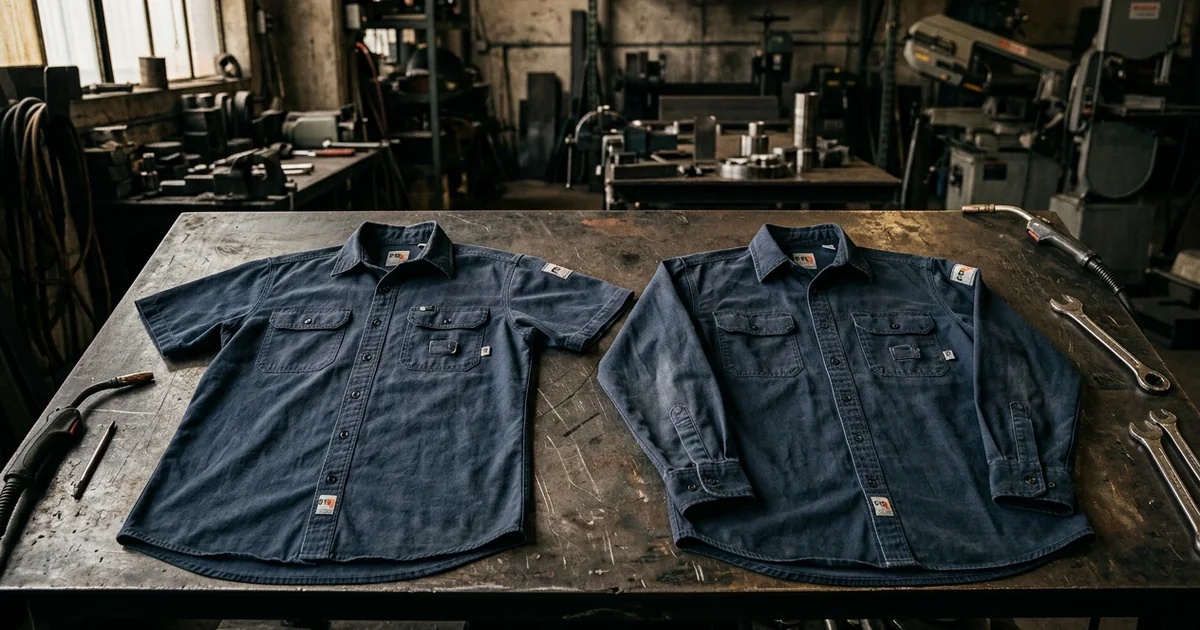
You'll see this gap in the wild constantly. Plenty of solid FR welding shirts and flash-fire garments are marked NFPA 2112 but list no cal/cm² arc rating — because they were built and certified for flash fire, not for arc flash. That's not a defect; it's the garment doing its job for the hazard it was made for. It only becomes dangerous when someone buys it for the wrong hazard. So the rule of thumb: electrical/arc-flash work → look for the cal number. Flash-fire work → look for the NFPA 2112 certification. Don't let the single word "FR" stand in for either one.
The relationship is one-directional, and that direction matters. Because an arc rating can only be earned by a fabric that's already flame-resistant, an arc-rated garment is FR by definition — you get the flame resistance for free. But it doesn't run the other way: flame resistance is the floor, the arc rating is the measured ceiling, and a garment can sit on the floor with no ceiling measured at all. That's the whole reason I keep the two words apart. "FR" tells you the cloth won't keep burning; only the arc rating tells you how much energy it'll absorb before your skin pays for it. For a deeper read on exactly what those two labels promise, see arc-rated vs flame-resistant.
What the cal/cm² number actually means (ATPV, EBT, CAT)
On an arc-rated garment, the protection level is reported as an arc rating in cal/cm² — higher is more protection. That rating comes from one of two measured values:
- ATPV (Arc Thermal Performance Value) — the energy level at which there's a 50% probability of a second-degree burn.
- EBT (Energy Breakopen Threshold) — the energy level at which the fabric is likely to break open.
A garment can have both values measured, and here's the part buyers miss: the garment's arc rating is the lower of its ATPV and EBT. Whichever fails first sets the number, because that's the real limit of the garment. So if a hood lists "ATPV 12, EBT 9," its arc rating is 9 cal/cm². Don't cherry-pick the bigger number — and don't be surprised when a tag reports its rating as an EBT instead of an ATPV; both are legitimate arc ratings in cal/cm², they're just naming which failure mode came first.
NFPA 70E then bins those ratings into PPE Categories with minimum cal requirements:
- CAT 1: arc rating ≥ 4 cal/cm²
- CAT 2: arc rating ≥ 8 cal/cm²
- CAT 3: arc rating ≥ 25 cal/cm²
- CAT 4: arc rating ≥ 40 cal/cm²
Read those as floors, not targets. A garment rated 12 cal/cm² clears the CAT 2 minimum (≥8) but does not reach CAT 3 (≥25) — being "comfortably above CAT 2" doesn't bump you up a category. The category your task requires comes from the incident-energy analysis for that specific work, and your garment's arc rating has to meet or beat it. When in doubt, the bigger number protects more, but the category boundary is a hard line, not a rounding exercise.
One more thing that trips up older hands: "HRC" became "PPE Category" in the 2015 edition. If a coworker still calls it "HRC 2," they mean CAT 2. That same 2015 change also eliminated the old HRC 0, which is why the categories now run 1 through 4. The backstop fabric spec under arc-rated electrical apparel is ASTM F1506 — it's the performance standard the fabric and garment have to meet to be sold as arc-rated for electrical work, and you'll often see it printed on the tag right alongside the NFPA references. If you want the cal/cm² number broken all the way down, the ATPV & arc rating explainer goes deeper than I can here.
Inherent vs treated FR — and why it's NOT a "which standard" question
Once buyers understand 2112 vs 70E, the next thing they fixate on is inherent vs treated FR — and they often think one is "real FR" and the other isn't. That's not how it works.
Inherent FR means the fiber itself is flame-resistant — think modacrylic blends and aramids. The FR is part of the molecule, so it does not wash out over the life of the garment. Treated FR means an FR chemical finish has been applied to a fabric (usually cotton), engineered to last the garment's useful life as long as you launder it correctly. Both can certify to NFPA 2112. Both can be arc-rated. The difference is cost, hand-feel, and durability, not which standard or hazard they cover.
So treat inherent-vs-treated as a comfort-and-budget decision after you've matched the garment to your hazard — not as a substitute for checking the cal number or the 2112 certification. A treated-cotton shirt with a verified arc rating protects an electrician; an inherent-fiber shirt with no arc rating does not, no matter how premium the fiber is.
The one place the distinction earns its keep is care. Treated FR depends on correct laundering — the finish lasts the garment's life if you wash it right, and it's compromised if you don't. Inherent FR is more forgiving because the protection is the fiber, but it still answers to the same care rules: no chlorine bleach, no fabric softener, no hydrogen-peroxide bleach, no starch. Those four are the usual killers regardless of FR type. Hard-water minerals can build up and reduce flame resistance, and grease or oil soaked into the fabric is its own fire hazard — saturate a garment with hydrocarbons and it doesn't matter how it was made, you clean it or you retire it. The full routine is in the how to wash FR clothing guide, but the short version is: wash inside-out, defer to the garment label, and remember FR is not fireproof.
How I evaluate FR clothing — what actually matters on the tag
People ask what I look at when I size up an FR garment, so here's the honest checklist — no lab, no torture tests, just the order I read a spec sheet and a tag in. It's the same order I'd hand a foreman vetting gear for a crew.
- Hazard match first. Before anything else: is this garment built for the fire the job actually has? A flash-fire job wants NFPA 2112 on the finished piece; an arc-flash job wants a cal/cm² arc rating that meets the required category. Everything below is secondary to getting this right.
- The certification claim, printed and specific. I want to see "NFPA 2112" and/or an arc rating stated on the listing or tag — not implied. "FR fabric" with no standard named tells me nothing about which hazard it's been tested for. If a page doesn't name the standard, I treat the protection level as unknown until the spec sheet says otherwise.
- Inherent vs treated. Not a safety ranking — both certify — but it tells me what I'm buying. Inherent (modacrylic/aramid) won't wash out and tends to feel softer; treated cotton is usually cheaper and heavier-feeling, and leans harder on correct laundering. I note which it is, and flag it when a listing doesn't say.
- Fabric weight in oz. Heavier cloth (9–10 oz) shrugs off welding spatter and abrasion better; lighter cloth (6–7 oz) breathes better in summer heat. Neither is "more FR" — it's a durability-versus-comfort trade, and the right answer depends on the job.
- Spatter and durability details. For welding specifically: reinforced or aramid-lined forearms, pearl-snap plackets that pull apart instead of trapping hot metal, collar coverage, seam construction. These don't show up as a rating number but they're the difference between a shirt that lasts a season and one that doesn't.
- Fit and coverage. A garment only protects what it covers. Sleeve length, hem length, and how it sits over gloves and boots matter — and a too-tight fit presses fabric against skin, which works against you in a thermal event.
- Breathability and all-day wearability. The safest garment is the one a worker actually keeps zipped up in August. If it's so hot people roll the sleeves or leave it open, the rating on the tag is academic.
- Care reality. Can it be home-laundered, and what's the routine? FR that gets bleached, softened, starched, or oil-soaked loses the plot. I weigh how forgiving a garment is to live with.
What I deliberately don't do: invent burn tests, claim a sample count, or assign a garment a rating it doesn't publish. If a listing is silent on a spec, I say it's silent — "—" beats a confident guess every time in a YMYL safety category. Owner-reported lifespan figures (you'll hear 18 to 30 months tossed around) are exactly that — reports from people who wore them, not a manufacturer warranty or a number I can stand behind, so I attribute them and move on.
How to actually choose: match the garment to the hazard
Here's the buying logic I'd hand a new hire, in order:
- 1. Name your hazard first. Flash fire (hydrocarbons, refinery, rig)? Arc flash (energized electrical work)? Both? Your job's hazard assessment — not the store's marketing — drives this. If you don't know your hazard, that's the first thing to fix, before you spend a dollar on a garment.
- 2. Flash-fire job → look for NFPA 2112 certification on the finished garment. That's the standard built for your hazard. Confirm it's the garment that's certified, not just a fabric claim.
- 3. Arc-flash job → look for an arc rating in cal/cm² that meets your required PPE Category (CAT 1 ≥4, CAT 2 ≥8, CAT 3 ≥25, CAT 4 ≥40), and remember the rating is the lower of ATPV and EBT. "FR" with no cal number is not enough.
- 4. Both hazards on one job? You need a garment (or layered system) that covers both — NFPA 2112 for the flash fire and the right arc rating for the arc flash. Some garments carry both claims on one tag; when they don't, you build a layered system that does. Don't assume one cert implies the other.
- 5. Then weigh weight and fabric — heavier for spatter and durability, lighter for summer breathability — matched to your shop and season, not to a spec-sheet bragging right.
- 6. Then, and only then, argue about inherent vs treated and hand-feel — the comfort-and-budget layer of the decision, after the protection is locked in.
The reason I push this order so hard: the failure mode here isn't "I bought a slightly worse shirt." It's "I bought protection for a fire I'm not going to face, and none for the one I am." A 14-cal arc-rated pant is wasted money on a pure flash-fire rig if it skips the 2112 certification; a beautifully made 2112 coverall is a liability on an energized panel if it carries no cal rating. Match the garment to the hazard, verify the number on the tag, and you've done the part that actually keeps you safe — the rest is comfort. If welding is your world specifically, the FR clothing for welders guide walks the same logic through spatter, heat, and the layers that actually hold up.
Frequently Asked Questions
What is the difference between NFPA 2112 and NFPA 70E?
NFPA 2112 is a flash-fire garment standard used in oil, gas, and petrochemical work — it certifies the finished garment using the ASTM F1930 thermal-manikin test. NFPA 70E is "Electrical Safety in the Workplace" and covers arc flash, defining the arc-flash PPE Categories (CAT 1–4). They protect against two different hazards, so you match the garment to your actual hazard rather than treating "FR" as one thing.
Is FR clothing enough for an arc-flash job?
Not on its own. All arc-rated clothing is flame-resistant, but not all flame-resistant clothing is arc-rated. An arc-flash hazard needs a garment with an arc rating in cal/cm² that meets your required NFPA 70E PPE Category. A shirt can be genuinely FR and still have no arc rating, meaning its arc-flash performance was never measured. For electrical work, look for the cal number, not just the letters "FR."
Does an NFPA 2112 garment also protect against arc flash?
Not unless it also carries an arc rating. NFPA 2112 certifies flash-fire performance using the ASTM F1930 manikin test; it does not measure how the garment behaves in an electrical arc. A garment can be both NFPA 2112-certified and arc-rated at the same time, but you have to see the arc rating in cal/cm² printed separately — the 2112 mark alone doesn't tell you the arc-flash level. For an arc-flash job, confirm both claims or use a garment built for the electrical hazard.
What do ATPV and EBT mean on an arc rating?
Both are arc ratings reported in cal/cm². ATPV (Arc Thermal Performance Value) is the energy at which there's a 50% chance of a second-degree burn; EBT (Energy Breakopen Threshold) is where the fabric is likely to break open. A garment's official arc rating is the lower of its ATPV and EBT, because whichever fails first is the real limit. Higher cal/cm² means more protection.
What arc rating do I need for each NFPA 70E PPE Category?
NFPA 70E sets minimum arc ratings by category: CAT 1 requires at least 4 cal/cm², CAT 2 at least 8, CAT 3 at least 25, and CAT 4 at least 40 cal/cm². Treat these as floors — a 12-cal garment clears CAT 2 but does not reach CAT 3. The category your specific task requires comes from the incident-energy analysis for that work, and your garment's arc rating has to meet or exceed it.
Is HRC the same as PPE Category (CAT)?
Effectively yes — "HRC" (Hazard/Risk Category) was renamed "PPE Category," or CAT, in the 2015 edition of NFPA 70E. That same revision eliminated the former HRC 0, which is why the categories now run CAT 1 through CAT 4. The minimum arc ratings are CAT 1 ≥4, CAT 2 ≥8, CAT 3 ≥25, and CAT 4 ≥40 cal/cm². If an older coworker says "HRC 2," they mean CAT 2.
Does inherent vs treated FR change which standard a garment meets?
No. Inherent FR means the fiber itself is flame-resistant (modacrylic blends, aramids) and doesn't wash out; treated FR is an FR finish on cotton engineered to last the garment's useful life if laundered correctly. Both can certify to NFPA 2112 and both can be arc-rated. The difference is cost, hand-feel, and durability — not which hazard or standard the garment covers. Match the garment to your hazard first, then weigh inherent vs treated.
How do I wash FR clothing without ruining the protection?
Home laundering is fine, but avoid chlorine bleach, fabric softener, hydrogen-peroxide bleach, and starch — any of those can compromise the flame resistance. Wash inside-out in warm water (around 140°F helps flush oils), skip the additives, and always defer to the garment's care label. Hard-water minerals can reduce FR over time, and grease or oil soaked into the fabric is a fire hazard in itself — clean it out or retire the garment. FR is flame-resistant, not fireproof.
Why Trust This Guide
This guide is written and reviewed by Wes Calder, an independent flame-resistant-workwear reviewer. Every recommendation is built on the published standards (NFPA 2112, NFPA 70E, ASTM F1506), manufacturer spec sheets and garment tags, hands-on handling, and what tradespeople actually report — and we tell you when a number is a manufacturer claim versus an independent standard, and when a garment is FR but not arc-rated. We earn an affiliate commission if you buy through some of our links, at no extra cost to you, and we never rank by commission over safety — see our affiliate disclosure.