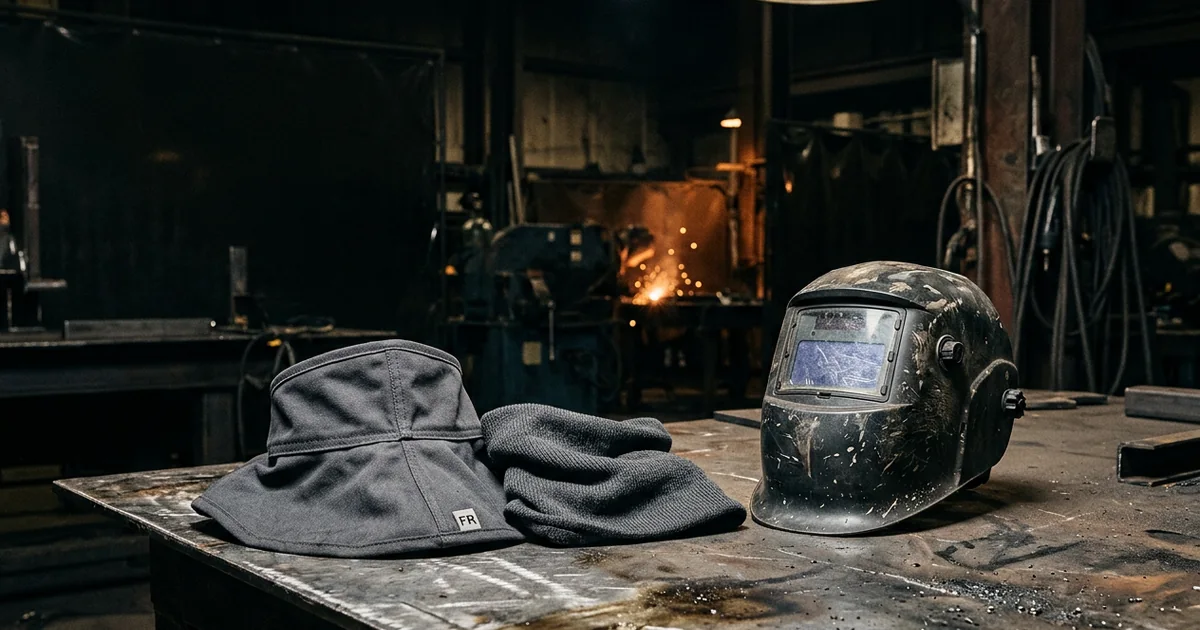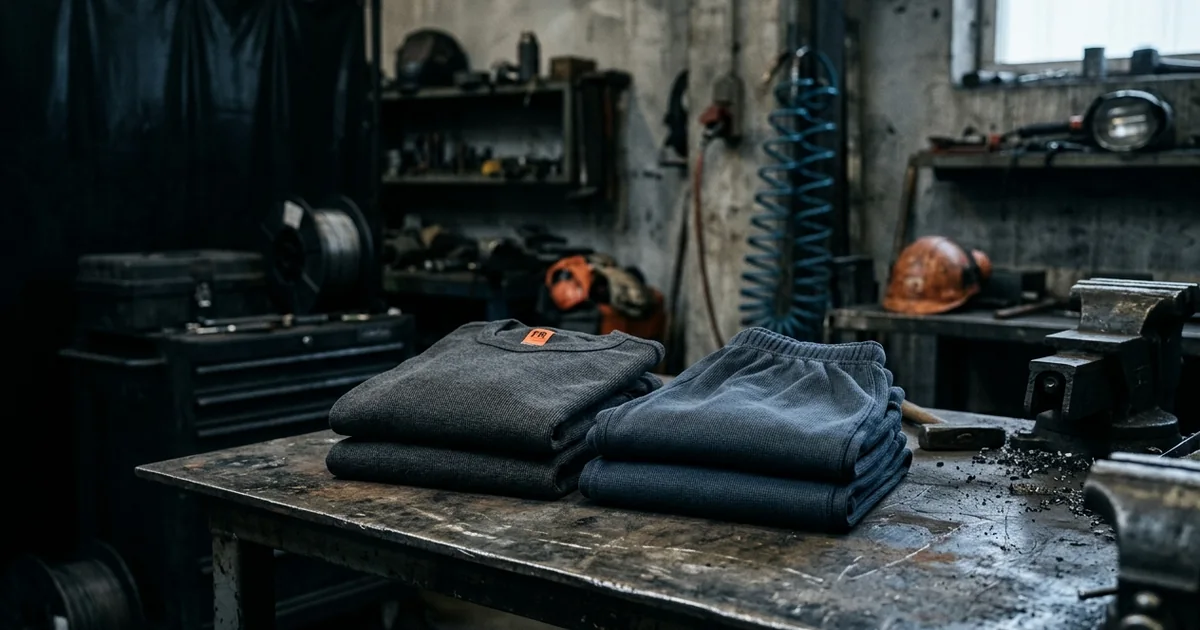
If a foreman just told you to "wear FR" and you're staring at a wall of shirts that all look the same, here's the one-sentence answer: "FR" on a shirt tag means the fabric is flame-resistant — it resists ignition, self-extinguishes when the flame source is gone, and won't melt onto your skin — but it does not automatically mean the shirt is arc-rated, and it never means "fireproof." What does FR mean on a shirt? Flame-resistant: the cloth is engineered so a flash fire or arc flash can't keep it burning, buying you the seconds that decide how badly you get hurt — it is not a forcefield. The letters "FR" are a category, not a guarantee of a specific protection level. The number on the tag is what you actually buy on, and this guide walks you through reading it so you pick the right shirt the first time.
Key Takeaways
- "FR" is the floor, not the spec: it tells you the fabric resists fire and won't melt — it does not tell you how much arc-flash protection you have.
- FR ≠ arc-rated: all arc-rated shirts are FR, but not all FR shirts are arc-rated. An arc-flash job needs an arc rating in cal/cm², not just the letters "FR."
- NFPA 2112 is a garment cert, not a fabric claim: it certifies the whole shirt to a flash-fire standard (manikin-tested per ASTM F1930) — look for it named on the tag, ideally with a UL classification.
- The arc rating is a number: ATPV (or EBT) in cal/cm² maps to NFPA 70E categories — CAT 1 ≥ 4, CAT 2 ≥ 8, CAT 3 ≥ 25, CAT 4 ≥ 40. Most FR work shirts land around CAT 2.
- Inherent vs treated both count: both can certify to NFPA 2112; the difference is cost, hand-feel, and how the protection holds up — not whether it's "real" FR.
- Weight is comfort, not a rating: a ~6 oz shirt breathes in summer heat; a 7 oz+ or FR-denim shirt runs warmer. Lighter doesn't mean less protected.
What "FR" on a shirt tag actually guarantees
This is the part the hangtags gloss over, so I'll be blunt: the bare letters "FR" guarantee one thing — the fabric is flame-resistant. A regular cotton work shirt ignites and keeps burning; a polyester one is worse, because it melts and drips, and molten synthetic on skin is a burn that doesn't stop when you slap it out. An FR shirt is built to do neither. When the flame source is gone, it stops burning on its own, and it won't fuse to you. That's the whole value proposition, and it's a real one — most of the serious burns in a flash fire or arc flash come from your own clothes continuing to burn after the event, not from the event itself.
But notice what "FR" by itself does not tell you. It doesn't tell you the shirt passed any particular standard. It doesn't tell you how much arc-flash energy it can stop. It doesn't tell you whether the protection is inherent to the fiber or a finish on cotton. "FR" is the category on the door; the specs on the tag are the actual room. A shirt that says only "FR" and names no standard, no rating, and sits at a suspiciously low price is the classic "FR-look" trap — styled to look the part, certified for nothing. The honest rule: trust the named standard and the rating, not the two letters.
FR and arc-rated are not the same word
This is the single most common mistake I see new buyers make with shirts, so here it is plainly: all arc-rated shirts are flame-resistant, but not all FR shirts are arc-rated. A flash-fire FR shirt can be completely legitimate and carry zero arc rating — because it was never tested or certified for the electrical-arc hazard. If your job involves arc flash, "it's an FR shirt" is not the answer. You need an arc rating, and that's a specific number.
The arc rating is stated in cal/cm² as either an ATPV or an EBT value. When a shirt lists both, its rating is the lower of the two — that's the conservative number, and it's the one that counts. Higher cal/cm² means more protection. NFPA 70E ties those numbers to the PPE Categories: CAT 1 needs at least 4 cal/cm², CAT 2 at least 8, CAT 3 at least 25, and CAT 4 at least 40. Most FR shirts — the button-ups and henleys you'll be shopping — land in the CAT 2 range, roughly 8–9 cal/cm² when the maker publishes a number at all. If your hazard assessment says "CAT 3" or "CAT 4," a single FR shirt usually won't get you there on its own; that's a layering and outerwear conversation, not a shirt conversation.
One bit of vocabulary cleanup, because old labels and old hands still use the term: "HRC" (Hazard Risk Category) was renamed "PPE Category" / "CAT" in the 2015 edition of NFPA 70E. If a coworker says "HRC 2" and a shirt tag says "CAT 2," they mean the same thing. For the full breakdown, see arc-rated vs. flame-resistant and the CAT/HRC levels explained.
What NFPA 2112 means on a shirt (and what it doesn't)
NFPA 2112 is the flash-fire garment standard, written for oil and gas and other flash-fire hazards. Here's the nuance that matters for shirts: it certifies the whole garment — the shirt, with its seams, thread, and closures — not just the cloth. A garment certified to NFPA 2112 has passed manikin-based flash-fire testing (ASTM F1930), and the best-documented ones carry a third-party UL classification you can verify. So when a shirt tag says "UL Classified to NFPA 2112," that's a meaningfully stronger claim than a vague "FR fabric."
What NFPA 2112 does not do is tell you the arc rating. It's a flash-fire standard, not an arc-flash one. A shirt can be NFPA 2112-certified and still need a separate arc rating (ATPV in cal/cm², built to ASTM F1506) before it's right for electrical work. That's why the better shirt listings name both — "meets NFPA 2112 and NFPA 70E," sometimes with ASTM F1506 — and publish a cal/cm² figure. The rule of thumb: NFPA 2112 answers "will it survive a flash fire?"; the ATPV number answers "how much arc-flash energy can it stop?" A flash-fire job needs the first; an arc-flash job needs the second; plenty of jobs need both. If you want the standards side by side, the NFPA 2112 vs. NFPA 70E explainer lays it out.
Inherent vs. treated FR shirts: both are legit
You'll hear that one kind of FR shirt is "real" and the other is "fake." Ignore that — it's usually a brand selling you the pricier one. Both are legitimate, and both can certify to NFPA 2112.
Inherent FR means the fiber itself is flame-resistant — modacrylic, aramid, and similar — so the protection is part of the fiber and doesn't wash out. You'll see these blends in the lighter, knit, and premium summer shirts. Treated FR means an FR chemical finish applied to a fabric like cotton; done right and laundered correctly, that protection lasts the life of the garment. Most of the affordable all-cotton and cotton-blend FR work shirts on the market are treated, and there's nothing wrong with that. The real trade-offs are cost, hand-feel, and how forgiving the shirt is of bad laundry habits — not whether the FR is "real." Buy on the certification, the rating, the fit, and how it'll hold up to your wash routine. The deeper cost-per-wear math is in inherent vs. treated FR.
Weight, breathability, and summer heat
Here's where comfort and safety stop fighting each other, if you read the tag right: fabric weight is a comfort spec, not a protection spec. A lighter shirt is not a less-protective shirt — it's a more breathable one. For FR shirts, "lightweight" generally means around 6–7 oz, and that's the range you want if you're working oilfield, utility, or a welding shop in July. The heavier 7 oz-plus all-cotton shirts and especially FR denim run hot; they're durable and they protect, but they'll cook you in summer heat.
The catch is that not every maker publishes a weight. Some listings say "Light" or "Heavy" with no oz figure, and that's frustrating but honest — when a number isn't stated, I won't invent one for you. If summer comfort is your top problem, prioritize the shirts that actually print a weight in the 6 oz neighborhood and use a genuinely breathable blend (inherent aramid/modacrylic or a moisture-managed cotton-nylon). That's the whole premise of the lightweight roundup. Whatever you buy, the protection only lasts if you wash it right — no bleach, no fabric softener, no starch, and don't let it stay grease-saturated, because soaked-in grease is its own fire hazard. The full routine is in how to wash FR clothing.
How to read an FR shirt tag before you buy
Put it all together and shopping gets simple. Before you trust a shirt to your skin, the tag (or the listing) should answer four questions:
- What standard does it meet? Look for a named standard — NFPA 2112 for flash fire, ASTM F1506 / NFPA 70E for arc flash — ideally with a third-party or UL classification. No standard named is a red flag.
- What's the arc rating? If your job has an arc-flash hazard, you need an ATPV (or EBT) in cal/cm² that meets your CAT. "CAT 2" with no published cal/cm² number is common; it's usable, but a printed ATPV is better because you can size it against your boundary.
- Inherent or treated, and what fiber? Either is fine — but knowing tells you how it'll feel and how forgiving it is in the wash.
- How heavy is it? ~6 oz for summer breathability, 7 oz-plus or denim for cold-weather durability. If no weight is stated, factor that uncertainty in.
If a shirt is silent on the standard and the rating and the price is far below certified FR, assume "FR-look," not FR. A real FR shirt costs what it costs because the testing and certification cost something. For the counterfeit tells specifically, see how to spot fake FR clothing.
Which shirt roundup is right for you
This hub is the "what does it mean" layer. When you're ready to pick an actual shirt, go to the roundup that matches your problem:
- Want the full field? Start with the best FR shirts — the overall picks across work shirts and henleys.
- Need full arm coverage? Best FR long-sleeve shirts covers the button-ups and henleys for year-round wear.
- Fighting summer heat? Best lightweight FR shirts ranks on breathability and weight.
- Need to be seen? Best hi-vis FR shirts covers ANSI/ISEA 107 visibility plus FR.
- Want the western look? Best FR pearl-snap shirts for the snap-front crowd.
- Welding specifically? Best FR welding shirts weighs heat and spatter durability.
Frequently Asked Questions
What does "FR" mean on a shirt?
"FR" means flame-resistant: the fabric resists ignition, self-extinguishes when the flame source is removed, and won't melt onto your skin. It is not "fireproof," and by itself it does not tell you the shirt's arc rating or which standard it meets. Read the tag for a named standard (like NFPA 2112) and, for arc-flash work, an arc rating in cal/cm².
Is every FR shirt arc-rated?
No. All arc-rated shirts are flame-resistant, but not all FR shirts are arc-rated. A flash-fire FR shirt can be legitimate and carry no arc rating at all. If your job has an arc-flash hazard, "FR" alone isn't enough — you need an arc rating in cal/cm² (ATPV or EBT) that meets your NFPA 70E PPE Category, typically built to ASTM F1506.
What does NFPA 2112 mean on a shirt?
NFPA 2112 is the flash-fire garment standard. A shirt certified to it has passed manikin-based flash-fire testing (ASTM F1930) at the whole-garment level, ideally verified by a third-party UL classification. It does not, on its own, state an arc rating — NFPA 2112 answers "will it survive a flash fire?" while a separate ATPV cal/cm² number answers "how much arc-flash energy can it stop?"
What arc rating do I need in an FR shirt?
Match it to your NFPA 70E PPE Category from your employer's hazard assessment: CAT 1 needs at least 4 cal/cm², CAT 2 at least 8, CAT 3 at least 25, and CAT 4 at least 40. Most FR work shirts land around CAT 2 (roughly 8–9 cal/cm²). For CAT 3 or 4, a single shirt usually isn't enough — that requires layering and arc-rated outerwear.
Are lightweight FR shirts less protective?
Not necessarily. Fabric weight is a comfort spec, not a protection spec — a ~6 oz shirt simply breathes better in heat than a 7 oz-plus or FR-denim shirt. What protects you is the certification and the arc rating, not the ounces. A light, inherent-FR or moisture-managed shirt can carry the same NFPA 2112 cert and CAT 2 arc rating as a heavier one while being far more comfortable in summer.
Why Trust This Guide
This guide is written and reviewed by Wes Calder, an independent flame-resistant-workwear reviewer. Every recommendation is built on the published standards (NFPA 2112, NFPA 70E, ASTM F1506), manufacturer spec sheets and garment tags, hands-on handling, and what tradespeople actually report — and we tell you when a number is a manufacturer claim versus an independent standard, and when a garment is FR but not arc-rated. We earn an affiliate commission if you buy through some of our links, at no extra cost to you, and we never rank by commission over safety — see our affiliate disclosure.