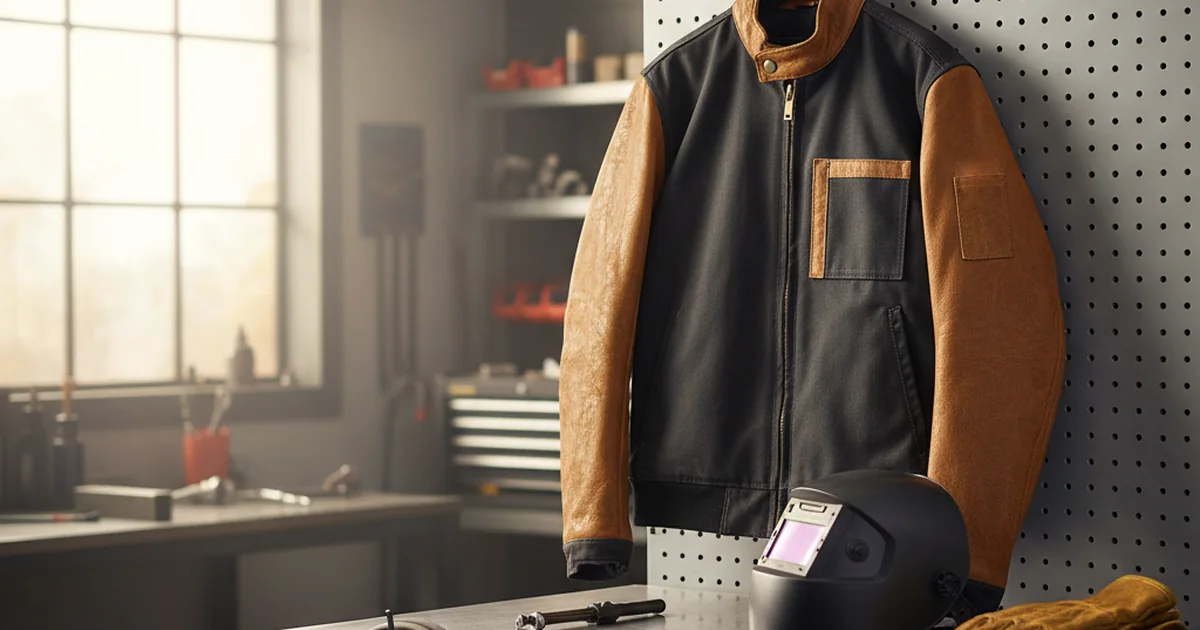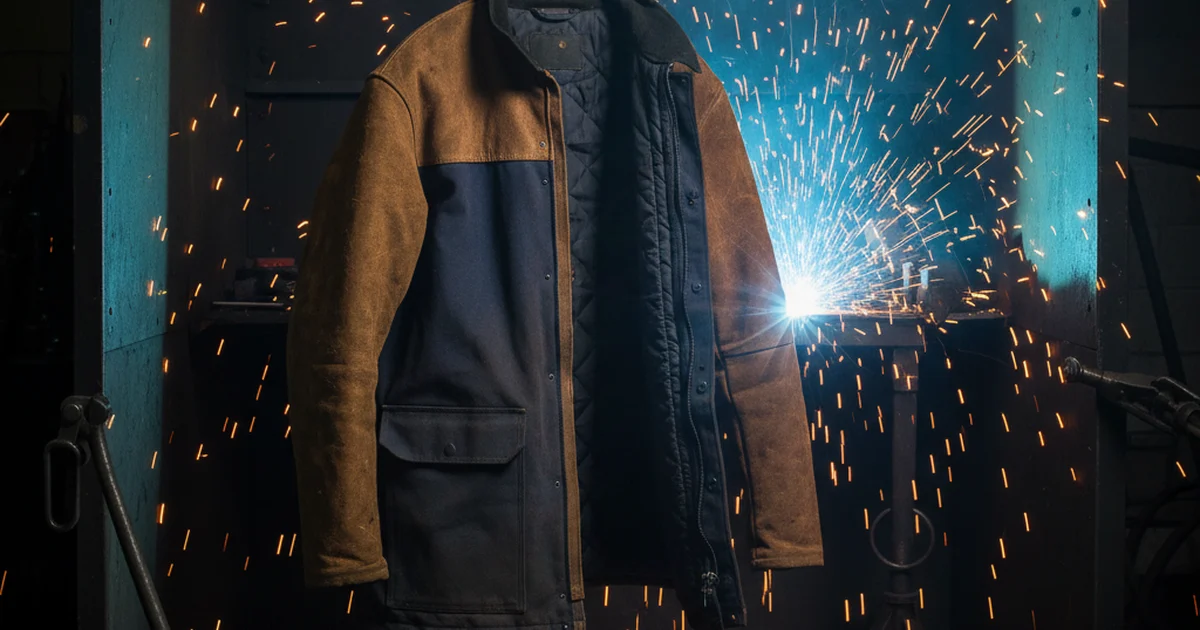

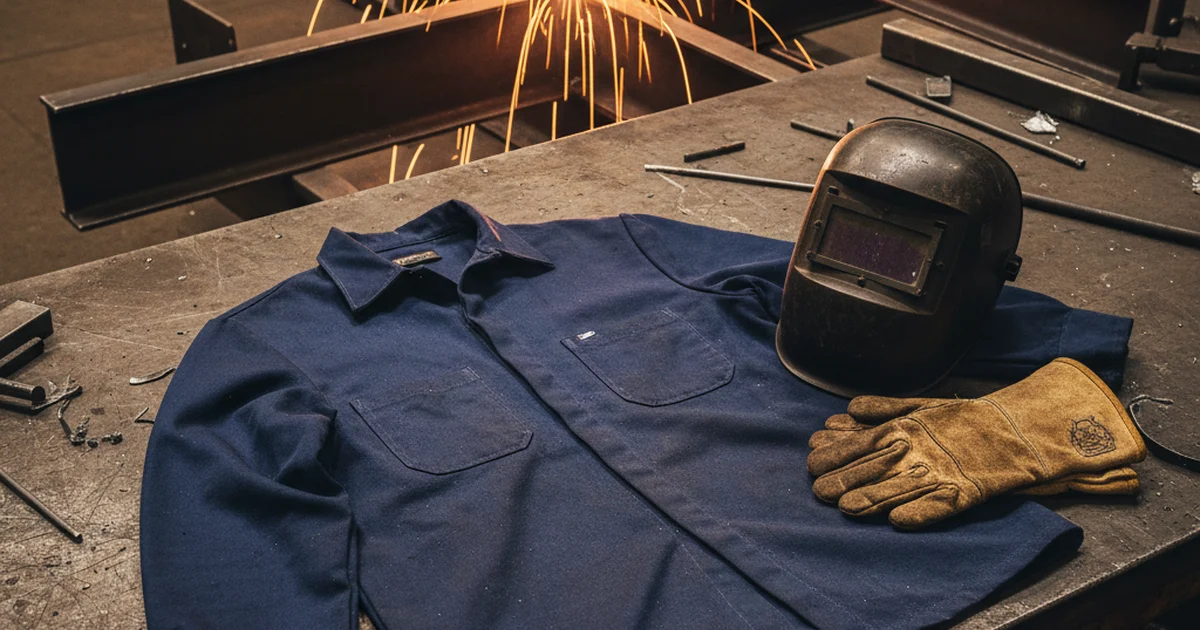
The best FR welding shirts for summer heat are the 6-7 oz options that breathe, while the heavier 9-10 oz fabrics win on spatter survival — and the single shirt I'd hand a new welder shopping on value is the Black Stallion WF2110-ST (7 oz, UL NFPA 2112, arc-rated 8.7 cal/cm², $44.99). The catch every welder runs into is the trade-off in that first sentence: the shirt light enough to wear all day in July is the same shirt that lets more spatter burn through. What is a flame-resistant (FR) shirt? Fabric that resists ignition, self-extinguishes, and won't melt onto your skin — not "fireproof." Below I rank six currently-sold welding shirts on protection, fit, durability and price, with every spec read off the garment's own listing.
This guide covers FR welding shirts for flash-fire and spatter exposure. If your job also has an arc-flash (electrical) hazard, you need a stated arc rating in cal/cm² — I flag which shirts have one and which don't.
Key Takeaways
- Weight is the heat-vs-spatter dial: the 7 oz shirts here (Black Stallion, Bulwark body, Carhartt) breathe better in summer; the 10 oz LAPCO resists spatter burn-through best but runs hot and stiff.
- "NFPA 2112" and "arc rating" are different claims: NFPA 2112 is a flash-fire garment certification; an arc rating (ATPV in cal/cm²) is a separate, electrical-hazard number. Some shirts here state both, some only one.
- FR is not automatically arc-rated: the Carhartt FRS160 is NFPA 2112/CAT 2 but lists no cal/cm² value — fine for flash fire and spatter, not a verified arc-flash garment.
- A documented spec beats a vague one: two shirts here (Rasco, LAPCO INV7) don't state NFPA 2112 on the page I pulled — that's a ranking penalty, because on a 2112-mandated site, "probably certified" isn't a spec.
- Best value: Black Stallion WF2110-ST — UL NFPA 2112 certified and arc-rated 8.7 cal at $44.99, the lowest price in the set.
- Highest protection: LAPCO 10 oz — heaviest fabric (10 oz) and highest arc rating (12.5 cal) here, if you'll trade summer comfort for it.
Which FR welding shirts actually breathe — and which take spatter?
This is the whole decision, so I'll be blunt about it. Welders consistently report the same complaint about heavy FR cotton in summer: it turns into a sweat box and doesn't breathe. Fabric weight is the lever. A 6-7 oz FR shirt moves more air and feels less like a tarp on a 95° day; a 9-10 oz shirt is hotter but puts more material between a spark and your skin, so it resists spatter burn-through longer.
None of these shirts is "fireproof." FR fabric resists ignition and self-extinguishes — it buys you time to react, it doesn't make you spark-proof. So the right pick depends on your real exposure. Heavy spatter and grinding all day? Lean toward the 10 oz LAPCO or a shirt with a reinforced sleeve like the Bulwark. Mostly tacking and lighter work in summer heat? A 7 oz shirt that breathes will get worn every day instead of left in the truck, and a shirt you actually wear protects you better than a heavier one you take off because you're cooking. That last point isn't a throwaway line — the most common way a good FR shirt fails to protect anyone is by living on a hook because it's too hot to put on.
How I evaluated these — and what to look for
I don't run an arc-flash lab, and I won't pretend to. What I do is read every garment's own listing and tag, cross-check the protection claims against the published standards (NFPA 2112, NFPA 70E, ASTM F1506), and weigh that against what welders actually report living with these shirts. Here's the order I work the criteria in — it's also the order I'd want you to think in.
- Fabric weight (oz). The single most useful number on a welding shirt. It's a direct proxy for the heat-vs-spatter trade-off: more ounces means more spark resistance and more sweat. The shirts here run 7 to 10 oz, and I treat that range as the dial, not a quality ladder — 7 oz isn't "worse," it's "cooler and lighter on spatter."
- Inherent vs treated FR. Inherent FR means the fiber itself is flame-resistant (modacrylic, aramid) and the FR can't wash out. Treated FR is a chemical finish on cotton that lasts the garment's useful life if you launder it right. Both can certify to NFPA 2112, so this isn't a protection ranking — it's a cost, hand-feel and care-margin call. I note it where the listing states it and say "not stated" where it doesn't, rather than guessing.
- The right certification for your hazard. NFPA 2112 is the flash-fire garment standard; an arc rating in cal/cm² is the electrical-hazard number. I check which the listing actually claims, because the two are not interchangeable and a welder with an arc-flash exposure can't substitute one for the other.
- Documentation quality. A spec that's stated on the page outranks a spec that's "probably there." When a listing omits NFPA 2112 or fiber content, I dock the shirt and tell you to pull the spec sheet — not because the shirt is unsafe, but because on a regulated jobsite an undocumented claim is a claim you can't defend in an audit.
- Fit and welding-specific features. Snap closures that pull apart instead of catching hot metal, a reinforced sleeve over the forearms where spatter lands, a long enough tail to stay tucked through a crouch. These are the details the manufacturer blogs gloss over and a welder feels every shift.
- Spatter durability. Heavier fabric and a reinforced spatter zone take repeated spark hits without burning through to a pinhole. This is where the 10 oz cotton and the Bulwark's Tuffweld sleeve earn their keep.
- Breathability. Weighed against everything above, because the most protective shirt is the one that stays on your back. I lean on owner-reports here, not a fabricated airflow test.
- Care and lifespan. All of these are home-launderable, but FR has rules — no chlorine bleach, no fabric softener, no starch — and grease saturation turns any FR shirt into a fire hazard. A shirt that survives correct laundering is a shirt that protects you in year two, not just on day one.
What I deliberately don't do: invent torture-tests, quote a sample size I didn't run, or carry one shirt's arc rating over to another model in the same line. Where a number isn't on the page, you'll see "—" and a note to verify, not a guess dressed up as data.
FR welding shirts compared
| Pick | Fabric / weight | FR type | NFPA 2112 | Arc rating | Real-world catch | Price |
|---|---|---|---|---|---|---|
| Black Stallion WF2110-ST | FR cotton / 7 oz | Not stated | Yes (UL) | ATPV 8.7 cal, CAT 2 | Cotton % and inherent-vs-treated not on listing | $44.99 |
| LAPCO 10 oz Welding Shirt | 100% FR cotton twill / 10 oz | Treated | Yes (UL) | ATPV 12.5 cal, CAT 2 | Runs hot & stiff in summer; priciest cotton here | $89.92 |
| Bulwark SWW2 | Excel FR cotton body 7 oz / Tuffweld rayon-aramid sleeve lining 8.5 oz | Treated body | Yes (stated) | ATPV 7.7 cal, CAT 1 | Most expensive; lowest arc rating here | $130.95 |
| Rasco FR Snap Shirt | FR cotton / 7.5 oz | Not stated | — (not on page) | 10 cal, CAT 2 | Cert & exact fiber not stated on fetched page | $82.00 |
| Carhartt FRS160 | 88% cotton / 12% nylon twill / 7 oz | Treated | Yes (UL) | — (no cal listed) | General-purpose FR, not welding-specific; no ATPV | $84.99 |
| LAPCO INV7 | 100% cotton / — | — | — | — | Weight, NFPA 2112 & arc rating not on fetched page | $51.99–$64.99 |
A note on reading that table: an "—" is not the same as a zero. It means the spec wasn't stated on the page I fetched, so I won't assert it. For LAPCO INV7 that means four blank cells — and that's exactly why it ranks last, not because it's a bad shirt.
1. Black Stallion WF2110-ST — best value welding shirt
This is the one I'd put on a new welder's back first. It's the rare shirt that's both UL NFPA 2112 certified and carries a real arc number (ATPV 8.7 cal/cm², CAT 2) — and it does it at $44.99, the lowest price in this set and from my primary retailer. At 7 oz it breathes far better than the 9-10 oz options for summer booth work, which is exactly the complaint welders raise about heavier FR cotton.
Who it's for: the apprentice or shop hand who needs one shirt that covers both a 2112-mandated site and a documented arc number without spending three figures, and who works in heat often enough that an extra two or three ounces of cotton would mean a shirt that gets taken off. The real trade-off: at 7 oz it isn't the spatter tank the 10 oz LAPCO is — if you grind and gouge all day, the heavier fabric will outlast it on burn-through. The pain it solves: the classic value gap where the cheap FR shirts skip the arc rating and the arc-rated ones cost double. This one refuses to pick a corner to cut. The honest con: the listing doesn't state the cotton percentage or whether the FR is inherent or treated, so if you're building a layering system around it — or you launder hard and want to know your care margin — confirm fiber content first.
- Pros: UL NFPA 2112 certified plus a stated 8.7 cal arc rating; 7 oz breathes in summer heat; lowest price here at $44.99.
- Cons: Listing omits exact cotton percentage and inherent-vs-treated, so fiber content needs confirming before you rely on it for a layering system.
Check price at Working Person's Store →
2. LAPCO 10 oz FR Welding Shirt — best for heavy spatter
If spatter survival beats summer comfort for your work, this is the pick. At 10 oz it's the heaviest fabric in the set, and that heavy 100% FR cotton twill gabardine takes a spark hit better than the 6-7 oz shirts — it also carries the highest arc rating here at ATPV 12.5 cal/cm² (CAT 2), UL classified to NFPA 2112. The FR is treated, applied to the cotton rather than built into the fiber, which is standard for heavy welding cotton and lasts the garment's life if you launder it right.
Who it's for: the production welder, fabricator or pipe hand who throws heavy spatter and grinds all shift, and who works cold shops or shoulder seasons where a 10 oz shirt is a feature, not a punishment. The real trade-off: it's the inverse of the Black Stallion — you're buying burn-through resistance and the top arc number in exchange for the worst summer breathability here. The pain it solves: the 7 oz shirts that come back from a heavy-spatter day peppered with pinholes; this fabric shrugs off the sparks that perforate lighter cotton. The honest con: it runs hot and stiff for all-day summer wear, and at $89.92 brand-direct it's pricier than comparable 7 oz welding shirts. This is a cold-weather and heavy-grinding shirt, not a July shirt.
- Pros: Heaviest fabric (10 oz) for the best spatter burn-through resistance here; highest arc rating in the set (12.5 cal, CAT 2); UL NFPA 2112 classified.
- Cons: Runs hot and stiff for all-day summer wear; brand-direct price ($89.92) is higher than comparable 7 oz welding shirts.
3. Bulwark SWW2 — best welding-specific design
This is the most thought-out welding shirt in the group. The forearms — the zone that eats the most spatter — get a heavier 8.5 oz Tuffweld lining (60% rayon / 40% aramid) layered over a 7 oz Excel FR cotton body that's NFPA 2112 compliant. That's a smart use of weight: heavier where the sparks land, lighter everywhere else so the whole shirt isn't a furnace.
Who it's for: the welder who wants the spatter protection of a heavy shirt where it actually matters without cooking the rest of their torso — and who's willing to pay for the engineering. The real trade-off: you're paying a premium for a targeted reinforcement, and you're accepting the lowest arc number in this set to get it. The pain it solves: the maddening choice between a light shirt that burns through at the forearms and a heavy shirt that bakes you everywhere; the Tuffweld sleeve splits the difference by zone. The honest con: two knocks keep it out of the top spot — it's the most expensive shirt here at $130.95, and it carries the lowest arc rating in the set (ATPV 7.7 cal/cm², CAT 1). If your hazard is electrical rather than just spatter, that 7.7/CAT 1 may be the number that decides it against this shirt.
- Pros: Heavier rayon/aramid Tuffweld sleeve lining over the forearms where spatter lands; NFPA 2112-compliant Excel FR cotton body; lighter 7 oz body keeps the rest breathable.
- Cons: Most expensive shirt here ($130.95); lowest arc rating in the set (7.7 cal, CAT 1).
4. Rasco FR Snap Shirt — best snap closure for welding
The pearl snaps here aren't just a western-yoke styling choice — they're a real welding feature. If hot metal lands on the placket, snaps pull apart instead of catching the way a button can. Pair that with a strong 10 cal/cm² CAT 2 arc rating and a 7.5 oz fabric and it's a genuinely good shirt.
Who it's for: the welder who's had spatter lodge behind a button and wants the placket to give way under hot metal, and who likes a western-yoke build in a mid-weight 7.5 oz fabric. The real trade-off: a strong arc number and a smart closure, against a documentation gap you have to close yourself. The pain it solves: the genuinely unpleasant moment when a spark catches the shirt front and you can't rip it open fast — snaps fix that. The honest con: what holds it back from a higher spot is documentation, not build. The product page I fetched doesn't state NFPA 2112 certification or the exact fiber breakdown. If you're on a 2112-mandated jobsite, verify the certification listing before buying — don't assume it from the arc rating, because an arc rating and a 2112 certification are separate claims.
- Pros: Pearl snaps pull apart instead of catching hot metal; strong 10 cal/cm² CAT 2 arc rating; 7.5 oz western-yoke build.
- Cons: Fetched product page doesn't state NFPA 2112 certification or the exact fiber breakdown — verify the cert before buying for a 2112-mandated site.
5. Carhartt FRS160 — best general-purpose FR shirt
The brand most welders already trust, and the durability shows in the fabric: 88% cotton / 12% high-tenacity nylon FR twill, 7 oz, UL classified to NFPA 2112/CAT 2, in stock at $84.99. The nylon content is there for abrasion life, and the 88/12 blend is a workhorse.
Who it's for: the tradesperson who wants one durable FR shirt for mixed work — some welding, plenty of everything else — from a brand whose FR line they already wear, and who doesn't have a documented arc-flash exposure to satisfy. The real trade-off: you get proven cotton-nylon durability and a trusted name, but you give up a welding-specific build and a stated cal number. The pain it solves: the abrasion that wears thin spots into pure-cotton shirts; the 12% nylon stretches the garment's working life. The honest con: two caveats land it mid-pack, and I'd be doing you a disservice to hide them. First, the page lists NFPA 2112/CAT 2 but no cal/cm² arc rating, so if you have an arc-flash hazard, this isn't the documented answer. Second — and this is straight from Carhartt — its FR garments are general-purpose, not built specifically for welding spatter. A solid everyday FR shirt; just not a purpose-built welding one.
- Pros: Durable 88/12 cotton-nylon twill from a trusted FR brand; UL classified to NFPA 2112/CAT 2; in stock at $84.99.
- Cons: No cal/cm² arc rating listed; Carhartt notes its FR is general-purpose, not built specifically for welding spatter.
6. LAPCO INV7 — budget pick, but confirm the specs
I'm ranking this one last on purpose, and the reason is honesty, not the shirt. It's a lower-cost LAPCO FR button shirt at $51.99-$64.99 that could work as a budget layer in an FR system.
Who it's for: the buyer who wants a budget LAPCO and is willing to do the spec-sheet legwork themselves, ideally as a second layer in a system where another garment carries the documented protection. The real trade-off: the lowest entry price here, against the most homework. The pain it solves: price, and only price — it's the cheapest way into the LAPCO name in this set. The honest con: the retailer page I fetched states no fabric weight, no NFPA 2112, and no arc rating — so every protective spec has to be confirmed on the actual spec sheet before you trust it for welding. Price is its only confirmed advantage. If you want a budget LAPCO, this can work, but pull the spec sheet and verify the protective numbers before it sees a single spark.
- Pros: Lower-cost LAPCO FR button shirt ($51.99-$64.99); a budget option for a layered FR system.
- Cons: Fetched retailer page states no fabric weight, no NFPA 2112, and no arc rating — all protective specs must be confirmed on the spec sheet first.
How to choose an FR welding shirt
Work the decision in this order — it mirrors how I ranked these, and it keeps you from buying the wrong thing for the right reasons.
1. Match the hazard first. Flash fire and spatter? NFPA 2112 is your garment standard — the flash-fire certification tested on a thermal manikin per ASTM F1930. An arc-flash (electrical) hazard? You need a stated arc rating in cal/cm², because all arc-rated clothing is flame-resistant but not all FR clothing is arc-rated. The arc rating is the lower of the garment's ATPV and EBT (both in cal/cm²), and a higher number means more protection. If you're an electrician or work near energized gear, "FR" on the tag isn't enough — find the cal number.
2. Pick your weight by season and exposure. Go 6-7 oz for summer heat and lighter work, where breathability is what keeps the shirt on your back. Go 9-10 oz, or a shirt with a reinforced spatter zone like the Bulwark's Tuffweld sleeve, for heavy spatter, grinding and cold shops. Weight is the dial, not a quality grade — the lightest shirt here protects to a real, documented number.
3. Decide inherent vs treated honestly. Both certify to NFPA 2112, so this isn't a protection question. Inherent FR (modacrylic, aramid) can't wash out; treated FR is a finish on cotton that lasts the garment's life with correct laundering. If you launder hard, run hot water often, or share a wash with whoever does the household laundry, the extra care margin of inherent FR is worth something — but you'll pay for it, and most welding cotton is treated.
4. Confirm the paperwork before you trust a claim. If a jobsite mandates NFPA 2112, make sure the listing actually states the certification — two of the shirts here (Rasco, LAPCO INV7) don't, on the pages I pulled. An undocumented certification isn't a certification you can show a safety auditor. Pull the spec sheet for anything that comes up "—".
5. Treat the cal number honestly, not competitively. NFPA 70E PPE Category minimums are CAT 1 ≥4, CAT 2 ≥8, CAT 3 ≥25, CAT 4 ≥40 cal/cm². The "HRC" label you may see on older tags was renamed "PPE Category" in the 2015 edition of NFPA 70E. Match the number to your facility's incident-energy analysis — don't just chase the biggest figure, and don't assume one shirt in a brand's line shares another model's rating.
6. Plan the care before you buy. Every shirt here is home-launderable, but FR has rules: no chlorine bleach, no fabric softener, no hydrogen-peroxide bleach, no starch — they degrade the FR or leave flammable residue. Wash inside-out; many makers recommend warm water (around 140°F) to flush oils, but defer to the garment label. Hard-water minerals reduce FR over time, and grease or oil saturation makes any FR shirt a fire hazard — clean it or retire it. A shirt you can't care for correctly is a shirt that stops protecting you sooner than the tag implies.
Frequently Asked Questions
Which FR welding shirt breathes best in summer heat?
Lighter fabric breathes better, so the 6-7 oz shirts here — like the 7 oz Black Stallion WF2110-ST and the Bulwark's 7 oz Excel FR body — move more air than the 10 oz LAPCO. Welders consistently report heavy FR cotton turns into a sweat box. A shirt you actually keep on protects you more than a heavier one you take off because you're cooking.
Is an NFPA 2112 shirt the same as arc-rated?
No. NFPA 2112 is a flash-fire garment certification (oil, gas, petrochemical), tested on a thermal manikin per ASTM F1930. An arc rating is a separate number — ATPV in cal/cm² — for electrical arc-flash, governed by OSHA and NFPA 70E. A shirt can be NFPA 2112 certified yet list no cal value, like the Carhartt FRS160 here. Match the garment to your actual hazard.
What arc rating (cal/cm²) do I need for welding?
Pure welding is a flash-fire and spatter hazard, so NFPA 2112 matters more than a specific cal number. If your job also has an arc-flash hazard, NFPA 70E PPE Category minimums are CAT 1 ≥4, CAT 2 ≥8, CAT 3 ≥25, CAT 4 ≥40 cal/cm². Several shirts here are CAT 2 (8.7 to 12.5 cal). Match the rating to your facility's incident-energy analysis, not to the biggest number.
What fabric weight should a welding shirt be?
Weight is the heat-vs-spatter dial. A 6-7 oz FR shirt breathes for summer and lighter work; a 9-10 oz shirt resists spatter burn-through better but runs hotter and stiffer. The shirts here span 7 to 10 oz. There's no universal "best" weight — pick by your season and how much spatter you throw, not by which number is highest.
How do I wash an FR welding shirt without ruining it?
Wash inside-out with normal detergent and skip chlorine bleach, fabric softener, peroxide bleach, and starch — they degrade FR or leave flammable residue. Many makers recommend warm water (around 140°F) to flush oils; defer to the garment's care label. Hard water leaves mineral deposits that reduce FR, so an extra rinse helps. Grease or oil saturation makes any FR shirt a fire hazard — clean it or retire it.
Inherent vs treated FR — does it matter for a welding shirt?
Both can certify to NFPA 2112. Inherent FR means the fiber itself is flame-resistant (modacrylic blends, aramids) and won't wash out. Treated FR is a chemical finish on cotton, engineered to last the garment's useful life if you launder it correctly. The trade-off is cost, hand-feel, and durability — not whether it protects. The Bulwark's body and the LAPCO 10 oz are treated FR cotton; both are NFPA 2112-level garments.
How long does an FR welding shirt last?
There's no fixed expiration — it depends on wear, laundering and contamination. Owners commonly report 18 to 30 months of regular use, but treat that as owner experience, not a guaranteed figure. Two things end an FR shirt early: incorrect laundering (bleach, softener, hard-water buildup) that degrades the FR, and grease or oil saturation, which makes the garment a fire hazard. When fabric is saturated or worn through, retire it.
Is a flame-resistant shirt fireproof?
No. FR fabric resists ignition, self-extinguishes, and won't melt onto your skin — it buys you time to react. It is not fireproof and won't make you spark-proof. That's why fabric weight and a reinforced spatter zone still matter for welding: they extend how long the shirt resists burn-through, but no FR shirt is immune to enough heat for long enough.
Why Trust This Guide
This guide is written and reviewed by Wes Calder, an independent flame-resistant-workwear reviewer. Every recommendation is built on the published standards (NFPA 2112, NFPA 70E, ASTM F1506), manufacturer spec sheets and garment tags, hands-on handling, and what tradespeople actually report — and we tell you when a number is a manufacturer claim versus an independent standard, and when a garment is FR but not arc-rated. We earn an affiliate commission if you buy through some of our links, at no extra cost to you, and we never rank by commission over safety — see our affiliate disclosure.