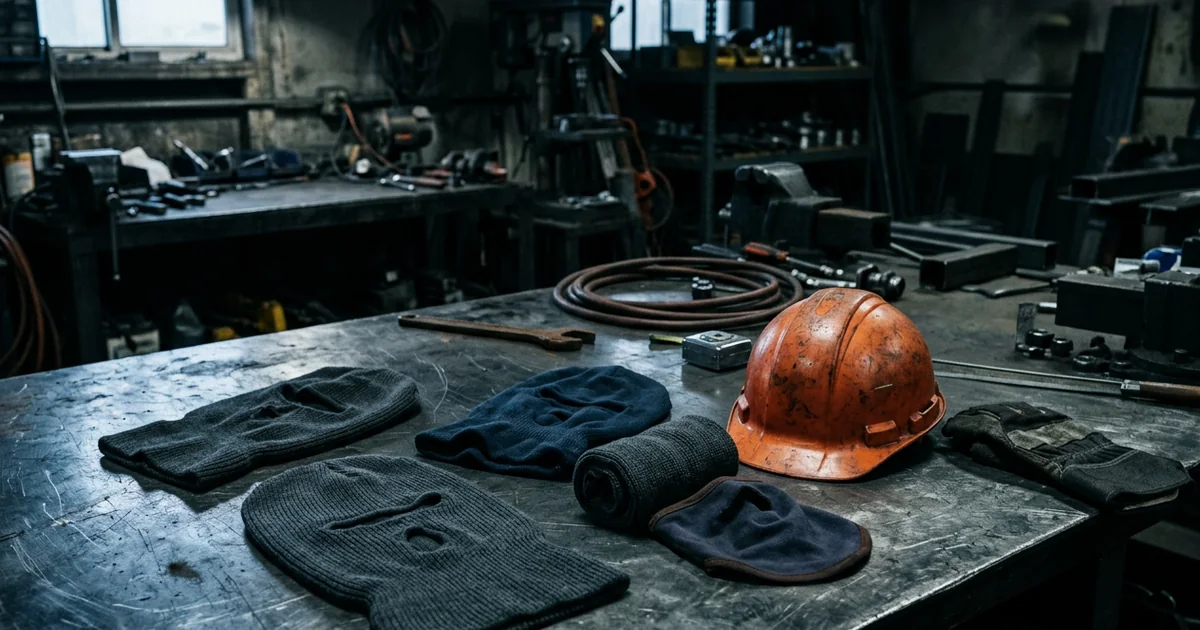

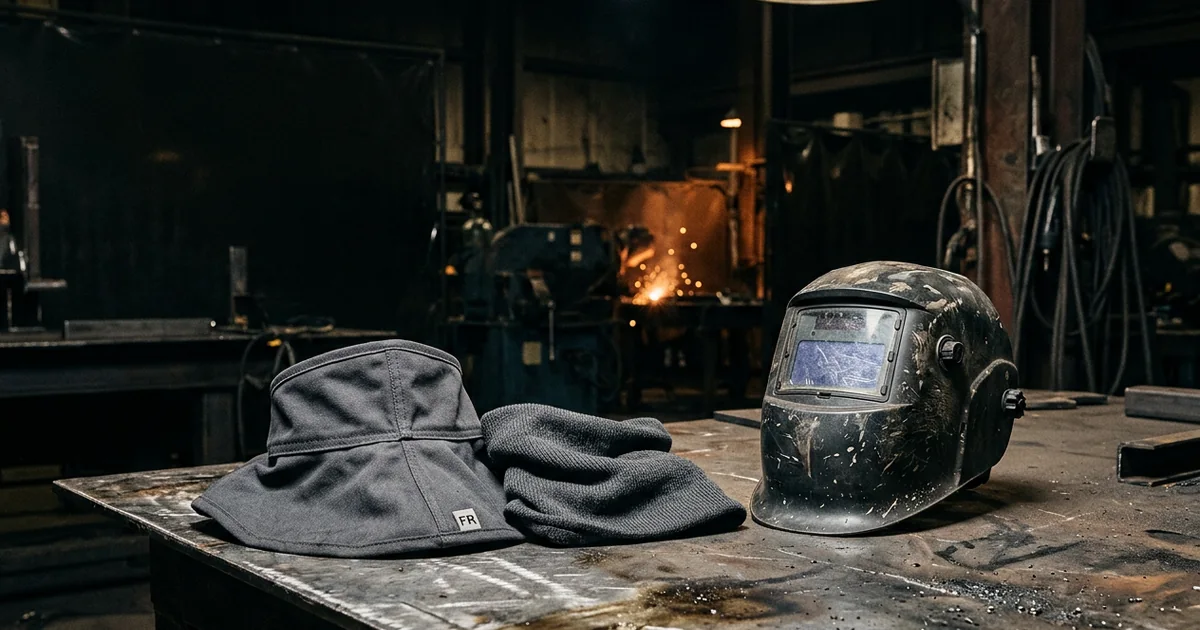
If you work around flash fire or arc flash, the skin on your face and neck is some of the most exposed real estate you have — and a cotton bandana will make a burn worse, not better. After ranking real flame-resistant face and neck protection by coverage, fiber, and published arc rating, my top pick is the OccuNomix LK910 full-face Nomex tube liner: it's the only product here that lists both ASTM F1506 compliance and an actual number — an 11.6 cal/cm² arc rating. What is FR clothing? Fabric that resists ignition, self-extinguishes, and won't melt onto skin — not "fireproof." Below I break down four picks across three form factors — full-face shrouds, FR neck gaiters, and FR face masks — and flag where the listings go quiet on specs.
Key Takeaways
- Coverage beats convenience. A full-face shroud protects more skin than a pull-up gaiter; if you need head + neck coverage under a hard hat, pair it with a proper FR hood.
- "FR" and "arc-rated" are not the same claim. Every pick here is flame-resistant, but only some publish a cal/cm² arc rating — read the difference in arc-rated vs. flame-resistant before you buy.
- Inherent fiber means permanent FR. The Nomex/modacrylic and modacrylic/aramid picks keep their flame resistance through washing; FR-treated cotton relies on a finish.
- A face mask is not a balaclava. If you want full head-and-face coverage instead of face-only, see my best FR balaclavas guide.
- Never substitute a non-FR face covering. Polyester gaiters and fleece neck warmers melt and drip onto skin in a thermal event — that's the exact failure FR is designed to prevent.
How I ranked these (protection first, not commission)
I rank on protection, not payout. The order here is driven by what each product listing actually states — fiber content, weight, certifications, and any published arc rating in cal/cm² — and by how much skin the form factor covers. Where a listing publishes a spec, I quote it; where it doesn't, you'll see "—" or "not stated," and I will not borrow another model's number to fill the gap. That's why a product with a documented ASTM F1506 arc rating outranks one that only carries a CAT label in its title. ASTM F1506 is the performance specification that assigns the cal/cm² arc rating for clothing worn under NFPA 70E, so a stated F1506 rating is the strongest evidence a buyer can verify.
| Pick | Fabric / weight | Arc rating (if stated) | Best for | Price |
|---|---|---|---|---|
| 1. OccuNomix LK910 | Modacrylic rib knit, Nomex thread / — | 11.6 cal/cm² (CAT 1), ASTM F1506 | Arc work, max coverage | $40.93 |
| 2. Ariat 10036645 | 45% rayon / 40% modacrylic / 15% aramid / 6.5 oz | CAT 2 (≥8 cal/cm²); listing shows 9.5 CAL vs 8+ — see note | Dual hazard, heat & sweat | $31.46 (closeout) |
| 3. Carhartt 105092 | 45% modacrylic / 35% lyocell / 20% aramid / 6.75 oz | — (meets NFPA 70E; no cal/cm² stated) | Everyday value layer | $29.99 |
| 4. Bulwark HFM2MU | Excel ComforTouch (blend not stated) / 6.0 oz | — (CAT2 in title; no number stated) | Face-mask cut | $40.99 |
1. OccuNomix LK910 Full-Face Nomex Tube Liner — best for arc work and coverage
This is the one I reach for first because it removes the guesswork. The listing states it meets ASTM F1506 and publishes an arc rating of 11.6 cal/cm², which clears the CAT 1 floor of 4 cal/cm² with room to spare. It's a full-face tube, so it covers more skin than any gaiter here, and the modacrylic rib knit sewn with Nomex thread is an inherent-fiber construction — the flame resistance is a property of the fiber, so it won't wash out. The honest trade-off: a full-face tube runs warm and snug, and at $40.93 it's priced like the premium it is. For flash-fire-only hazards, note this listing publishes an arc rating, not an NFPA 2112 flash-fire rating.
- Pros: Only pick with a stated ASTM F1506 + 11.6 cal/cm² arc rating; most coverage; inherent Nomex/modacrylic FR that survives washing.
- Cons: Warm and snug in summer heat; fabric weight not stated on the listing (the 9.5 oz figure refers to the Nomex thread, not the fabric); no NFPA 2112 flash-fire rating published.
Check price at Working Person's Store →
2. Ariat 10036645 PowerDry Neck/Face Gaiter — best for dual hazard and sweaty heat
If your job exposes you to both flash fire and arc flash, this is the most logical buy on the list: the Ariat listing carries NFPA 2112 (flash fire) and NFPA 70E (arc), so a single product is intended to address both hazard types. The 45% rayon / 40% modacrylic / 15% aramid blend uses Polartec PowerDry to wick and dry fast, which genuinely beats a heavy shroud when you're sweating. One caveat I have to flag for an honest comparison: the page is internally inconsistent on the cal/cm² number — the description lists 9.5 CAL while the spec table shows 8+ — so I treat it as "CAT 2, at least 8 cal/cm²" rather than a clean 9.5. It's a closeout at $31.46 (was $34.95), which is a strong price for a dual-rated gaiter.
- Pros: Only dual-rated pick (NFPA 2112 + NFPA 70E); CAT 2; PowerDry wicking for heat; inherent modacrylic/aramid fibers; closeout price.
- Cons: Arc figure conflicts on the listing (9.5 CAL vs 8+); ASTM F1506 not separately stated; closeout means stock and color may be limited.
Check price at Working Person's Store →
3. Carhartt 105092 Force FR Neck Gaiter — best everyday value layer
This is the gaiter I'd hand a crew that needs FR neck and lower-face coverage without a big spend. At $29.99 it's the cheapest pick, and the 45% modacrylic / 35% lyocell / 20% aramid pique knit is inherent FR — the protection is built into the fibers, so it won't wash out. It pulls up over the nose and ears for face coverage and runs at a comfortable 6.75 oz. The honest limitation is documentation: the listing states it meets the performance requirements of NFPA 70E but does not publish a cal/cm² arc rating, so I can't give you a number. Match it to tasks where a rated outer layer is the controlling protection and the gaiter is supplemental, not to high-incident-energy arc work where you need a documented rating.
- Pros: Lowest price; inherent modacrylic/aramid FR; comfortable everyday pique knit; meets NFPA 70E performance requirements.
- Cons: No cal/cm² arc rating published; NFPA 2112 and ASTM F1506 not stated; gaiter cut covers less than a full-face tube.
Check price at Working Person's Store →
4. Bulwark HFM2MU Excel ComforTouch FR Face Mask — best for a true face-mask cut
When buyers search "FR face mask," many actually want a mask cut rather than a tube or a gaiter — and this Bulwark is exactly that, not a balaclava. The listing's headline safety claim is the right one: it "will not melt and drip and will self-extinguish upon removal of the source of ignition," which is the defining behavior of real FR. It's a 6.0 oz Excel ComforTouch fabric and carries CAT2 in the product title. I rank it fourth for one reason — the listing is thin on verifiable numbers. It does not state NFPA 2112, NFPA 70E, ASTM F1506, or a cal/cm² figure beyond the CAT2 label, and it doesn't publish the blend percentages. If you need documentation for a job hazard analysis, the OccuNomix or Ariat will give you more to point to.
- Pros: True face-mask cut; explicitly self-extinguishes and won't melt or drip; lighter 6.0 oz fabric; CAT2 marked.
- Cons: No stated cal/cm², NFPA 2112, NFPA 70E, or ASTM F1506 on the listing; fabric blend not disclosed; Excel ComforTouch is a treated FR fabric rather than inherent (the listing doesn't state this either way).
Check price at Working Person's Store →
How to read the ratings on these labels
Two number systems show up on FR face protection, and confusing them gets people hurt. NFPA 2112 addresses flash fire — a short-duration fuel or engulfment fire common in oil, gas, and chemical processing — and garments are evaluated with a 3-second engulfment manikin test, keeping total predicted body burn under 50%. The arc-flash side is separate: NFPA 70E defines the PPE Categories, and the minimum arc ratings are CAT 1 = 4, CAT 2 = 8, CAT 3 = 25, and CAT 4 = 40 cal/cm². The cal/cm² number itself is the ATPV — the incident energy at which there's a 50% probability of a second-degree burn. A product like the Ariat that lists both NFPA 2112 and NFPA 70E is built to cover both hazard types; a product carrying only one rating should be matched to that hazard.
Frequently Asked Questions
Is an FR face mask different from a regular face covering?
Yes, and the difference matters for your skin. An FR face mask resists ignition, self-extinguishes when the heat source is removed, and won't melt onto skin. A standard polyester or fleece face covering can melt and drip in a thermal event, fusing to the skin and making a burn far worse. In any flash-fire or arc-flash environment, a non-FR covering is a melt hazard, not protection.
Does every FR face mask have an arc rating?
No. Every product in this guide is flame-resistant, but only some publish a cal/cm² arc rating. The OccuNomix LK910 states 11.6 cal/cm² and meets ASTM F1506, and the Ariat 10036645 lists CAT 2 (at least 8 cal/cm²). The Carhartt and Bulwark listings do not publish a cal/cm² figure. If your job requires a documented arc rating, buy a product that states one.
Inherent or treated — which FR fiber is better for a face mask?
Inherent FR fibers like Nomex/aramid and modacrylic are flame-resistant as a property of the fiber itself and don't lose FR with washing. Treated FR fabrics rely on a chemical finish. The OccuNomix (Nomex/modacrylic) and the modacrylic/aramid gaiters here are inherent constructions; Bulwark's Excel ComforTouch is a treated FR fabric. Both can be safe when worn within their rating — inherent simply removes the worry of finish degradation over a garment's life.
Should I get a face mask, a gaiter, or a balaclava?
It depends on coverage. A gaiter protects the neck and lower face; a face mask covers the face; a full-face shroud like the OccuNomix covers the most skin. If you need your whole head plus your face protected under a hard hat, a balaclava is the right form factor — see our dedicated FR balaclava guide. Welders should also look at an FR welding cap to protect the scalp under a hood.
What's the difference between NFPA 2112 and NFPA 70E?
NFPA 2112 is the flame-resistant clothing standard for flash fire — short-duration engulfment fires in oil, gas, and chemical work. NFPA 70E governs arc-flash hazards and defines the PPE Categories and the minimum arc ratings clothing must meet. They address different hazards, so a dual-rated product covers both, while a single-rated product should be matched to the hazard it's certified against.
Why Trust This Guide
I'm Wes Calder, an independent FR-workwear reviewer. I rank FR face and neck protection only on what manufacturers actually publish — fiber content, weight, certifications, and stated arc ratings — and I write "not stated" rather than invent a number when a listing goes quiet. I earn a commission on some links here, but I never rank by commission over safety; my order is driven by coverage and verifiable specs, not payout. Read our full affiliate disclosure.