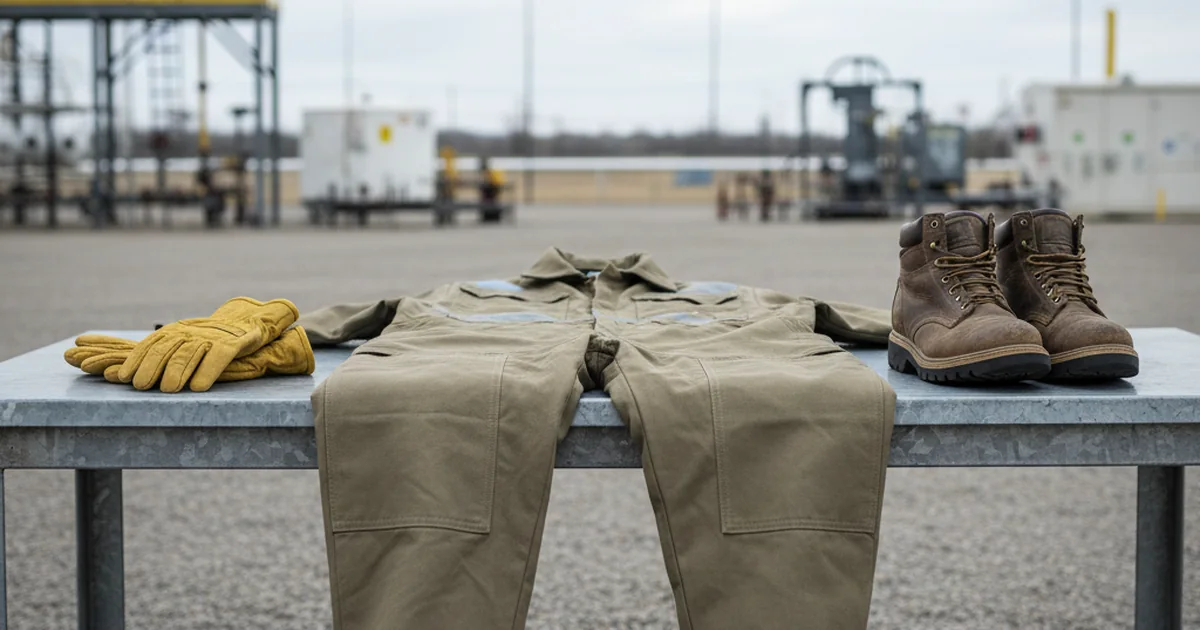

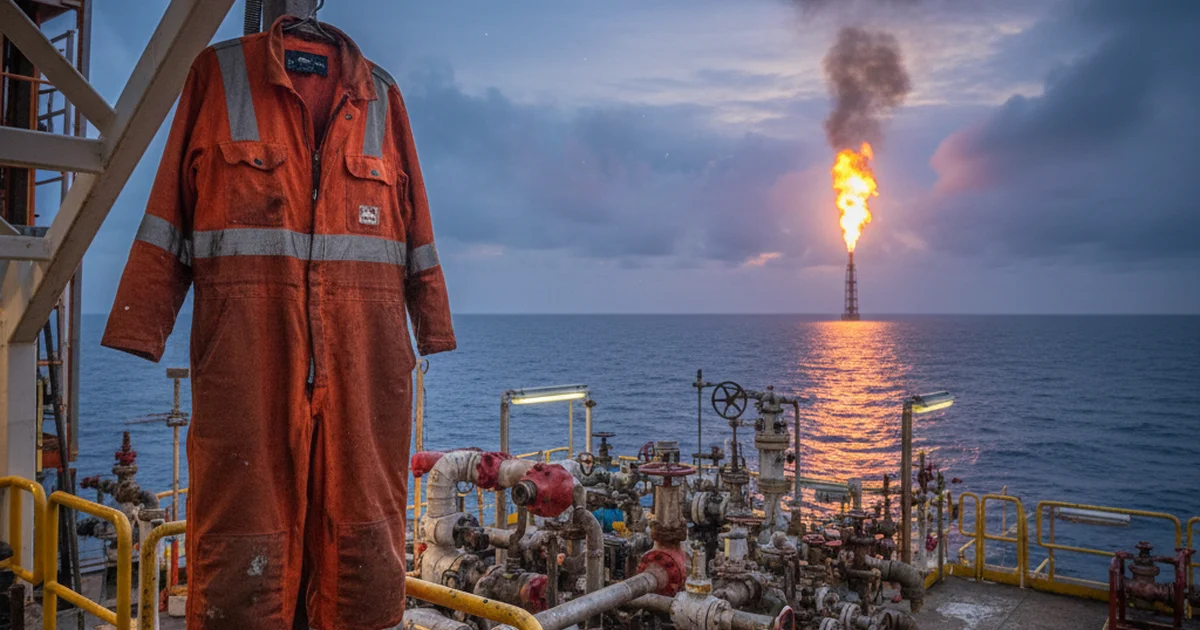
Oil and gas FR clothing has one job most other workwear doesn't: survive a flash fire long enough to get you out of it. On the vast majority of upstream and midstream sites, that means your shirt, pants, and outerwear have to be certified to NFPA 2112 — the flash-fire garment standard — and your employer's PPE policy (backed by OSHA's general-duty and 1910.269 obligations) is the trigger that makes it mandatory, not optional. Flame-resistant (FR) clothing resists ignition, self-extinguishes when the flame source is gone, and won't melt onto your skin — it is not "fireproof."
The short version: if you work around a potential hydrocarbon flash fire, buy garments whose tag actually states NFPA 2112 with a third-party (UL or equivalent) classification — and if your site also has an arc-flash hazard, you need an arc rating in cal/cm² on top of that. Below are the picks I'd put on my own back, ranked on protection and fit first, with the trade-offs spelled out.
Key Takeaways
- NFPA 2112 is the oilfield standard. It's the flash-fire garment certification (tested by ASTM F1930 manikin burn). Your tag should name it plus a third-party classification — not just say "FR."
- FR ≠ arc-rated. All arc-rated clothing is FR; not all FR is arc-rated. If your site has an arc-flash hazard, you also need a cal/cm² rating (ATPV or EBT) per NFPA 70E.
- Cover the whole body. A compliant shirt over regular jeans still leaves your legs exposed — FR pants matter as much as the shirt.
- Inherent vs. treated is a real choice. Inherent FR (modacrylic/aramid) won't wash out and tends to breathe better; treated FR cotton costs less and lasts the garment's life if you launder it right.
- Care is part of the rating. No chlorine bleach, no fabric softener, no starch — and grease/oil saturation is itself a fire hazard, so a soaked garment comes off the rotation.
Why oil and gas sites require NFPA 2112
The hazard upstream and midstream is a hydrocarbon flash fire — a brief, intense fireball from an ignited gas or vapor cloud. NFPA 2112 is the standard written for exactly that: it certifies a garment (not just fabric) using the ASTM F1930 instrumented-manikin burn test, so a 2112-rated coverall, shirt, or pant has been evaluated as a finished piece of clothing against a flash-fire exposure.
OSHA doesn't publish a single "you must wear NFPA 2112" line for general oil and gas, but its general-duty clause and the hazard-assessment requirement effectively force the issue, and most operators codify it in site PPE policy. The practical reality on a pad: your employer's PPE matrix is the trigger, and that matrix almost always cites NFPA 2112 by name. So the buying question isn't "is this shirt FR?" — it's "does the tag state NFPA 2112 with a third-party classification?" If it doesn't, it won't pass a gate audit even if the fabric genuinely resists flame. This is also why I'm wary of cheap "FR-look" garments that name no standard at all — see how to spot fake FR clothing.
Flash fire vs. arc flash: do you need both?
This trips up a lot of oilfield hires. NFPA 2112 covers flash fire. NFPA 70E is the electrical-safety standard that defines arc-flash PPE Categories (CAT 1–4), and ASTM F1506 is the fabric/apparel spec for arc-rated electrical work. A garment can be NFPA 2112 certified for flash fire and carry no arc rating — that's perfectly fine if your hazard is purely flash fire.
But many oil and gas roles touch both: think electricians on a facility, instrumentation techs, or anyone working near energized gear on a production site. If your job has an arc-flash hazard, "FR" alone isn't enough — you need a documented arc rating in cal/cm² (the lower of the garment's ATPV or EBT) that meets your CAT level: CAT 1 ≥ 4, CAT 2 ≥ 8, CAT 3 ≥ 25, CAT 4 ≥ 40 cal/cm². A dual-hazard garment certified to both NFPA 2112 and NFPA 70E covers you for either exposure. If you want the standards laid out plainly, I broke them down in NFPA 2112 vs. NFPA 70E and what ATPV means.
Inherent vs. treated FR in the oilfield
Both inherent and treated FR can certify to NFPA 2112 — the difference is how the flame resistance gets there. Inherent FR (modacrylic, aramid fibers like those in Nomex/Kevlar blends) builds the resistance into the fiber, so it doesn't wash out, ever. It usually breathes better, which matters when you're in coveralls under a West Texas sun. Treated FR is a chemical finish on cotton; done right and laundered correctly, it lasts the life of the garment, and it costs less.
For oil and gas specifically, my rule of thumb: if heat stress is your daily fight, the breathability of inherent FR is worth paying for. If you're outfitting a whole crew on a budget and the climate is milder, treated cotton gets you compliant for far less. Neither is "safer" on paper if both hold the same NFPA 2112 cert — it's a comfort, durability, and cost trade. More on the distinction in inherent vs. treated FR.
FR picks that pass oilfield site rules
Ranked on protection, fit, and breathability — not on what I earn. Every spec below is read off the garment's own listing; where a number isn't stated, I say so.
| Pick | Fabric / FR type | Rating (as listed) | Real-world catch | Price |
|---|---|---|---|---|
| Rasco DH Air shirt | Inherent (DH Air) | NFPA 2112, ASTM F1506, CAT 2 | Confirm the SKU is DH Air, not treated cotton | From $121.99 |
| Benchmark Silver Bullet | Inherent aramid/Kevlar | CAT 2, ATPV 9 cal/cm² | Premium price, sold mostly direct | From $134.99 |
| Benchmark FR welding pants | Treated (88/12 Arapaho) | UL Classified NFPA 2112-2018 | Treated cotton runs warmer | $94.63 |
| Bulwark SEW2 shirt | Treated (Excel FR cotton) | NFPA 2112/70E, CAT 1, 7.7 cal/cm² | Entry-tier protection; heavier | $61.99 |
| Bocomal welding shirt | Treated cotton | NFPA 2112-2023 (brand-stated) | Thin third-party track record | See listing |
1. Rasco FR DH Air Uniform Shirt — best breathable inherent on a value budget
If your oilfield fight is heat as much as fire, this is where I'd start. DH Air is a lightweight inherent fabric that breathes noticeably better than treated cotton, and the listing classifies it to NFPA 2112 and ASTM F1506 at CAT 2 — so it covers flash fire and a documented arc rating in one shirt, for roughly $100 less than a comparable premium inherent piece.
- Pros: Genuine inherent FR (won't wash out); lighter and more breathable than treated cotton; dual-standard classification; strong price-to-protection ratio.
- Cons: Rasco mixes inherent and treated fabrics under similar styling, so you must confirm the specific SKU is DH Air (or GlenGuard) before assuming it's inherent — they aren't interchangeable.
2. Benchmark FR "Silver Bullet" — best dual-hazard pick with hi-vis striping
When the site spec calls out both an NFPA 2112 garment and a documented arc rating, this is the cleanest answer in the lineup. It's an inherent aramid/Kevlar blend listed at CAT 2 with a printed ATPV of 9 cal/cm², it won't wash out, and Benchmark is genuinely Made in USA (Santa Ana, CA, est. 2002) and UL Classified. The reflective striping is a real safety plus on a dark pad at night.
- Pros: Inherent FR with a stated 9 cal/cm² arc rating; built-in hi-vis striping; verified US manufacturing and UL classification.
- Cons: Premium pricing (from $134.99) and sold mostly direct, so fewer fit-and-return options than the big retail brands.
3. Benchmark FR Welding Pants — don't forget the bottom half
Pants are the half people skip, and it's a dangerous gap: a compliant FR shirt over regular jeans leaves your legs fully exposed in a flash fire. These are 88% FR cotton / 12% nylon (Arapaho) and UL Classified to NFPA 2112-2018 per the listing — a documented flash-fire pant built welding-tough enough for oilfield abuse, at a fair $94.63.
- Pros: Documented NFPA 2112 lower-body coverage; durable 88/12 construction; reasonable price for a verified pant.
- Cons: Treated cotton runs warmer than inherent — if heat is your enemy, weigh that against the lower cost.
4. Bulwark SEW2 Excel FR Shirt — best for outfitting a whole crew
This is the shirt I'd hand a crew on day one. It's 7 oz Excel FR ComforTouch (treated 100% cotton), listed at CAT 1 / ATPV 7.7 cal/cm² and meeting NFPA 2112 and NFPA 70E — and at $61.99 it's cheap enough to stock a fleet and carried by nearly every workwear retailer.
- Pros: Easy to buy in bulk and find anywhere; meets NFPA 2112; budget-friendly fleet shirt.
- Cons: Treated 100% cotton at the entry protection tier (CAT 1); runs heavier than inherent fabrics. For higher arc ratings you'd step up to Nomex or another fabric.
Check price at Working Person's Store →
5. Bocomal FR Welding Shirt — cheapest NFPA 2112 entry point
If budget is the whole story — a new hire, a spare, or trying FR before you commit — Bocomal is among the most affordable NFPA 2112-certified shirts you can buy, and the weight range (4.5 oz summer up to 8.5 oz) lets you match the season. The honest caveat: it's a treated-FR import brand with a thinner third-party track record, and its durability and "own factory" claims are the brand's own marketing, not independently verified.
- Pros: Lowest price to get into a certified NFPA 2112 shirt; wide weight range for hot or cold sites.
- Cons: Less transparent certification/lab data than legacy names; durability claims rest mostly on the brand's marketing. Fine as a starter or spare; for a documented site audit I'd lean on a brand with clearer paperwork.
Keeping FR compliant on a working site
An FR garment is only protective if you maintain it. The hard rules: no chlorine bleach, no fabric softener, no hydrogen-peroxide bleach, and no starch — any of those can compromise the FR performance or leave a flammable residue. And the one that's specific to oil and gas: grease and oil saturation turns an FR garment into a fire hazard. A coverall soaked in hydrocarbons can ignite and burn even though the fabric itself is flame-resistant, so a saturated garment comes out of rotation until it's properly cleaned. I walk through the full routine in how to wash FR clothing.
Frequently Asked Questions
Is NFPA 2112 required for oil and gas work?
In practice, yes. NFPA 2112 is the flash-fire garment standard, and most oil and gas operators require it by name in their site PPE policy, backed by OSHA's general-duty and hazard-assessment obligations. Your employer's PPE matrix is the actual trigger — so buy garments whose tag states NFPA 2112 with a third-party (UL or equivalent) classification, or they won't pass a gate audit.
Do I need an arc rating for oilfield FR, or just NFPA 2112?
It depends on your hazard. NFPA 2112 covers flash fire; if that's your only exposure, an arc rating isn't required. But if your role works near energized electrical gear, you also need an arc rating in cal/cm² (ATPV or EBT) meeting your NFPA 70E PPE Category. A garment certified to both NFPA 2112 and NFPA 70E covers either exposure.
Should oilfield workers buy inherent or treated FR?
Both can certify to NFPA 2112, so neither is "safer" at the same cert. Inherent FR (aramid/modacrylic) won't wash out and breathes better, which helps with heat stress in coveralls — but costs more. Treated FR cotton is cheaper and lasts the garment's life if laundered correctly. Pick on climate and budget, not on a safety difference.
Is an FR shirt over regular jeans enough on an oil and gas site?
No. A flash fire wraps the whole body, so a compliant FR shirt over non-FR jeans leaves your legs fully exposed and can fail a site PPE check. You need FR pants or coveralls rated to NFPA 2112 as well. Treat the outfit as a system — shirt and pants both certified — not just the top layer.
Is oil-soaked FR clothing still safe?
No. FR fabric resists ignition, but grease and oil saturated into the garment is itself flammable and can ignite and burn even though the fabric is flame-resistant. A hydrocarbon-soaked coverall is a fire hazard and should come out of rotation until properly laundered. Also avoid chlorine bleach, fabric softener, and starch, which can degrade FR performance.
Why Trust This Guide
This guide is written and reviewed by Wes Calder, an independent flame-resistant-workwear reviewer. Every recommendation is built on the published standards (NFPA 2112, NFPA 70E, ASTM F1506), manufacturer spec sheets and garment tags, hands-on handling, and what tradespeople actually report — and we tell you when a number is a manufacturer claim versus an independent standard, and when a garment is FR but not arc-rated. We earn an affiliate commission if you buy through some of our links, at no extra cost to you, and we never rank by commission over safety — see our affiliate disclosure.