
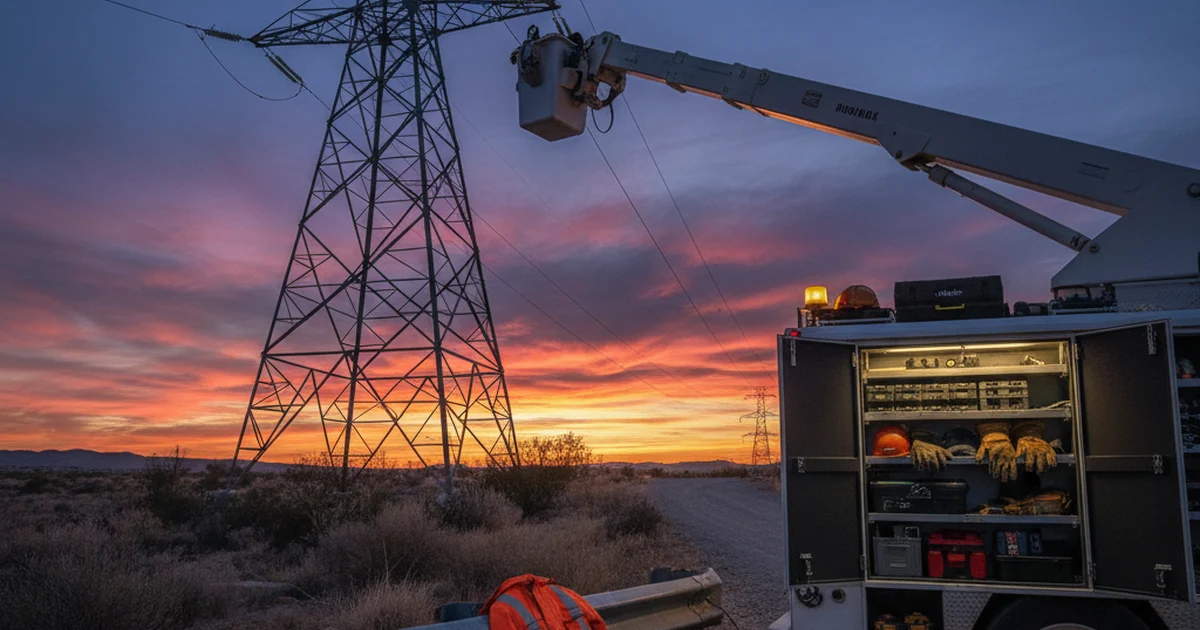
FR clothing for linemen has to be arc-rated — not just flame-resistant. That's the whole game. If your job has an arc-flash hazard (and a lineman's does), a shirt that says "FR" but states no arc rating in cal/cm² is the single most common — and most dangerous — mistake on the truck. Arc rating, expressed in cal/cm², is the energy a garment can take in an arc flash before the wearer would likely hit a second-degree burn; it's the number that decides whether your FR is actually enough for the hazard.
Here's the short version: every arc-rated garment is FR, but not every FR garment is arc-rated. For electrical line work you need ASTM F1506 fabric carrying a published arc rating, and that rating has to clear the PPE Category your task calls for under NFPA 70E. Below I'll lay out the cal-rating rule, the FR-but-not-arc-rated trap, and the real picks that pass it — base layer to CAT 4 outerwear.
Key Takeaways
- FR alone isn't enough: linemen face arc-flash hazards, so you need arc-rated clothing — fabric meeting ASTM F1506 with a published arc rating in cal/cm². Plain "FR" with no rating is the trap.
- The cal number is the law of the job: under NFPA 70E, CAT 1 ≥ 4, CAT 2 ≥ 8, CAT 3 ≥ 25, CAT 4 ≥ 40 cal/cm². Your garment's arc rating has to meet or beat the category for your task.
- The system is rated to its weakest piece: a CAT 2 shirt over unrated pants doesn't make a CAT 2 outfit. Every layer in the arc-flash zone needs its own rating.
- Inherent vs treated is a real trade-off: inherent (aramid/modacrylic) won't wash out and tends to breathe lighter; treated cotton is cheaper and durable if laundered right. Both can be arc-rated — read the tag.
- FR is not fireproof: it resists ignition, self-extinguishes, and won't melt onto skin. Grease- or oil-soaked FR is a fire hazard regardless of rating.
Why "FR" isn't the spec a lineman needs
This is the distinction that trips up new hands and burns experienced ones who got complacent. Flame-resistant means the fabric resists ignition and self-extinguishes instead of melting onto your skin. Arc-rated means that fabric has been tested for how much arc-flash energy it can absorb — and given a number in cal/cm². All arc-rated clothing is FR; plenty of FR clothing is not arc-rated.
For a lineman, the FR-only garment is a quiet liability. It'll survive a flash-fire scenario it was designed for, but it tells you nothing about whether it protects you in an arc event — which is the hazard you actually live with. The standard that matters here is ASTM F1506, the FR-and-arc-rated fabric spec for electrical workers. If a shirt's tag names NFPA 2112 (the oil-and-gas flash-fire garment standard) but never mentions F1506 or a cal/cm² rating, it was built for a different hazard. It might be a fine garment — just not your arc-flash layer.
Rule of thumb when you pick up a shirt: find the cal/cm² number first. No number, no arc rating, not for the line.
The cal-rating rule: matching your garment to the category
NFPA 70E is the electrical-safety standard that defines arc-flash PPE Categories — what the field still half-calls "HRC," renamed PPE Category (CAT) in the 2015 edition. Your task's category comes from the arc-flash study or the PPE category tables; your job is to wear a garment system whose arc rating meets or beats it.
| PPE Category | Minimum arc rating | Typical line-work read |
|---|---|---|
| CAT 1 | ≥ 4 cal/cm² | Lighter-energy tasks; a single arc-rated layer often covers it |
| CAT 2 | ≥ 8 cal/cm² | Common everyday line-work band; most rated daily shirts target this |
| CAT 3 | ≥ 25 cal/cm² | Higher energy; usually requires layering or a heavier rated system |
| CAT 4 | ≥ 40 cal/cm² | Highest standard category; flagship arc-rated outerwear territory |
One number people miss: when a garment lists both an ATPV and an EBT, the garment's arc rating is the lower of the two. Read the rating the manufacturer publishes, not the headline you wish it had. And remember the category is a minimum — a 9 cal shirt clears CAT 2; an 8.0001 cal shirt technically does too, but I'd want margin, not a coin-flip.
The layer-system trap (and the grease trap)
Two failure modes I see again and again. First, the weakest-link problem: a CAT 2 shirt does not make a CAT 2 outfit if your pants are unrated. The arc-flash zone is your whole torso and legs — every garment exposed to it needs its own arc rating, and the system protects you to the level of its lowest-rated piece. That's why the picks below cover a shirt, an outer layer, and pants.
Second, the grease trap: FR is not fireproof, and an FR garment soaked with grease, oil, or fuel can ignite and sustain a flame regardless of its arc rating — the contaminant burns even though the fabric resists. Keep FR clean, and don't sabotage the rating in the wash: skip chlorine bleach, peroxide bleach, fabric softener, and starch, all of which can degrade or coat the FR finish. (We go deeper in the FR laundering guide.)
Inherent vs treated FR for line work
Both can be genuinely arc-rated — this isn't a safety hierarchy, it's a trade-off. Inherent FR (aramids like Kevlar/Nomex, or modacrylic blends) is flame-resistant in the fiber itself, so it can't wash out, and the better inherent fabrics tend to run lighter and breathe better — which matters when you're on a climbing belt in July. It costs more. Treated FR is a chemical finish on cotton; it's cheaper and durable, and lasts the garment's life if you launder it right, but it's typically heavier and the protection lives in the finish. For a lineman who climbs and sweats, I lean inherent for the next-to-skin and outer layers; treated cotton is a sound, affordable choice for daily-driver pieces. The full breakdown is in inherent vs treated FR.
Arc-rated picks for linemen, by job
I rank these on protection-first merit — arc rating, fiber type, and how they actually wear on a pole — not on what pays. Confirm the exact cal rating on each garment's tag for the SKU and size you buy; arc ratings can vary by fabric weight within a line.
1. DragonWear Exxtreme FR Jacket — best CAT 4 outer layer for cold-weather line work
When you need a single outer layer that carries a high arc rating on its own, this is the honest answer. It's an inherent Super Fleece tri-blend rated CAT 4 / 40 cal/cm² per the manufacturer, dual-hazard certified to NFPA 70E and NFPA 2112 — so you stop stacking layers to chase the cal number through a winter shift. Inherent means it won't wash out.
- Pros: 40 cal CAT 4 rating on one wind-resistant fleece; inherent FR that never washes out; genuinely warm.
- Cons: expensive ($399.95–$449.95); it's outerwear, not a head-to-toe wardrobe.
2. Benchmark FR "Silver Bullet" Shirt — best inherent shirt with built-in hi-vis
An inherent aramid/viscose/Kevlar-blend shirt, manufacturer-rated CAT 2 at ATPV 9 cal/cm², with reflective striping sewn in — so you're not zip-tying a vest over your FR for roadside visibility. It's made in the USA (Santa Ana, CA, est. 2002) and UL-classified, which is more third-party paper than most shirts in this class put on the listing.
- Pros: inherent fiber that doesn't wash out; 9 cal clears CAT 2 with margin; reflective striping integrated; UL-classified, US-made.
- Cons: premium price ($134.99–$148.99); sold mostly direct, so fewer fitting/return options.
Check Benchmark FR on Amazon →
3. Rasco FR DH Air Uniform Shirt — best breathable inherent shirt for summer climbing
The shirt I'd point a lineman to for hot-weather work. DH Air is an inherent fabric that runs lighter and cooler than the usual 88/12 treated cotton, and it's classified to ASTM F1506 and NFPA 2112 at CAT 2 per Rasco — the right spec set for electrical work. One real catch: Rasco mixes treated and inherent SKUs under similar styling, so confirm the tag actually says DH Air (or GlenGuard) if you want inherent.
- Pros: light, breathable inherent fabric; carries ASTM F1506; strong price for an inherent shirt (from $121.99).
- Cons: catalog mixes treated and inherent under similar looks — you have to read the tag to know which you're getting.
4. Bulwark SEW2 Excel FR ComforTouch Shirt — best value arc-rated daily driver
The accessible entry point: a true arc-rated shirt at an entry price, widely stocked. It's 7 oz Excel FR ComforTouch (treated 100% cotton) rated ATPV 7.7 cal/cm², CAT 1, meeting NFPA 2112 and NFPA 70E. Inside its incident-energy budget it's fine for everyday line work — just don't reach for a CAT 1 shirt on a CAT 2+ task.
- Pros: legitimately arc-rated at a price you can stock by the half-dozen ($61.99); widely available; comfortable hand.
- Cons: CAT 1 only (7.7 cal); treated cotton, so heavier and lower-protection than the inherent picks above.
Check price at Working Person's Store →
5. Carhartt FRB100 FR Relaxed-Fit Jeans — best widely-available FR pants to complete the system
Pants are the layer linemen most often shortcut, and an unrated pant drags your whole system down (remember the weakest-link rule). These FR-treated denim jeans are built to meet NFPA 2112 / NFPA 70E and are about as available and well-sized as FR pants get. Because they're treated FR, confirm the specific SKU's arc rating on the tag before you count them toward a CAT level.
- Pros: easy availability and broad sizing; durable Carhartt build; pairs cleanly under any rated shirt ($89.99).
- Cons: treated cotton — check the SKU's published cal rating rather than assuming a category.
Check price at Working Person's Store →
Frequently Asked Questions
Is regular FR clothing enough for linemen?
No. Linemen face arc-flash hazards, so plain flame-resistant clothing isn't enough on its own — you need arc-rated clothing, meaning ASTM F1506 fabric with a published arc rating in cal/cm². Every arc-rated garment is FR, but plenty of FR garments carry no arc rating. If the tag states no cal/cm² number, treat it as not rated for the line.
What cal rating do linemen need?
It depends on the task's PPE Category from your arc-flash study or NFPA 70E tables. The category minimums are CAT 1 ≥ 4, CAT 2 ≥ 8, CAT 3 ≥ 25, and CAT 4 ≥ 40 cal/cm². Your garment system's arc rating must meet or beat the category for the job. Many everyday line-work shirts target CAT 2, but always match the number to the documented hazard, not to a default.
Should lineman gear meet NFPA 2112 or NFPA 70E?
For electrical line work, NFPA 70E is the standard that matters — it defines the arc-flash PPE Categories — and the fabric spec to look for is ASTM F1506. NFPA 2112 is the flash-fire garment standard for oil and gas, tested differently. Some garments meet both, which is fine, but a tag that only names NFPA 2112 with no cal/cm² rating was built for a different hazard than arc flash.
Is inherent or treated FR better for linemen?
Both can be arc-rated, so it's a trade-off, not a safety ranking. Inherent FR (aramid or modacrylic) is flame-resistant in the fiber, can't wash out, and the better fabrics breathe lighter — useful for hot-weather climbing, at a higher price. Treated FR is a finish on cotton: cheaper and durable, lasting the garment's life if laundered correctly, but usually heavier. Read the tag to know which one you're holding.
Do linemen need FR pants too, or just a shirt?
You need rated coverage on every layer in the arc-flash zone, pants included. An arc-rated shirt over unrated pants does not make a rated outfit — the system protects you only to the level of its lowest-rated piece. Pair an arc-rated shirt and outer layer with FR pants that carry their own rating, and confirm each garment's cal/cm² on its tag before counting it toward a category.
Why Trust This Guide
This guide is written and reviewed by Wes Calder, an independent flame-resistant-workwear reviewer. Every recommendation is built on the published standards (NFPA 2112, NFPA 70E, ASTM F1506), manufacturer spec sheets and garment tags, hands-on handling, and what tradespeople actually report — and we tell you when a number is a manufacturer claim versus an independent standard, and when a garment is FR but not arc-rated. We earn an affiliate commission if you buy through some of our links, at no extra cost to you, and we never rank by commission over safety — see our affiliate disclosure.