
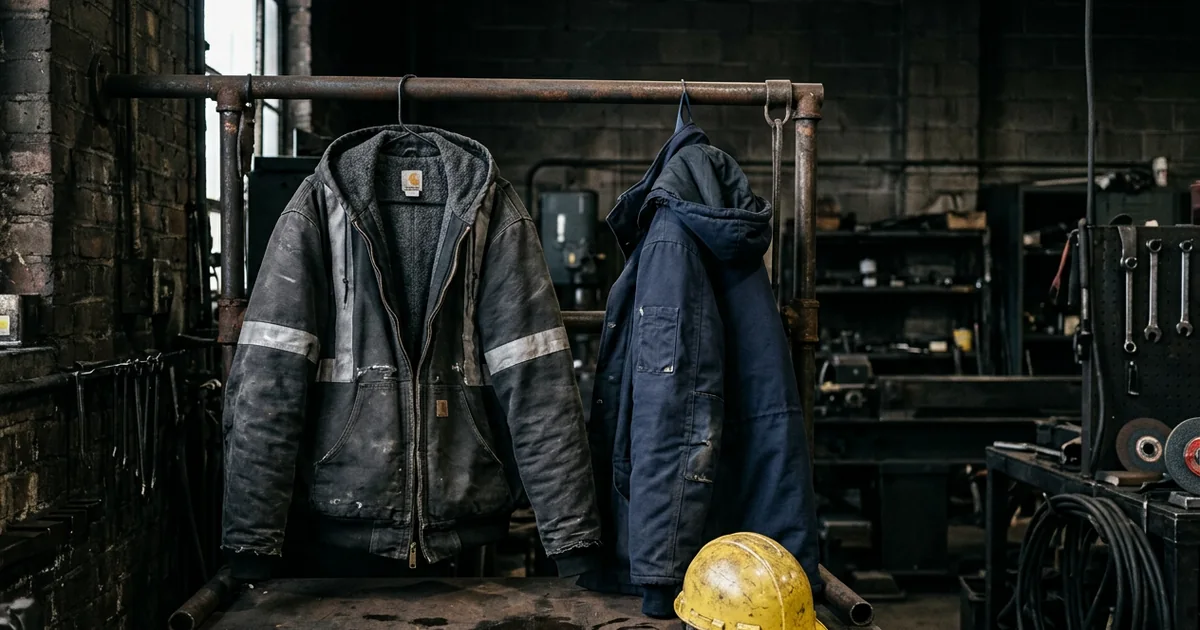
If I had to hand one jacket to a crew working wet, cold, and around energized equipment, it's the Ariat FR H20 Waterproof Insulated Jacket (10018144) — its listing pairs a high stated arc rating (52 cal/cm², CAT 4) with a sealed waterproof shell and real insulation. But "best" depends on your hazard and your wallet: a flash-fire crew on a dry day might be better served by a cheaper inherent-Nomex jacket, and a casual FR layer is a different purchase entirely. FR clothing is fabric that resists ignition, self-extinguishes when the flame source is removed, and won't melt onto skin — it is not "fireproof." Below I rank six real jackets the way I'd buy them: protection first, then value, then fit.
Key Takeaways
- NFPA 2112 and an arc rating are two different things. A jacket can meet NFPA 2112 (flash fire) and still publish no arc rating (cal/cm²). I only quote an arc number when the listing states one — read my arc-rated vs flame-resistant explainer before you spec a job.
- The Ariat FR H20 is my overall pick. Highest combination of stated arc rating, waterproofing, and stated insulation weight — at the highest price.
- The Bulwark JLP8 is the value pick. Inherent-FR Nomex shell, HRC 4 at a stated 43.3 cal/cm², insulated, and the lowest price here ($287.99).
- Insulated isn't automatically more protective. The Carhartt 101623 publishes the highest arc number (54.3) in this guide on a heavy duck shell — but it's treated FR cotton, not inherent fiber. Pair it with the right base layer; see my FR hoodie guide.
- Some great listings are missing numbers. Two jackets here don't state a price and one doesn't state a cal/cm² figure. I flag every gap with "—" rather than guess.
How I ranked these (protection first, not commission)
I rank on protection, then value, then fit and versatility — never by what pays me. The hard rule on this site: I quote a spec only if the product listing actually states it. Where a listing doesn't publish an arc rating, a fabric weight, a price, or whether the fiber is inherent or treated, you'll see "—" or "not stated." I never invent a cal/cm² number, and I never borrow one model's arc rating for another — that's how someone ends up under-protected. CAT/HRC tiers map roughly to arc rating: CAT 1 ≥ 4, CAT 2 ≥ 8, CAT 3 ≥ 25, CAT 4 ≥ 40 cal/cm². NFPA 2112 covers flash fire; it does not, by itself, tell you the arc rating.
| Pick | Fabric / weight | Arc rating (if stated) | Best for | Price |
|---|---|---|---|---|
| 1. Ariat FR H20 (10018144) | 8 oz waterproof shell, 160 g insulation | 52 cal/cm², CAT 4 | Wet, cold, arc-flash work | $399.95 |
| 2. Carhartt 101623 Duck Bomber | 13 oz cotton FR duck, 10.5 oz quilt lining | 54.3, HRC 4 | Coldest dry jobsites | — |
| 3. Bulwark JLP8 Insulated | Nomex shell (inherent), modacrylic insulation | 43.3 cal/cm², HRC 4 | Best value / inherent FR | $287.99 |
| 4. Carhartt FRJ184 (USA made) | Nomex (inherent), quilt lined | HRC 4 (cal/cm² —) | Durability, USA made | — |
| 5. Ariat FR Vernon (10024027) | 42% modacrylic / 29% cotton blend | CAT 3 (cal/cm² —) | Wet, light-duty FR | $329.95 |
| 6. Walls FR Denim (FO37410J) | FR stonewashed denim | CAT 2 (cal/cm² —) | Casual FR layer | — |
1. Ariat FR H20 Waterproof Insulated Jacket — best overall
This is the jacket I'd buy if I could only own one. The listing describes an 8-ounce waterproof, seam-sealed shell over 160 g of "Cool Climate" insulation, and references 52 (cal/cm²), CAT 4, with NFPA 2112 and NFPA 70E compliance. That combination — a high stated arc rating plus genuine waterproofing plus a stated insulation weight — is rare, and it's why it tops the list. The trade-off is price: at $399.95 it's the most expensive jacket here, and you're paying for the waterproof construction as much as the FR rating.
- Pros: Highest stated arc rating with waterproofing (52 cal/cm², CAT 4); sealed shell for wet work; stated 160 g insulation; NFPA 2112 and 70E referenced.
- Cons: Most expensive in this guide; fabric blend and inherent-vs-treated status not stated on the listing.
Check price at Working Person's Store →
2. Carhartt 101623 FR Lined Duck Bomber — best for the coldest dry jobsites
If raw arc number and warmth are your priorities and you're not fighting rain, this Carhartt is hard to beat. The listing states a 13-ounce 100% cotton FR duck shell with a 10.5-ounce FR quilt lining, calls it NFPA-compliant and UL classified to NFPA 2112, and lists HRC 4 with an ARC rating of 54.3 — the highest arc number in this guide. The honest caveats: it's treated FR cotton rather than an inherent fiber, and the listing doesn't state a price. Confirm the current price and lead time before you commit.
- Pros: Highest stated arc rating here (54.3, HRC 4); heavy 13 oz duck shell plus 10.5 oz quilt lining = very warm; UL classified to NFPA 2112.
- Cons: Treated FR cotton, not inherent fiber; price not stated; not waterproof.
Check price at Working Person's Store →
3. Bulwark JLP8 Insulated Jacket — best value
For most buyers, this is the smart-money jacket. The listing describes a flame-resistant Nomex outer shell — an inherent FR fiber, meaning the protection is built into the fiber and doesn't wash out — with modacrylic insulation and a cotton lining. It states ATPV 43.3 cal/cm², HRC 4, and references NFPA 2112 and NFPA 70E. At $287.99 it's the lowest-priced jacket here, and it only loses to the Ariat on waterproofing and a slightly lower stated arc rating. For dry cold-weather arc-flash and flash-fire work, it's the one I'd point most crews toward.
- Pros: Inherent-FR Nomex shell; HRC 4 at a stated 43.3 cal/cm²; insulated; lowest price in this guide ($287.99).
- Cons: Not waterproof; fabric weight in oz not stated; lower arc rating than the top two picks.
Check price at Working Person's Store →
4. Carhartt FRJ184 USA Made Lined Jacket — best for durability
This one wins on longevity. The listing says it's made with Nomex, "a material that is made with FR fibers," and that the technology "never washes away or wears out" — in other words, inherent FR. It's quilt-lined, NFPA 70E compliant, HRC 4, and USA made. Where it falls short of the top picks is documentation: the listing states no ATPV cal/cm² number and no price. If your job requires a specific documented arc rating, you can't size protection from this listing alone — but as a tough, long-lived inherent-FR jacket, it earns its place.
- Pros: Inherent Nomex fiber that the listing says won't wash out; USA made; HRC 4; quilt lined for warmth.
- Cons: No ATPV cal/cm² stated; NFPA 2112 not stated on the listing; price not stated.
Check price at Working Person's Store →
5. Ariat FR Vernon Waterproof Jacket — best for wet, light-duty FR
The Vernon is waterproof and permanently flame-resistant, with a stated blend of 42% modacrylic, 29% cotton, 20% viscose, 8% polyacrylate and 1% carbon. The listing notes it's "permanently flame-resistant" (inherent), and lists CAT 3, NFPA 2112 and NFPA 70E — but no ATPV cal/cm² number is stated. That puts it a protection tier below the jackets above. It's a solid choice for wet, lighter-duty FR work; it is not the pick if your hazard assessment calls for 40+ cal/cm².
- Pros: Waterproof; permanently (inherent) flame-resistant; full fabric blend disclosed; NFPA 2112 and 70E stated.
- Cons: Only CAT 3 stated, with no ATPV cal/cm² number; lower protection tier; not insulated for deep cold.
Check price at Working Person's Store →
6. Walls FR Stonewashed Denim Jacket — best casual FR layer
The most wearable jacket in the group: FR stonewashed denim that looks like a regular jean jacket but carries an FR rating. The listing states NFPA 2112 and 70E with CAT 2 — the lightest protection tier here — and doesn't state an ATPV cal/cm² figure, fabric weight, or inherent-vs-treated status. It was also out of stock when I checked, which is why no price shows. Treat this as a style-forward FR over-layer, not your arc-flash jacket.
- Pros: Casual denim styling with an FR rating; NFPA 2112 and 70E stated; comfortable everyday layer.
- Cons: Lowest protection tier (CAT 2); no cal/cm², weight, or inherent/treated status stated; out of stock / price not stated.
Check price at Working Person's Store →
Insulated vs uninsulated: which do you actually need?
Insulation is about warmth, not protection — don't conflate the two. The Carhartt 101623 (13 oz duck plus a 10.5 oz quilt lining), the Bulwark JLP8 (modacrylic insulation), and the Ariat H20 (160 g insulation) are built for cold jobsites. The Ariat Vernon and Walls denim read as uninsulated or light layers — better in mild weather or as part of an FR layering system. A common mistake is buying a heavily insulated jacket for spring work and sweating through it, or grabbing an uninsulated shell for a January night shift. Match insulation to your climate, and match the arc rating and NFPA 2112 status to your hazard — they're separate decisions. If you layer, every layer against your skin should also be FR; a non-FR base under an FR shell can still melt.
Frequently Asked Questions
Which FR jacket here is the most protective?
By stated arc rating, the Carhartt 101623 is highest at 54.3 (HRC 4), and the Ariat FR H20 is close behind at 52 cal/cm² (CAT 4). The Ariat is my overall pick because it adds a waterproof shell and stated insulation. Always confirm the rating on the live listing and match it to your own hazard assessment.
Does NFPA 2112 mean a jacket has an arc rating?
No. NFPA 2112 certifies flash-fire performance. An arc rating (cal/cm², or ATPV) is a separate measurement, and only some garments publish it. A jacket can meet NFPA 2112 and state no arc rating at all — for example, the Carhartt FRJ184 here lists HRC 4 but no cal/cm² number.
Is inherent FR better than treated FR?
Inherent FR fibers like Nomex have the protection built into the fiber, so listings often note it won't wash out — the Bulwark JLP8 and Carhartt FRJ184 are inherent. Treated FR cotton, like the Carhartt 101623 duck, can offer high arc ratings and warmth at lower cost. Both can be compliant; choose based on durability needs, comfort, and budget.
Can an FR jacket also be waterproof?
Yes. The Ariat FR H20 and Ariat FR Vernon are both waterproof FR jackets. Waterproofing adds cost and isn't the same as protection level — the H20 states a 52 cal/cm² rating while the Vernon states only CAT 3, so check the arc rating separately from the waterproof claim.
What's the best value FR jacket?
The Bulwark JLP8 at $287.99 — it's the lowest-priced jacket in this guide while offering an inherent-FR Nomex shell, HRC 4 protection at a stated 43.3 cal/cm², and insulation. It's the one I'd recommend to most crews working in dry cold.
Why Trust This Guide
This guide was written and reviewed by Wes Calder, an independent flame-resistant-workwear reviewer. I rank on protection, value, and fit — and I quote a spec only when the product listing actually states it, marking every gap with "—" rather than guessing a number that could leave someone under-protected. FR Gear Lab earns a commission on some links, but we never rank by commission over safety — see our affiliate disclosure for details.