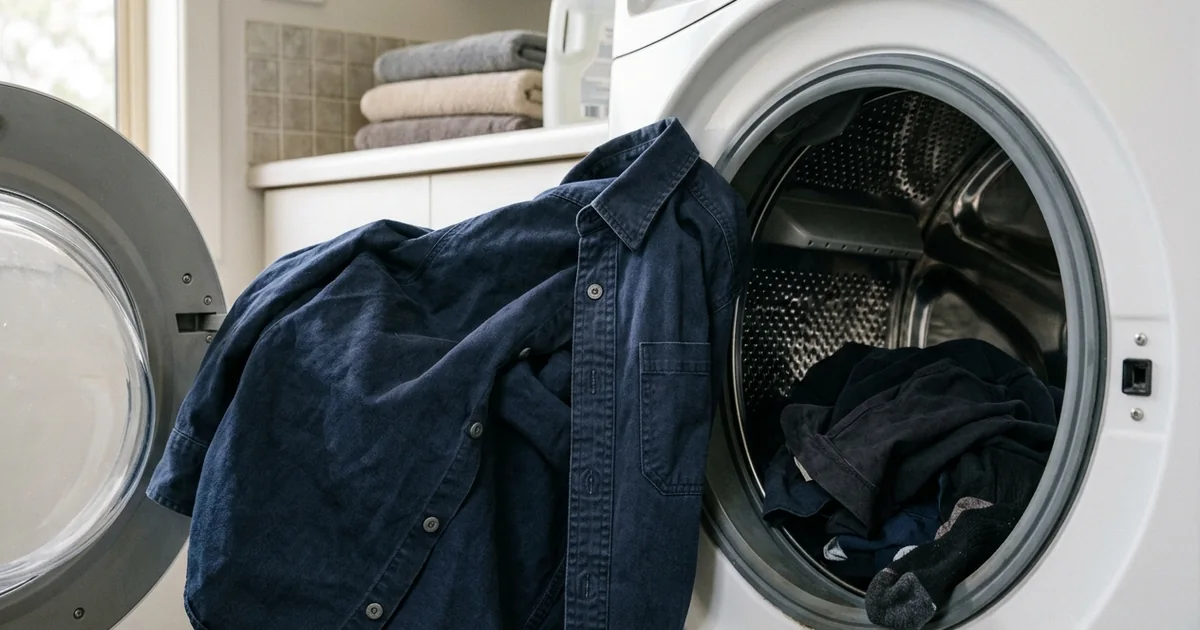

Yes, you can tumble dry FR clothing — put the dryer on low (permanent press or "less dry"), and pull the garment out while it's still damp. That's the whole answer for 90% of FR workwear. The catch most guides get wrong: dryer heat doesn't destroy your flame resistance — a home dryer can't get hot enough to do that. The only thing high heat actually costs you is excessive shrinkage. What is flame-resistant (FR) clothing? Fabric that resists ignition, self-extinguishes, and won't melt onto skin — not "fireproof," and not automatically arc-rated.
Key Takeaways
- Tumble dry low, remove promptly. Carhartt, Tyndale, and RPS/NFPA-2113-oriented guidance all specify low, permanent-press, or "less dry" — not medium, not high. Line drying is fine too, and best for size retention.
- Dryer heat won't wash out your FR. Carhartt states plainly that home washers and dryers can't reach the temperatures that would harm the treatment. The heat risk in a home dryer is shrinkage, not loss of protection.
- No starch, ever. Starch doesn't chemically erode the FR — but it sits on the fabric as a flammable substance that can serve as fuel. Same story for fabric softener.
- Ironing is OK on low heat. Carhartt says "iron with low heat"; Bulwark says warm iron on the permanent-press setting.
- The care label wins every argument. Always defer to the garment's own instructions — that's the one rule every manufacturer and OSHA agree on.
Can you tumble dry FR clothing? (Yes — on low)
Every manufacturer care guide I've read says the same thing, and none of them says "medium." Carhartt's official FR instructions read: "Tumble dry low and remove promptly." Tyndale says "tumble-dry on low" or use the "permanent press" or "less dry" setting. RPS Solutions, working off NFPA 2113, says "tumble dry low" / "use the low, permanent press, or less dry setting." Bulwark, for its inherently-FR fiber garments, specifies "Tumble dry on Permanent Press cycle with proper cool down. Do not overdry. Remove promptly and hang or fold."
So if you've seen "medium heat" floating around, ignore it — the consensus from the people who make and certify this stuff is low. And the single most important move isn't the heat setting at all: it's pulling the garment out while it's still damp. Tyndale is blunt about why: "Most shrinkage is caused by over drying, which occurs when a dry garment continues to be heated." Over-dry an FR shirt on high and you'll shrink it; catch it damp and hang it, and the fit holds.
| Method / setting | Do it? | Why | Source |
|---|---|---|---|
| Tumble dry LOW / permanent press / "less dry" | Yes | Minimizes shrinkage; standard-endorsed setting | Carhartt, Tyndale, RPS/NFPA 2113 |
| Remove while still damp | Yes | Over-drying is what causes most shrinkage | Tyndale, Carhartt |
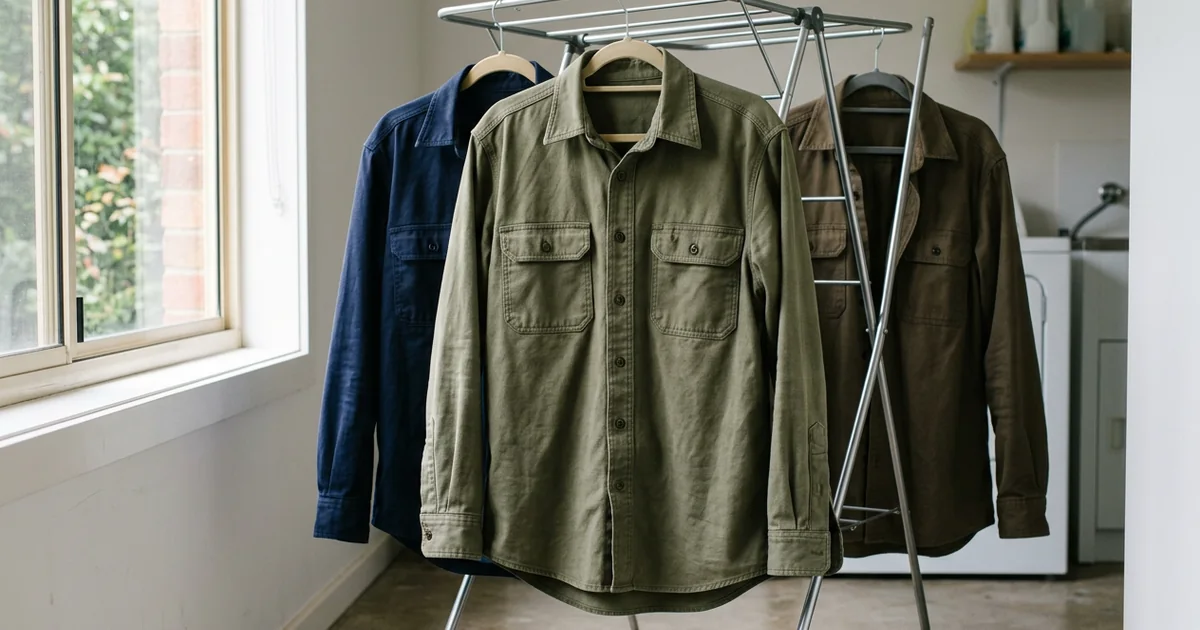
| Line / air dry | Yes — best for size retention | No dryer heat = least shrinkage (avoid direct sun) | Tyndale, Bulwark |
| Tumble dry HIGH | No | Risk is excessive shrinkage, not loss of FR | Tyndale, Carhartt |
| Iron | Yes — low / warm heat | Acceptable on most FR; no starch | Carhartt, Bulwark |
| Starch | No | Flammable residue that can serve as fuel | Carhartt, Tyndale, Bulwark |
| Fabric softener / dryer sheets | No | Coats fiber, masks FR, may serve as fuel | Carhartt, Bulwark |
Does dryer heat ruin flame resistance? No — here's the real risk
This is the question everyone actually has, and it gets muddled constantly. There are really two separate heat questions, and untangling them clears up most of the confusion:
- "Will my dryer's heat destroy my FR protection?" No. Carhartt spells it out: "Temperatures in home laundries are fine for FR… home washers/dryers can't reach temperatures that high — industrial launderers are where you need to be careful of too much heat." Whether your garment is inherent or treated FR, a home dryer simply can't hit a temperature that harms the flame-resistant chemistry.
- "Then why still dry on low?" Shrinkage, plus label compliance. Tyndale: "Drying a garment on high heat may shrink it excessively." That's the entire downside of high heat — a shirt that no longer fits, not a shirt that no longer protects.
The bigger-picture reassurance: correct home laundering doesn't wash your FR out over the life of the garment. Carhartt says the FR qualities "will remain in the fabric for the useful life of the garment" if you follow the label, and Tyndale states that its garments' flame-resistant properties "cannot be washed out over time if the washing instructions are followed." The dryer isn't the enemy. Neglecting the care label is.
Can you iron FR clothing?
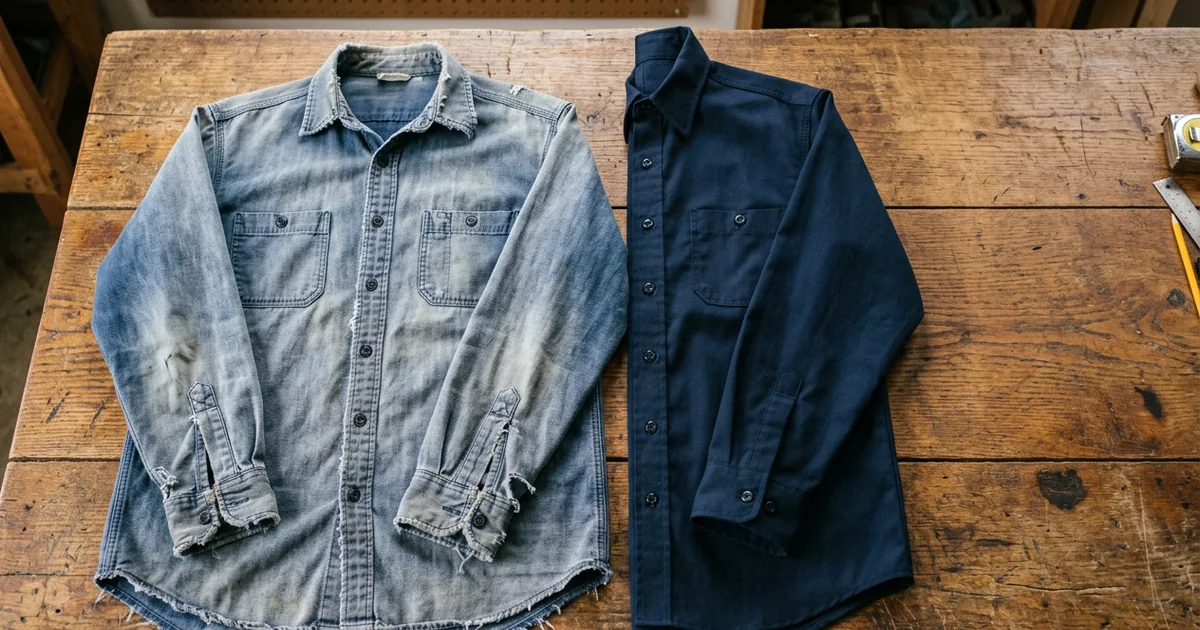
Yes — most FR takes an iron fine, on low or warm heat. Carhartt's care line says "Iron with low heat," and its general guidance notes FR garments "can be dry cleaned (as long as no starch is used) and ironed." Bulwark says to "press with a warm iron on the Permanent Press setting." One dry-cleaning caveat worth knowing: Carhartt does not recommend dry cleaning FR denim, because the indigo dye can fade excessively — that's an appearance issue, not a safety one.
The hard rule while ironing: no starch. And here's the mechanism, stated precisely, because most pages hand-wave it. Starch does not chemically erode or "eat away" your flame resistance. The problem is that it's a flammable substance that sits on top of the fabric. Carhartt calls starch "a propellant." Tyndale puts it cleanly: "While starch does not erode the flame resistance of the garment, it is a flammable substance… Any flammable substance deposited on top of the AR/FR fabric can contribute to body burn and should not be used on flame resistant products." So you can have a perfectly good FR shirt with a layer of fuel starched onto it — that's the risk you're avoiding.
Fabric softener is on the same list, for the same reason. Carhartt: the softener "may coat the fiber and mask flame resistant performance. It may also serve as fuel in case of combustion." Bulwark echoes it — softeners and additives "can coat the fiber and mask the flame resistant performance" and "may also serve as fuel." Skip the dryer sheets too.
Should you dry FR separately from other clothes?
Short answer: yes, separate it — but for honest reasons, not the scary one you usually hear. The folklore, repeated on nearly every FR care page, is that drying your FR with lint-shedding non-FR clothing will leave flammable lint in the weave and "make your FR burn." I'm not going to assert that as settled fact, because the strongest data I found contradicts it: Tyndale ran the test and reports that "100 launderings and even five lint traps' worth of lint from loads containing regular, non-FR garments had no effect on the flame resistance of an AR/FR garment in an arc flash." Tyndale goes as far as calling rental companies' lint-danger claims "false."
So why still keep FR in its own load? Two solid reasons that don't depend on the lint myth. First, contaminant control: Tyndale's own how-to says to "wash FR garments separately from household laundry to prevent the transfer of workplace contaminants" — the oils, dirt, and greases from a jobsite are the real hazard, and you don't want them cross-contaminating (or getting spread onto) your other clothes. Second, separation is a standards-endorsed best practice: RPS, working from NFPA 2113, lists "do not launder FR garments with normal clothing." Treat it as sensible housekeeping and standards compliance — not because a mixed load is proven to make your gear ignite.
If you're the one setting the rules for a crew, there's an OSHA angle worth knowing: per a 2015 OSHA interpretation, the employer "is responsible for ensuring that the FR garment is laundered such that contaminants… will not affect the performance of the garment," and "the employer cannot simply instruct employees to follow manufacturers' instructions." If home laundering is allowed, workers have to be trained and the garments inspected. Separation and the low-heat routine are how you actually meet that bar.
Frequently Asked Questions
Can you put FR clothing in the dryer?
Yes. Tumble dry FR clothing on low, permanent press, or the "less dry" setting, and remove it while it's still damp to limit shrinkage. Carhartt says "tumble dry low and remove promptly," and Tyndale says "tumble-dry on low." Skip high heat — its only real downside is excessive shrinkage, not loss of flame resistance.
Does high heat destroy the flame resistance in FR clothing?
No. Carhartt states that home washers and dryers can't reach temperatures high enough to harm the FR treatment — that's an industrial-laundry concern, not a home one. The risk from high heat in a home dryer is excessive shrinkage, not loss of protection. Follow the label temperatures and your FR stays FR for the life of the garment.
Is it better to air dry or line dry FR clothing?
Line or air drying is a great option and is actually best for size retention, since no dryer heat means the least shrinkage. Tyndale lists line drying alongside low-heat tumble drying to minimize shrinkage. Bulwark's one caveat: don't line dry in direct sunlight. If you want your FR to keep its fit longest, hang it up.
Can you iron FR clothing, and why not starch it?
You can iron most FR on low or warm heat — Carhartt says "iron with low heat" and Bulwark says warm iron on permanent press. Never use starch. Starch doesn't chemically erode the flame resistance; it sits on the fabric as a flammable substance that can serve as fuel and contribute to a burn. Fabric softener is off-limits for the same reason.
Can you dry FR clothes with regular clothes?
It's best to keep FR in its own load, but mostly to control jobsite contaminants and meet standards guidance — not because a mixed load is proven to make FR burn. Tyndale's own test found lint from non-FR loads had no effect on arc-flash performance across 100 washes. Still, separating for contaminants (and per NFPA 2113 best practice) is the smart call.
What's the one rule I shouldn't break when drying FR?
Always defer to the garment's own care label. Carhartt, Tyndale, and OSHA all point back to the manufacturer's instructions rather than a generic rule. The label reflects that specific fabric's tested tolerances — so when a chart online and your label disagree, the label wins. Follow it and the FR properties last the useful life of the garment.
Why Trust This Guide
This guide is written and reviewed by Wes Calder, an independent flame-resistant-workwear reviewer. Every recommendation is built on the published standards (NFPA 2112, NFPA 70E, ASTM F1506), manufacturer spec sheets and garment tags, hands-on handling, and what tradespeople actually report — and we tell you when a number is a manufacturer claim versus an independent standard, and when a garment is FR but not arc-rated. We earn an affiliate commission if you buy through some of our links, at no extra cost to you, and we never rank by commission over safety — see our affiliate disclosure.