
If you wash flame-resistant (FR) clothing the way the tag tells you to, washing does not reduce its protection — but washing it wrong can, and there's a real difference between the two types of FR. A flame retardant is what makes fabric self-extinguish and resist ignition instead of burning and melting; in FR clothing it's either built into the fiber (inherent) or applied as a chemical treatment. Inherent FR is part of the fiber itself, so it does not wash out. Treated FR relies on a finish that can be degraded by the wrong laundry habits. Either way, the fastest way to lose protection isn't a hundred wash cycles — it's fabric softener, bleach, trapped contaminants, or plain physical wear.
Key Takeaways
- Inherent FR does not wash out. With inherent FR the flame resistance is built into the fiber, so normal washing does not strip it (Bulwark).
- Treated FR is where wash mistakes matter most. A topical treatment can be degraded by the wrong products, so how you launder a treated garment is what protects — or wrecks — the rating.
- Fabric softener and bleach are the classic FR killers. Softener leaves a flammable film; chlorine bleach and peroxide can attack a treatment. Skip both on any FR garment.
- Contamination defeats FR. Grease, oil, and solvents left in the fabric are their own ignition hazard — a clean garment is part of the protection.
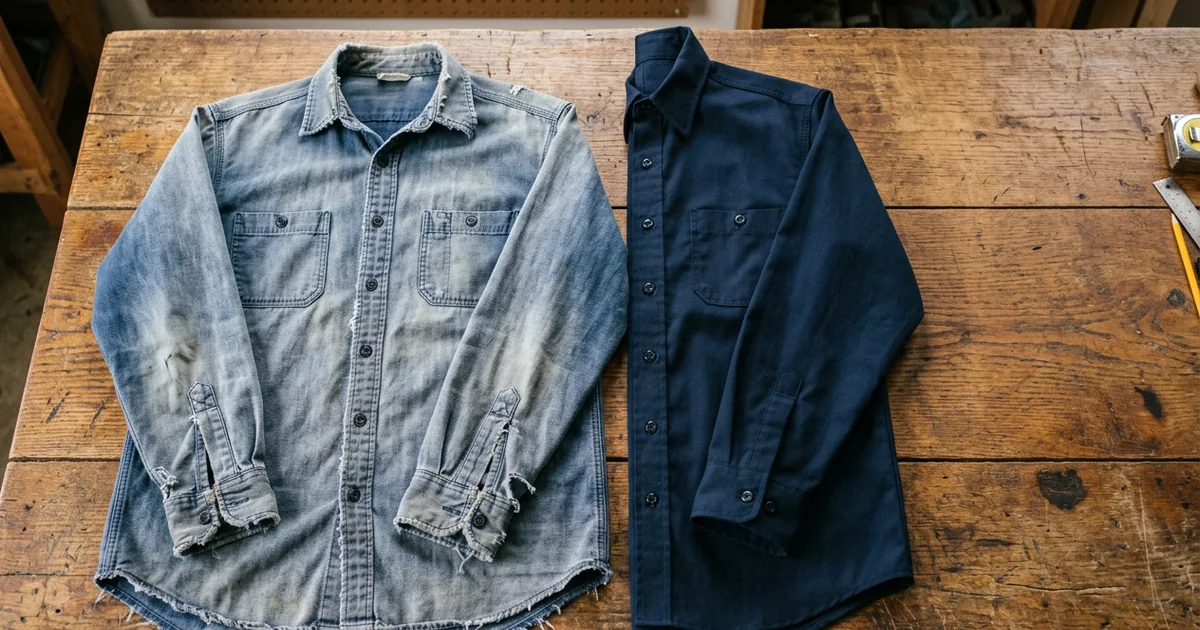
- Physical wear ends a garment's life, not a wash counter. Holes, thin spots, and frayed seams expose skin no matter which type of FR you bought.
Does washing actually wash the flame resistance out?
Short answer: it depends on how the FR was made, and for the most common failure it doesn't come down to the wash at all. The single most important distinction is inherent vs treated FR. With inherent FR, the flame resistance is a permanent property of the fiber — Bulwark puts it plainly: the protection is built into the fiber and does not wash out. So the fear that a shirt "wears out" its rating over a laundry cycle mostly applies to the treated category, and even there the damage comes from how you wash, not simply the fact that you washed it.
That's the reframe I'd want a new hire to internalize: the enemy isn't your washing machine, it's four specific mistakes. Fabric softener that leaves a flammable coating. Bleach or peroxide that attacks a topical finish. Trapped oil and grease that turns a protective garment into fuel. And ordinary physical wear that opens up holes and thin spots. Get those four right and washing is a non-issue for the life of the garment.
| Factor | Inherent FR | Treated FR | Why it matters |
|---|---|---|---|
| FR washes out with normal laundering? | No — built into the fiber | Not with correct care; a treatment can be degraded by wrong products | The core reason to know which type you own |
| Fabric softener / dryer sheets | Avoid — leaves flammable film | Avoid — leaves flammable film | Adds a burnable coating regardless of FR type |
| Chlorine bleach / peroxide | Avoid | Avoid — can attack the treatment | Especially harmful to a topical finish |
| Trapped grease / oil / solvent | Defeats protection | Defeats protection | Flammable contaminant is its own ignition hazard |
| Physical wear (holes, thin spots) | Ends garment life | Ends garment life | Exposed skin can't be protected by any rating |
So how long does the FR rating really last?
Honestly, there's no universal wash-cycle number I'd put in your head, and I'm not going to invent one. The straight answer is that a garment holds its protection for as long as two things stay true: the FR mechanism is intact, and the fabric is physically intact. For inherent FR, the first condition is essentially permanent — the fiber is the protection. For treated FR, the first condition holds as long as you don't strip or coat the finish with the wrong laundry products. The second condition — physical integrity — is the one that actually retires most garments, and it applies to both types equally.
That's why "how long does it last" is really a care-and-inspection question, not a calendar question. A garment that's washed correctly and inspected regularly can serve until it wears out; a garment that's softener-coated, oil-soaked, or full of thin spots is compromised long before any nominal lifespan. Follow the manufacturer's care instructions on the tag, keep it clean, and check it — that's the whole formula. For the step-by-step routine, see our guide to washing FR clothing.
What actually kills FR protection (and how to avoid it)
Fabric softener and dryer sheets are first on my list because they're the mistake people make with the best intentions — they want the garment to feel nicer. The softener deposits a film on the fibers, and that film can burn. Bleach and peroxide are next: on a treated garment they can attack the chemistry that gives the fabric its FR. Both of these are avoidable with a plain, additive-free detergent.
Contamination is the one welders and oilfield crews underrate. If grease, oil, or solvent is soaking your garment, you're wearing fuel — and no rating changes that. Wash contaminated garments until they're clean, and re-wash if they come out still soiled. Finally, plain physical damage: holes, worn-thin knees and elbows, blown seams. That's skin exposed to a hazard, full stop, and it's the reason inspection matters as much as laundering. When damage shows up, the garment is done. If you're wondering which category your garment even falls into, our explainer on what FR clothing is lays out the basics.
Frequently Asked Questions
Does washing reduce FR protection?
Washing correctly does not reduce FR protection. Inherent FR is built into the fiber and does not wash out, and treated FR holds up when you follow the care tag. What reduces protection is washing wrong: fabric softener, bleach, or leaving flammable contaminants in the fabric — plus ordinary physical wear like holes and thin spots.
Does inherent FR last longer than treated FR?
For the FR mechanism itself, yes in the sense that inherent FR is a permanent property of the fiber and does not wash out, while treated FR depends on a finish you must protect through correct laundering. But both types are ended by the same thing in practice — physical wear. A worn-out garment with holes or thin spots is compromised no matter which type of FR it uses.
Can I use fabric softener on FR clothing?
No. Fabric softener and dryer sheets leave a film on the fibers that can be flammable, which undermines the protection you paid for. Use a plain detergent with no fabric softener, no added brighteners, and no bleach. This applies to both inherent and treated FR garments.
When should I retire an FR garment?
Retire it when the fabric is physically compromised or contaminated beyond cleaning: holes, worn-thin areas, frayed or blown seams, or grease and oil you can't wash out. Physical damage exposes skin and defeats the protection regardless of how the FR is built in. Inspect after each wash and replace anything that fails.
Whose care instructions should I follow?
Follow the garment's own care tag. It tells you whether your FR is inherent or treated and lists the wash and dry limits the manufacturer stands behind. If general advice you read online conflicts with the tag, the tag wins — it's specific to your fabric and treatment.
Why Trust This Guide
This guide is written and reviewed by Wes Calder, an independent flame-resistant-workwear reviewer. Every recommendation is built on the published standards (NFPA 2112, NFPA 70E, ASTM F1506), manufacturer spec sheets and garment tags, hands-on handling, and what tradespeople actually report — and we tell you when a number is a manufacturer claim versus an independent standard, and when a garment is FR but not arc-rated. We earn an affiliate commission if you buy through some of our links, at no extra cost to you, and we never rank by commission over safety — see our affiliate disclosure.