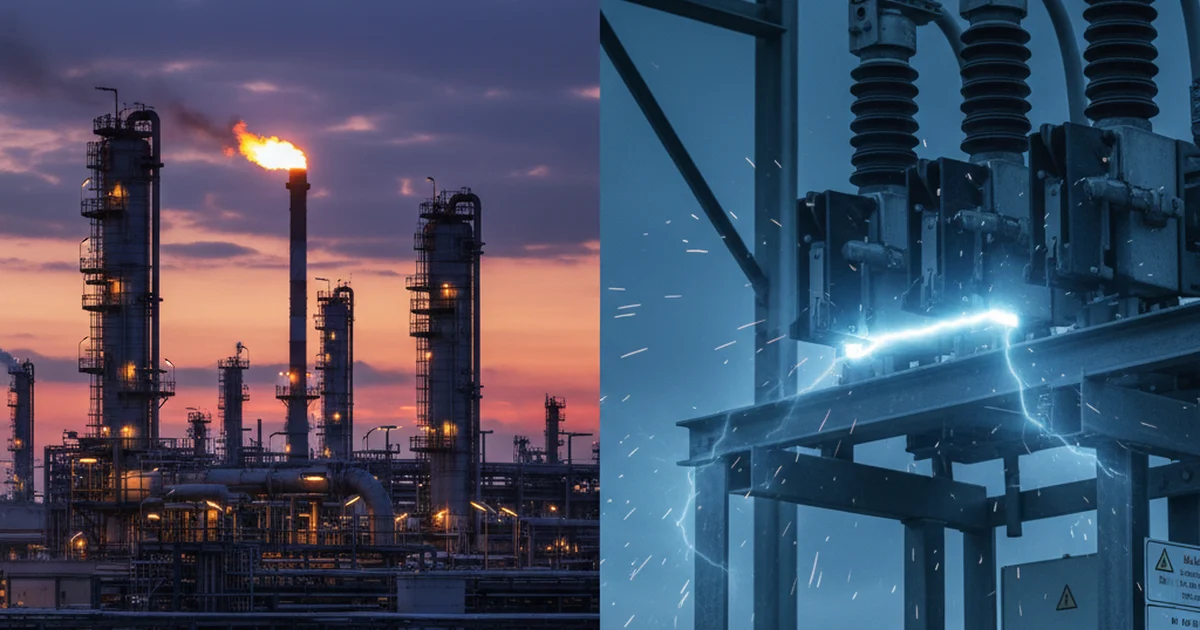

FR clothing requirements come down to one question your employer usually answers for you: does your job expose you to a flash-fire or arc-flash hazard? If it does, OSHA's general PPE rules — backed by the consensus standards employers cite to comply — effectively require flame-resistant (and, for electrical work, arc-rated) clothing. What is flame-resistant (FR) clothing? Fabric that resists ignition, self-extinguishes when the ignition source is removed, and won't melt onto your skin — it is not "fireproof." The short version: OSHA sets the legal duty, and the NFPA and ASTM standards define what "compliant" actually means.
Key Takeaways
- The hazard drives the requirement. Flash-fire exposure (oil and gas) points to NFPA 2112; arc-flash exposure (electrical) points to NFPA 70E and ASTM F1506. No hazard, no FR mandate.
- OSHA is the law; the standards are the spec. OSHA's general PPE duty makes employers assess and protect against the hazard; NFPA/ASTM define what protective clothing has to do.
- FR is not always enough. All arc-rated clothing is FR, but not all FR clothing is arc-rated — electrical work needs a stated arc rating in cal/cm², not just "FR."
- Compliance lives on the tag. A genuinely compliant garment names its standard (NFPA 2112 / ASTM F1506) and, for arc work, its arc rating; an "FR-look" garment that states neither is not compliant PPE.
Who is actually required to wear FR clothing?
There's no single line in the law that says "welders must wear FR." Instead, the requirement is created by the hazard. If your employer's hazard assessment finds a credible flash-fire or arc-flash exposure, FR or arc-rated clothing becomes mandatory PPE for that work — and your employer is the one who has to issue it and enforce it. In practice that captures three big groups:
- Oil and gas / petrochemical workers exposed to flash-fire (a brief, intense fireball from igniting hydrocarbons). This is the world NFPA 2112 is written for.
- Electrical workers, linemen, and anyone working on or near energized equipment who could be caught in an arc flash. This is governed by NFPA 70E and the ASTM F1506 apparel spec.
- Many welders and metal trades, where sparks, spatter, and open flame make ordinary clothing — especially anything that melts — a real ignition risk.
The reason it usually feels "mandated by my employer" is that it is. OSHA's framework puts the duty on the employer to assess the hazard, select PPE, and require workers to use it. So when your company puts you in FR, they're not being generous — they're meeting a legal obligation.
OSHA vs. the NFPA/ASTM standards — what's the difference?
This trips people up, so here's the clean split. OSHA is the enforceable law. Its general PPE requirements make the employer responsible for identifying workplace hazards and providing protective clothing that's adequate for them. But OSHA's clothing language is broad — it doesn't list fabric weights or arc ratings.
The consensus standards fill that gap. They're written by the NFPA and ASTM and define exactly what a protective garment must survive and how it's tested. Employers lean on them because they translate OSHA's broad duty into a concrete, defensible spec:
- NFPA 2112 — the flash-fire garment standard (oil and gas). Garments are certified at the garment level and validated with the ASTM F1930 instrumented-manikin test, which measures predicted body burn in a simulated flash fire.
- NFPA 70E — the electrical-safety standard that defines arc-flash PPE Categories (CAT 1 through CAT 4) and tells the employer what protection level a given task needs.
- ASTM F1506 — the fabric/apparel spec for FR, arc-rated clothing worn by electrical workers; it's the standard arc-rated garments are built and labeled to.
So when a safety manager says a garment is "compliant," they almost always mean it meets one of these standards — which is how they satisfy OSHA. The law sets the duty; the standard sets the bar. For a side-by-side on the two NFPA standards, see NFPA 2112 vs. NFPA 70E.
"FR" isn't always enough — the arc-rating catch
Here's the distinction that keeps electrical workers compliant: all arc-rated clothing is flame-resistant, but not all flame-resistant clothing is arc-rated. A shirt can be perfectly good FR — it self-extinguishes, it won't melt — and still not be rated for arc-flash protection, because nobody has tested and assigned it an arc value.
For arc-flash work, the requirement isn't just "wear something FR." It's "wear a garment with a stated arc rating in cal/cm² that meets or exceeds the energy your task can produce." That arc rating is expressed as ATPV or EBT, and the garment's rating is the lower of the two. NFPA 70E sorts that into PPE Categories:
| PPE Category | Minimum arc rating |
|---|---|
| CAT 1 | ≥ 4 cal/cm² |
| CAT 2 | ≥ 8 cal/cm² |
| CAT 3 | ≥ 25 cal/cm² |
| CAT 4 | ≥ 40 cal/cm² |
Worth knowing if you came up on older terminology: the 2015 edition of NFPA 70E renamed "HRC" (Hazard/Risk Category) to "PPE Category / CAT" and dropped the old HRC 0. So if a co-worker still says "HRC 2," they mean CAT 2. More on the categories in FR CAT/HRC levels explained, and on the FR-vs-arc-rated line in arc-rated vs. flame-resistant.
What makes a garment actually compliant?
You verify compliance the same way I'd check any FR garment: read the tag, not the marketing. A genuinely compliant FR garment tells you what it meets, in writing:
- The stated standard on the tag — NFPA 2112 for flash-fire, ASTM F1506 for arc-rated electrical apparel. If the label doesn't name a standard, treat it as not-compliant for hazard work.
- A third-party / UL classification, not just the maker's word. Independent certification is the difference between "we say it's FR" and "it was tested to the standard."
- For electrical work, the arc rating in cal/cm² printed on the garment, so you can match it to your task's PPE Category.
And the red flag: be wary of an "FR-look" garment that states no standard, no rating, and carries a price far below certified FR. Cheap "fire-resistant-style" clothing that won't name a standard is exactly what gets a worker hurt and an employer cited — it's the thing this whole requirement exists to keep off the jobsite.
Does inherent vs. treated FR change the requirement?
No — both can meet the requirement, and both can be certified to NFPA 2112. The difference is how the fabric is flame-resistant, which affects cost, hand-feel, and care, not whether it's compliant:
- Inherent FR (modacrylic or aramid fibers, like the aramid family) is flame-resistant because of the fiber itself, so it doesn't wash out over the life of the garment.
- Treated FR is a chemical finish applied to cotton; it lasts the garment's life if it's laundered correctly.
Both keep you compliant if the garment is certified and cared for. The catch is the "cared for" part: FR is not fireproof, and you can defeat it. Avoid chlorine bleach, fabric softener, hydrogen-peroxide bleach, and starch, and never wear FR that's saturated with grease or oil — oil-soaked FR can become a fire hazard regardless of its rating. For the full care rules, see how to wash FR clothing.
Frequently Asked Questions
Does OSHA legally require FR clothing?
OSHA doesn't name "FR" garment by garment, but its general PPE requirements make employers assess workplace hazards and provide adequate protective clothing. Where a flash-fire or arc-flash hazard exists, that duty effectively requires flame-resistant or arc-rated clothing. Employers typically satisfy it by issuing garments certified to NFPA 2112 or ASTM F1506.
Which jobs require FR clothing?
The hazard decides, not the job title. Oil and gas and petrochemical workers exposed to flash-fire, electrical workers and linemen exposed to arc-flash, and many welders facing sparks and open flame are the main groups. If your employer's hazard assessment finds a credible flash-fire or arc-flash exposure, FR or arc-rated clothing becomes mandatory PPE for that work.
Is FR clothing the same as arc-rated clothing?
No. All arc-rated clothing is flame-resistant, but not all FR clothing is arc-rated. Arc-rated garments have been tested and assigned a value in cal/cm² (ATPV or EBT) for arc-flash protection. For electrical work governed by NFPA 70E, "FR" alone isn't enough — you need a stated arc rating that meets your task's PPE Category.
How do I know if my FR clothing is compliant?
Read the tag. A compliant garment names its standard — NFPA 2112 for flash-fire, ASTM F1506 for arc-rated electrical apparel — and ideally shows a third-party or UL classification. For electrical work it also prints an arc rating in cal/cm². Be wary of "FR-look" clothing that states no standard or rating and costs far less than certified FR.
Does my employer have to provide FR clothing?
When a hazard assessment establishes that FR or arc-rated clothing is required PPE for the work, the responsibility to assess the hazard, select appropriate protective clothing, and require its use falls on the employer under OSHA's framework. That's why FR usually shows up as company-issued or company-mandated rather than something you choose to wear voluntarily.
Why Trust This Guide
This guide is written and reviewed by Wes Calder, an independent flame-resistant-workwear reviewer. Every recommendation is built on the published standards (NFPA 2112, NFPA 70E, ASTM F1506), manufacturer spec sheets and garment tags, hands-on handling, and what tradespeople actually report — and we tell you when a number is a manufacturer claim versus an independent standard, and when a garment is FR but not arc-rated. We earn an affiliate commission if you buy through some of our links, at no extra cost to you, and we never rank by commission over safety — see our affiliate disclosure.