
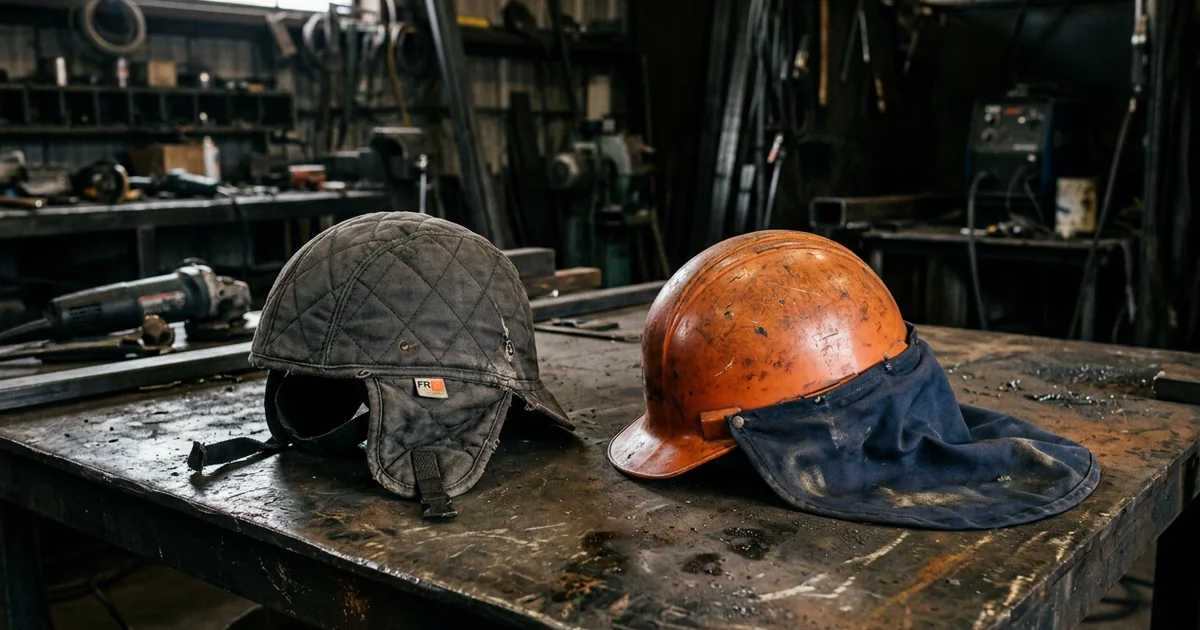
If you want one straight answer, the Occunomix LZ620 FR winter hard hat liner is the pick I keep coming back to — it's the only true cold-weather liner in this group, it covers head, ears and neck, and it carries the highest arc ratings any of these listings actually state. But "best" depends on your hazard: a winter liner, an arc-rated balaclava, and a summer sun/neck shade are three different jobs, and no single piece nails all of them. FR clothing is fabric engineered to resist ignition, self-extinguish once the flame source is gone, and not melt onto skin — it is not "fireproof," and it has limits. Below is how I'd choose, ranked protection first.
Key Takeaways
- A "hard hat liner" and a "balaclava" are different tools. The Occunomix LZ620 is a shoulder-length winter liner for warmth and coverage; the rest are balaclavas, tube liners and gaiters you'd wear under a helmet — see my best FR balaclavas guide for that category in depth.
- Arc rating and flash-fire rating are not the same number. Only some of these publish a cal/cm² arc rating, and one (Carhartt) is UL classified to NFPA 2112 for flash fire instead — read arc-rated vs flame-resistant before you buy.
- Inherent vs treated changes longevity, not legality. Two of these are inherent fiber, one is explicitly treated for up to 50 washings, and two don't state it. Both can be compliant.
- Match the cal/cm² to your CAT level. CAT 1 ≥ 4, CAT 2 ≥ 8, CAT 3 ≥ 25, CAT 4 ≥ 40 cal/cm². The Occunomix liner's lower section hits CAT 3; the gaiter states no rating at all.
- Coverage is a spec too. If you need a full hood under your helmet for arc work, see how these compare with a dedicated FR hood.
How I ranked these (protection first, not commission)
I only quote a spec when the product listing actually states it. Where a listing doesn't publish an arc rating, a fabric weight, or whether the fiber is inherent or treated, I write "—" or "not stated" instead of guessing — and I never borrow one model's cal/cm² number for another, because that's exactly how someone ends up under-protected. My order is protection first (stated arc rating, relevant standards, coverage), then value, then fit and comfort. I earn a commission if you buy through my links, but the ranking is built on what the listings document, not on what pays best. A higher price or a bigger brand doesn't move a product up; a stated, verifiable rating does.
| Pick | Fabric / weight | Arc rating (if stated) | Best for | Price |
|---|---|---|---|---|
| 1. Occunomix LZ620 FR liner | Treated cotton cap + 18.0 oz modacrylic lower; Nomex thread | Cap 21 cal/cm² (CAT 2); lower 28.6 cal/cm² (CAT 3) | Winter warmth + arc work | $65.00 |
| 2. PIP 9100 HDFR12 balaclava | 86% cotton / 12% nylon / 2% spandex; 6.5 oz | 12.1 cal/cm² (HRC 2) | All-season arc-flash layer | $49.99 |
| 3. Occunomix LK910 NFR tube | Modacrylic rib knit, Nomex thread; 9.5 oz (inherent) | 11.6 cal/cm² (CAT 1) | Full-face sun / neck shade | $40.93 |
| 4. Carhartt Force balaclava 103520 | 45% modacrylic / 35% lyocell / 20% aramid; 6.75 oz | — (UL classified to NFPA 2112) | Flash-fire coverage | $42.99 |
| 5. Carhartt Force neck gaiter 105092 | 45% modacrylic / 35% lyocell / 20% aramid; 6.75 oz | — | Lightweight face shade | $29.99 |
1. Occunomix LZ620 FR — best for winter warmth under a hard hat
This is the only product here that's genuinely a winter hard hat liner rather than a balaclava: shoulder-length, two-way coverage over head, ears and neck. The upper cap is flame-resistant treated cotton lined with modacrylic, the lower section is an 18.0 oz modacrylic soft rib knit, and the zipper and thread are Nomex. It's also the protection leader on paper — the listing states 21 cal/cm² (CAT 2) at the cap and 28.6 cal/cm² (CAT 3) at the lower part — and it meets ASTM F1506 while complying with NFPA 70E. The honest trade-off: it's treated FR (rated for up to 50 washings, not "lifetime inherent"), and a cotton-blend liner runs warm, so it's overkill for a July shift.
- Pros: Real winter coverage; highest stated arc ratings here (CAT 2 cap / CAT 3 lower); ASTM F1506 + NFPA 70E; Nomex zipper and thread.
- Cons: Treated rather than inherent (50-wash rating); too warm for hot weather; one-size fit won't suit every head.
Check price at Working Person's Store →
2. PIP 9100 HDFR12 Ultrasoft balaclava — best value for arc-flash crews
If your work is arc-driven and you want a published number you can put against your CAT level, the PIP 9100 is my value pick. It's a single-layer Ultrasoft balaclava (86% cotton / 12% high-tenacity nylon / 2% spandex, 6.5 oz) with a stated arc rating of 12.1 cal/cm² (HRC 2), and it meets both NFPA 70E and ASTM F1506 — that F1506 callout is something the Carhartt pieces don't state. Being single-layer, it's breathable enough for daily wear under a hard hat and under arc-flash suits, but that same thinness means it adds little real winter warmth. The listing doesn't state whether the fiber is inherent or treated, so I won't claim either.
- Pros: Stated 12.1 cal/cm² (CAT 2); meets NFPA 70E and ASTM F1506; breathable single layer; works under suits and coveralls.
- Cons: Not a warmth layer; inherent-vs-treated not stated; cotton-rich blend wets out faster than a synthetic.
Check price at Working Person's Store →
3. Occunomix LK910 NFR tube liner — best full-face sun / neck shade
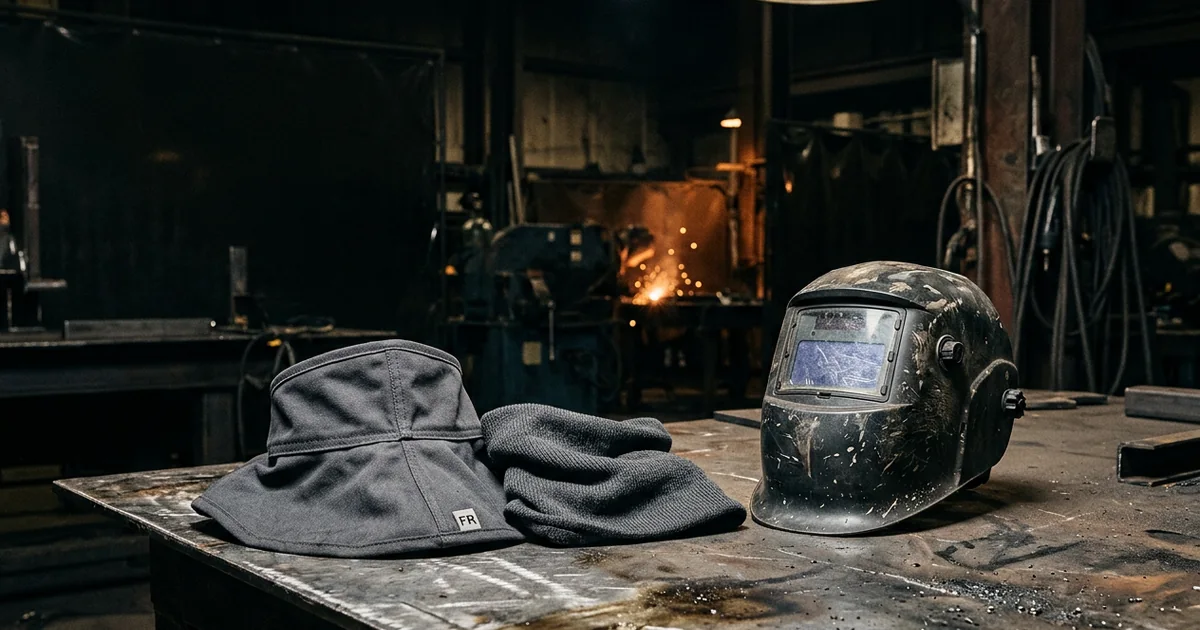
This full-face Nomex tube liner is the closest thing here to an FR "sun shade" you'd pull up under a helmet for neck and face coverage on bright days. It's a quick-drying modacrylic soft rib knit with Nomex thread (9.5 oz), the listing states it's inherently flame-resistant, and it meets ASTM F1506 plus NFPA 70E. Its stated arc rating is 11.6 cal/cm² — but note that's CAT 1, the lowest tier in this lineup, so I'd treat it as a lighter-hazard layer or a sun/neck shade rather than a high-cal hood. The upside is inherent fiber and genuine full-face coverage in one tube.
- Pros: Inherent FR; full-face/neck coverage; ASTM F1506 + NFPA 70E; quick-drying; lowest price among the rated picks.
- Cons: CAT 1 (11.6 cal/cm²) is the lowest arc tier here; tube style is less adjustable than a fitted hood.
Check price at Working Person's Store →
4. Carhartt FR Force balaclava 103520 — best for flash-fire coverage
The Carhartt Force balaclava is the one piece here that's UL classified to NFPA 2112, the flash-fire standard, and it also meets the performance requirements of NFPA 70E. The fabric is a 45% modacrylic / 35% lyocell / 20% aramid pique knit (6.75 oz) with FastDry wicking. The honest catch for arc work: the listing states no arc rating (no cal/cm², no CAT) and doesn't claim ASTM F1506 — so if your hazard analysis is arc-flash-based and your safety manager wants a documented cal/cm², this isn't the one to lean on. For flash-fire exposure (oil, gas, certain industrial environments), the 2112 classification is exactly what you'd want.
- Pros: UL classified to NFPA 2112 (flash fire); meets NFPA 70E; comfortable modacrylic/aramid blend; FastDry wicking and odor control.
- Cons: No stated arc rating (cal/cm² / CAT "—"); ASTM F1506 not stated; inherent-vs-treated not stated.
Check price at Working Person's Store →
5. Carhartt FR Force neck gaiter 105092 — best lightweight face shade
The Force neck gaiter is the lightest and cheapest pick, and it's a neck/face shade rather than a full hood — fitted from nose to neckline with an elastic back. Same 6.75 oz modacrylic/lyocell/aramid FR pique knit as the balaclava, with FastDry. It meets the performance requirements of NFPA 70E, but the listing states no NFPA 2112, no ASTM F1506 and no arc rating, so I treat it as a comfort-and-coverage layer for lower-hazard days, not a documented standalone rating you build a CAT level around. As a supplemental face shade under a helmet, it does that job well at $29.99.
- Pros: Lightest and lowest-cost; meets NFPA 70E; fitted nose-to-neck coverage; FastDry wicking.
- Cons: No stated arc rating, no F1506, no 2112 ("—"); neck/face only, not a full hood; inherent-vs-treated not stated.
Check price at Working Person's Store →
Do I need a winter liner or a balaclava?
They solve different problems. A winter hard hat liner like the Occunomix LZ620 is built primarily for cold — it's shoulder-length, insulating, and covers ears and neck so you can work outdoors in winter without losing FR protection. A balaclava or tube liner is thinner, made to wear year-round under a helmet for face and neck coverage, and is often where you'll find the published arc rating. If your main enemy is cold and you also need arc coverage, the LZ620 does both. If you're indoors or in warm weather and just need rated head/neck coverage under the hat, a single-layer balaclava like the PIP 9100 is lighter and breathes better. Several people end up owning one of each for the season.
Frequently Asked Questions
Is an arc rating the same as NFPA 2112?
No. An arc rating (ATPV, measured in cal/cm²) describes electrical arc-flash protection and is tied to NFPA 70E and ASTM F1506. NFPA 2112 covers flash fire — a different hazard. A garment can carry one and not the other: the Carhartt Force balaclava here is UL classified to NFPA 2112 but states no arc rating, while the Occunomix and PIP pieces publish a cal/cm² arc rating instead.
Which of these has the highest arc rating?
The Occunomix LZ620 FR winter liner states the highest figures: 21 cal/cm² (CAT 2) at the cap and 28.6 cal/cm² (CAT 3) at the lower neck section. The PIP 9100 states 12.1 cal/cm² (CAT 2) and the Occunomix LK910 tube states 11.6 cal/cm² (CAT 1). The two Carhartt pieces do not state an arc rating.
Should I get inherent or treated FR?
Both can be compliant — the difference is mostly longevity and care. Inherent FR (like the modacrylic/Nomex Occunomix LK910) has flame resistance built into the fiber. Treated FR (like the Occunomix LZ620, rated for up to 50 washings) has it applied to the fabric, which can wear down over many washes if you don't follow the care instructions. Match it to how hard you'll launder the piece.
Can a cotton blend really be flame-resistant?
Yes, when it's either treated for flame resistance or blended with FR fibers. The PIP 9100 is a cotton/nylon/spandex blend that still carries a stated 12.1 cal/cm² arc rating and meets ASTM F1506, and the Occunomix LZ620's cap is treated FR cotton. A plain cotton t-shirt is not FR — the rating comes from the treatment or fiber blend, not the cotton itself.
Will these fit under a standard hard hat?
All five are designed to be worn with head protection — the balaclavas, tube liner and gaiter sit close to the head, and the Occunomix LZ620 is specifically a hard hat liner. Fit varies by head size and helmet suspension, so check the listing's sizing (several are one-size-fits-most) and confirm your helmet's suspension still seats correctly with the liner on.
Why Trust This Guide
This guide was written and reviewed by Wes Calder, an independent flame-resistant-workwear reviewer at FR Gear Lab. I rank picks on the specs the manufacturer listings actually document — stated arc ratings, standards like ASTM F1506 and NFPA 70E/2112, fiber type and coverage — and I mark anything a listing doesn't state with "—" rather than inventing a number, which matters because this is safety gear. We earn a commission on some links, but we never rank by commission over protection — see our affiliate disclosure. Always confirm the current spec sheet and your own job hazard analysis before relying on any FR garment.