
Key Takeaways
- All FR, or it's not protection. A non-FR base or fleece under an FR shell can melt to skin. Start with an FR base — see my FR base layers and thermals guide.
- Layering adds arc protection. Stacking FR garments increases the system's effective arc rating, so a cold-weather kit is often more protective than a single shirt.
- Mid layer is where you regulate. An FR fleece or hoodie traps heat and wicks sweat; the Ariat FR Polartec hoodie is my default — more in my best FR hoodies roundup.
- The outer carries the weather and the highest rating. My Bulwark insulated pick states 43.3 cal/cm² (CAT 4); compare options in my best FR jackets guide.
- Warmth must not cost your rating. Pick layers whose certifications match the hazard your job actually requires — never trade arc rating for comfort.
How I ranked these (protection first, not commission)
I ranked these as a system, not as five separate winners. For each garment I only quote a spec the Working Person's Store listing actually states; where a number isn't on the page, I write "—" and treat it as unknown rather than borrow a figure from a similar model. That matters here because FR garments certify to two different hazards: NFPA 2112 covers short-duration flash fire (verified with the ASTM F1930 manikin test for under 50% body burn and the ASTM D6413 vertical flame test), while NFPA 70E covers electrical arc-flash and is where the ATPV cal/cm² and CAT/HRC numbers come from. Many of these garments are dual-certified. Where a piece publishes no ATPV, I don't infer one — I rank on stated merit, build quality, and how it functions in the layer, never on what it pays. Note the CAT thresholds as you read the table: CAT 1 ≥ 4, CAT 2 ≥ 8, CAT 3 ≥ 25, CAT 4 ≥ 40 cal/cm².
| Pick | Fabric / weight | Arc rating (if stated) | Best for | Price |
|---|---|---|---|---|
| Carhartt 102904 FR Force LS Tee (base) | 93% cotton / 7% spandex, 6 oz | — (CAT 1 label; ATPV not stated) | Skin-side base layer, sweat-wicking | $77.99 |
| Ariat FR Polartec 10014867 Hoodie (mid) | FR knit (rayon/modacrylic/para-aramid/spandex), 10 oz | 16 cal/cm², CAT 2 | Default mid layer, water-resistant | — |
| Wolverine FireZerO W1203310 Fleece (mid, alt) | 100% FR cotton fleece, 405 g | 20.9 cal/cm², HRC 2 | Warmer mid layer, full ASTM F1506 | $130.28 |
| Bulwark JLP8 Insulated Jacket (outer) | Nomex shell, modacrylic insulation, cotton lining | 43.3 cal/cm², HRC 4 | Dry-cold insulated outer | $287.99 |
| Ariat FR H2O 10018144 Jacket (outer, alt) | Waterproof shell, 160 g insulation | 52 cal/cm², CAT 4 | Wet-cold, waterproof outer | $399.95 |
1. Carhartt FR Force Long-Sleeve Tee — best FR base layer
This is the layer against your skin, and it's the one people most often get wrong by reaching for a cotton or poly thermal. The Carhartt 102904 is a 6-ounce, 93% cotton / 7% spandex FR knit, UL Classified to NFPA 2112 and meeting NFPA 70E, with a CAT 1 label sewn into the side seam. The listing explicitly says you can wear it alone or as a sweat-wicking base layer through the colder months. Honest trade-off: it does not publish an ATPV number, so I treat it as a foundation inside a system rather than as standalone arc protection — the arc rating you rely on comes from the stack above it.
- Pros: True FR base layer (no melt risk against skin); Force moisture-wicking to manage cold-stress sweat swings; NFPA 2112 + 70E; CAT 1 labeled.
- Cons: ATPV and ASTM F1506 not stated on the listing; $77.99 is a real premium over a non-FR thermal — but a non-FR thermal isn't an option here.
Check price at Working Person's Store →
2. Ariat FR Polartec Hoodie — best FR mid layer
The mid layer is where you actually regulate temperature, and this is my default. It's a 10-ounce FR knit (the page lists rayon, modacrylic, para-aramid, and spandex) built on Polartec PowerDry FR, water-resistant, and certified to NFPA 2112 and NFPA 70E. Crucially, it states an ATPV of 16 cal/cm² and a CAT 2 rating, so it isn't just warmth — it adds measurable arc protection to the system. Honest trade-off: the listing doesn't state the insulation type, and it's described as a technical mid layer, so don't expect a parka's warmth from it alone — that's the outer's job.
- Pros: Stated 16 cal/cm² ATPV (CAT 2) adds real protection; Polartec FR wicks instead of trapping moisture; water-resistant; dual-hazard certified.
- Cons: Price not stated on the listing; insulation and ASTM F1506 not stated; spec table lists a shorter blend than the description.
Check price at Working Person's Store →
3. Wolverine FireZerO Hooded Fleece — best warmer mid layer (alternative)
When the Ariat isn't warm enough on its own, this is the heavier mid-layer swap. The Wolverine FireZerO is a 100% FR cotton fleece at 405 grams, certified to NFPA 70E, NFPA 2112, ASTM F1506, and OSHA 29 CFR 1910.269, with a stated ATPV of 20.9 cal/cm² and HRC 2 — a notch above the Ariat on stated arc value, and it carries the full ASTM F1506 listing. The honest caveats: it's a treated FR fabric (achieved via a double-dipping process) rather than inherently FR, and it's currently on closeout, so sizes and long-term availability may be limited.
- Pros: Higher stated ATPV (20.9 cal/cm²); full ASTM F1506 + OSHA listing; warm 405 g cotton fleece; closeout price $130.28 (down from $144.75).
- Cons: Treated rather than inherent FR; closeout means availability may be limited; heavier and less moisture-managing than the Polartec mid layer.
Check price at Working Person's Store →
4. Bulwark JLP8 Insulated Jacket — best dry-cold insulated outer
This is the top pick of the whole system. The Bulwark JLP8 pairs an FR knit Nomex shell with 100% modacrylic insulation and a cotton lining, meets NFPA 2112 and NFPA 70E, and states an ATPV of 43.3 cal/cm² with HRC 4. That number clears the CAT 4 threshold (≥ 40 cal/cm²) on the shell alone, which is exactly what you want from your outermost layer — the warmest piece is also the most protective. Honest trade-off: the listing doesn't state ASTM F1506 or a garment weight, and while Nomex is inherently FR, the page doesn't say so explicitly, so I report only what it states.
- Pros: Stated 43.3 cal/cm² ATPV, HRC 4 (CAT 4); Nomex shell with modacrylic insulation; warm dry-cold workhorse at $287.99.
- Cons: ASTM F1506 and weight not stated; cotton lining and no waterproofing means it's a dry-cold pick, not a wet-weather one.
Check price at Working Person's Store →
5. Ariat FR H2O Waterproof Insulated Jacket — best wet-cold outer (alternative)
If your cold comes with rain or wet snow, swap the dry-cold outer for this. The Ariat FR H2O has an 8-ounce waterproof shell with 160 grams of insulation, is certified to NFPA 2112 and NFPA 70E, and states an ATPV of 52 cal/cm² at CAT 4 — the highest stated arc value in this lineup. A waterproof FR shell is genuinely hard to find, and it's the difference between warm and soaked-through on a wet site. Honest trade-off: at $399.95 it's the priciest piece here, and the listing doesn't state the fabric blend or ASTM F1506, so confirm those against your site's requirements.
- Pros: Highest stated ATPV in the set (52 cal/cm², CAT 4); waterproof FR shell for wet-cold work; 160 g insulation; dual-hazard certified.
- Cons: Most expensive pick ($399.95); fabric blend and ASTM F1506 not stated; overkill if you only ever work dry cold.
Check price at Working Person's Store →
How the three layers work together
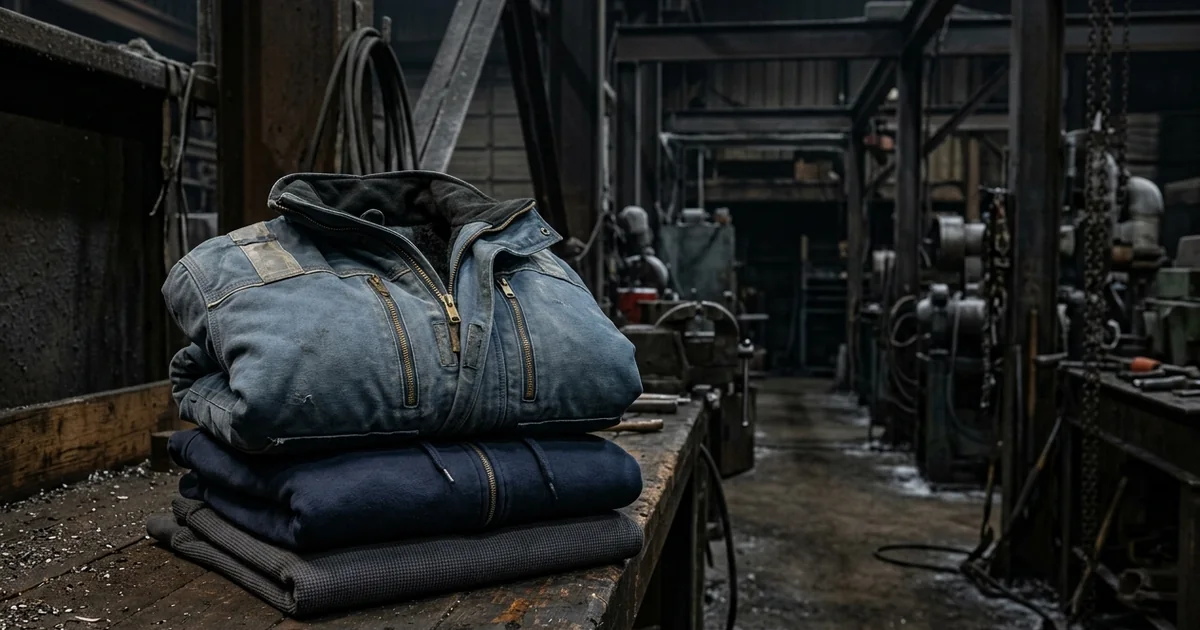
Think base → mid → outer, all FR. The guidance on FR cold-weather layering is consistent: every layer worn over FR clothing should also be FR or arc-rated, because a non-FR base or mid layer — especially meltable synthetics like untreated polyester or nylon — can ignite or melt to the skin even under an FR shell. The upside is that stacking FR garments increases the system's effective arc rating, and an FR moisture-wicking base layer helps prevent the cold-stress temperature swings that come from sweating and then chilling. So the kit above isn't just warm; layered correctly, it's more protective than any single shirt. If your legs need the same treatment, the same all-FR logic applies to insulated bottoms — see my FR bib overalls guide.
Frequently Asked Questions
Can I wear a regular thermal base layer under FR?
No. A non-FR base layer — cotton or, worse, a meltable synthetic — can ignite or melt to your skin under an FR shell. Every layer from skin outward must be flame-resistant. Start with an FR base like the Carhartt FR Force tee.
What's the difference between NFPA 2112 and NFPA 70E?
NFPA 2112 sets minimum performance requirements for FR clothing against short-duration flash fire. NFPA 70E addresses electrical arc-flash and is where the ATPV cal/cm² and CAT/HRC ratings come from. Many garments here are dual-certified to both.
Does layering FR clothing increase my arc rating?
Yes. Layering multiple FR garments increases the effective arc rating of the system, so a properly built cold-weather kit is often more protective than a single FR shirt. Always confirm your stack meets the specific rating your job requires.
A garment doesn't list an ATPV number — is it still safe?
A missing ATPV doesn't mean unsafe; some FR base layers (like the Carhartt tee) are NFPA 2112 certified and labeled CAT 1 without publishing an ATPV. Treat those as foundation layers and get your stated arc value from your mid and outer layers.
Is inherent FR better than treated FR?
Both can meet the same standards. Inherent FR (like Nomex) is built into the fiber; treated FR is applied to the fabric. What matters is the garment's certifications and stated ratings for your hazard — verify those rather than choosing on the label alone.
Why Trust This Guide
I'm Wes Calder, an independent FR reviewer. I build these guides around the specs each manufacturer actually publishes, and I write "not stated" rather than guess when a listing is silent on a number — especially arc ratings, which are safety-critical. FR Gear Lab earns a commission on some links, but I never rank by commission over safety; the Bulwark leads because of its stated 43.3 cal/cm² ATPV, not its payout. See our affiliate disclosure.