
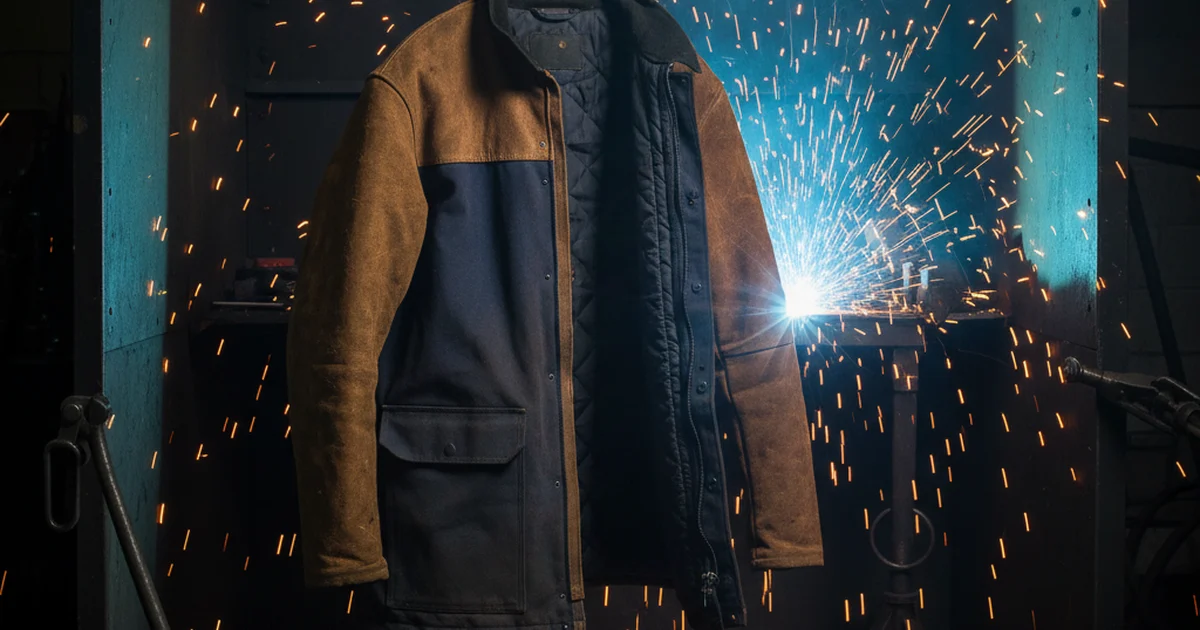
An FR welding jacket has one job: keep sparks, spatter, and a flash from setting your shirt — or you — on fire. The buyer's real fight is comfort versus protection: leather welding jackets are the toughest spatter armor made, but they're stiff, scratchy, and cook you by mid-shift; FR-cotton jackets breathe and launder like normal workwear but won't shrug off heavy stick spatter the way a hide will. Flame-resistant (FR) fabric resists ignition, self-extinguishes, and won't melt onto your skin — it is not "fireproof." Below I rank four currently-sold jackets, all FR-cotton or pigskin/cotton hybrids, and tell you which one fits your booth, your weather, and your wallet.
One thing up front, because it matters for safety: none of these jackets publishes a real arc rating. They're built for spatter and flash-spark protection, not arc-flash electrical work. If your hazard is an arc flash, you need a garment with a stated arc rating in cal/cm² — see the FAQ.
Key Takeaways
- Leather vs FR cotton: leather (or a pigskin/cowhide hybrid) takes heavy spatter and grinding sparks better; FR cotton breathes, weighs less, and launders — pick by how much heat you throw and how hot your shop runs.
- "FR" is not an arc rating. Every jacket here is a spatter jacket. None states an ATPV in cal/cm², so do not use them where NFPA 70E requires an arc-rated garment.
- My value pick is the Black Stallion B9C BSX at $36.99 — a real welder's collar in 9 oz FR cotton — but its "CAL 8+" page claim has no precise ATPV, so I treat that number as marketing.
- Best documented durability here is the FN9-42C: its page actually states the FR survives 50 home wash cycles per ASTM F1506. Most jackets don't tell you that.
- FR is not fireproof, and grease/oil saturation turns any FR garment into a fire hazard — clean it or retire it.
How I evaluated these welding jackets
I don't run an arc-flash lab, and I won't pretend to. What I do is read every garment's listing and tag, pull the published standards behind the numbers, and weigh it all against what welders actually report wearing this stuff in a real booth. Here's the honest checklist I ran each jacket through — and the order I weighted it in, because for a welding jacket the priorities aren't the same as for an arc-flash shirt.
- Fabric and weight. All four of these land at 9 oz FR cotton, which is the sweet spot for a welding jacket: heavy enough that a spatter glob loses its heat before it burns through, light enough that you can wear it past lunch. Lighter FR shirting (6–7 oz) breathes more but takes pinhole burns; a full leather hide stops everything but weighs you down. Weight is the first thing I look at because it's the single best predictor of both spatter resistance and how miserable July will be.
- Inherent vs treated FR. This is the question that decides how the jacket ages. Inherent FR means the fiber itself is flame-resistant (modacrylic or aramid) and can't wash out; treated FR is a flame-resistant finish applied to cotton, which lasts the garment's life if you launder it correctly. Every jacket in this guide is treated FR cotton — which is fine, but it makes laundering durability the spec that matters most.
- The right rating for the hazard. A welding jacket guards against spatter and flash sparks, not arc flash. NFPA 2112 is the flash-fire garment standard (think oil & gas); arc-flash work is governed by NFPA 70E and needs an arc rating in cal/cm². None of these four states an NFPA 2112 certification or a verified arc rating — so I rank them as spatter jackets and say so loudly, rather than letting a vague "CAL 8+" stand in for a number that isn't there.
- The welder's collar. A flip-up collar that shields your neck and throat from overhead spatter is the one feature that separates a real welding jacket from an FR shirt with a jacket label. I treat its presence (and quality) as a hard line item.
- Spatter and durability. Where does the hide or the heavy panel sit? Front and sleeves take the worst of out-of-position work, so a hybrid that armors those zones earns points a uniform cotton jacket can't.
- Breathability and fit. The protection you actually wear beats the protection you take off because you're roasting. I weight airflow heavily — a jacket you shed at 2 p.m. protects nothing at 2:15.
- Care and laundering. Treated FR lasts only if you wash it right: no chlorine bleach, no fabric softener, no starch, wash inside-out. A page that publishes its wash-cycle durability (the FN9-42C does) tells you the maker stands behind the finish; most stay silent.
One thing I deliberately did not do: invent torture-test numbers or a sample size. I haven't burned forty jackets in a fixture. Where I lean on real-world durability or comfort, it's owner-reports and spec tags — labeled as such — not a lab claim I can't back up.
Leather vs FR cotton: which welding jacket is right for you?
Short answer: if you're running heavy stick, doing a lot of overhead, or grinding next to your welds, leather (or a leather-fronted hybrid) is worth the weight — hide doesn't ignite, and globs of spatter that would burn a pinhole through cotton just bounce off. If you're MIG-ing all day in a hot shop, an FR-cotton jacket is the smarter buy: it breathes, it's a fraction of the weight, and you can throw it in the wash.
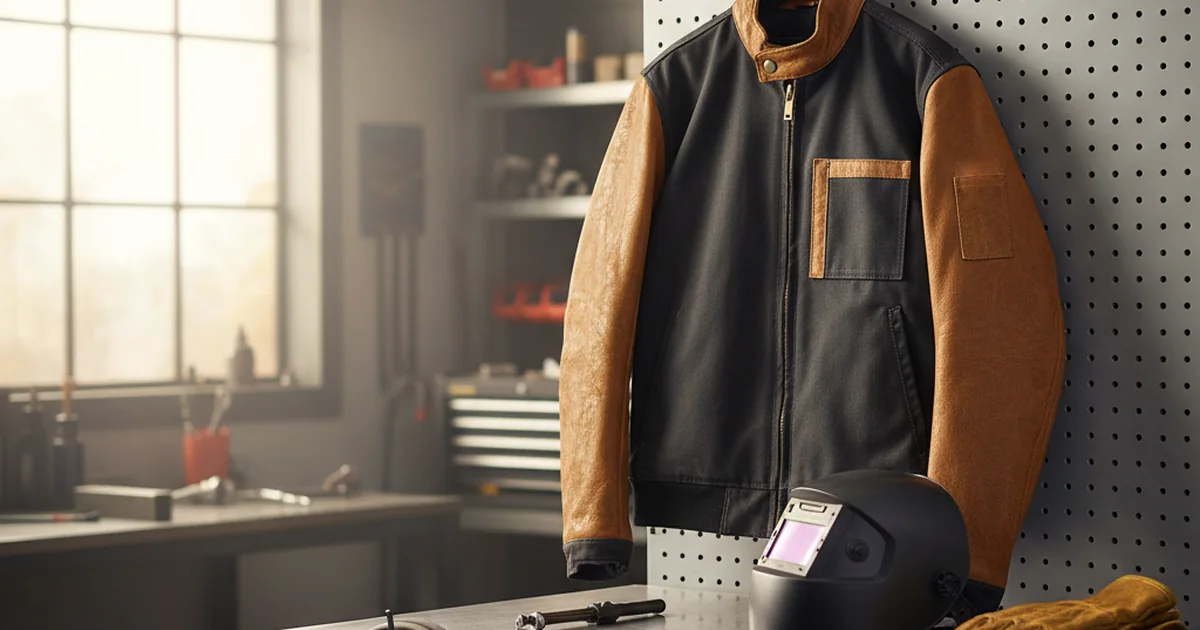
The honest trade-off is comfort. A full-leather welding jacket is the stiff, scratchy, too-hot option welders consistently complain about — fantastic protection, miserable in July, and it never really softens up. FR cotton fixes the comfort but gives up some burn-through resistance, especially under sustained spatter or a hot grinding wheel parked next to the seam. The pigskin/cotton hybrid in this guide is the compromise: leather where you get hit (front and sleeves), FR cotton on the back where you need to breathe. That's why it lands high here despite being the priciest — it's the closest you get to leather protection without baking inside a full hide.
One more distinction that trips people up: all of these are FR, but FR is not the same as arc-rated. Arc-rated clothing is always flame-resistant; flame-resistant clothing is not always arc-rated. These jackets are sold for welding spatter and flash sparks, and none of them publishes an arc rating — so match the jacket to the hazard, and read the FAQ before you reach for one of these on an electrical job.
| Pick | Fabric / weight | FR type | Rating (if stated) | Real-world catch | Price |
|---|---|---|---|---|---|
| Black Stallion FN9-42C (Navy) | 9 oz FR cotton | Treated | No arc rating / NFPA 2112 stated; FR rated to 50 washes per ASTM F1506 | Only one pocket | $66.99 |
| Black Stallion FRB9-30C-PS (Pigskin hybrid) | 9 oz FR cotton body + grain pigskin front + split-cowhide sleeves | Treated (cotton portion) | None stated (ASTM compliant per page; 50-wash FR) | Hottest and priciest here | $95.99 |
| Black Stallion B9C BSX (Black) | 9 oz FR cotton | Treated | Page says "CAL 8+" but no precise ATPV/CAT — unconfirmed | Vague arc number; spatter jacket only | $36.99 |
| Black Stallion BXTN9C Stryker FR (Tan) | 9 oz FR cotton | Treated | None stated | Thinnest spec disclosure; bigger sizes cost more | $32.99 |
1. Black Stallion FN9-42C — best documented FR-cotton welding jacket
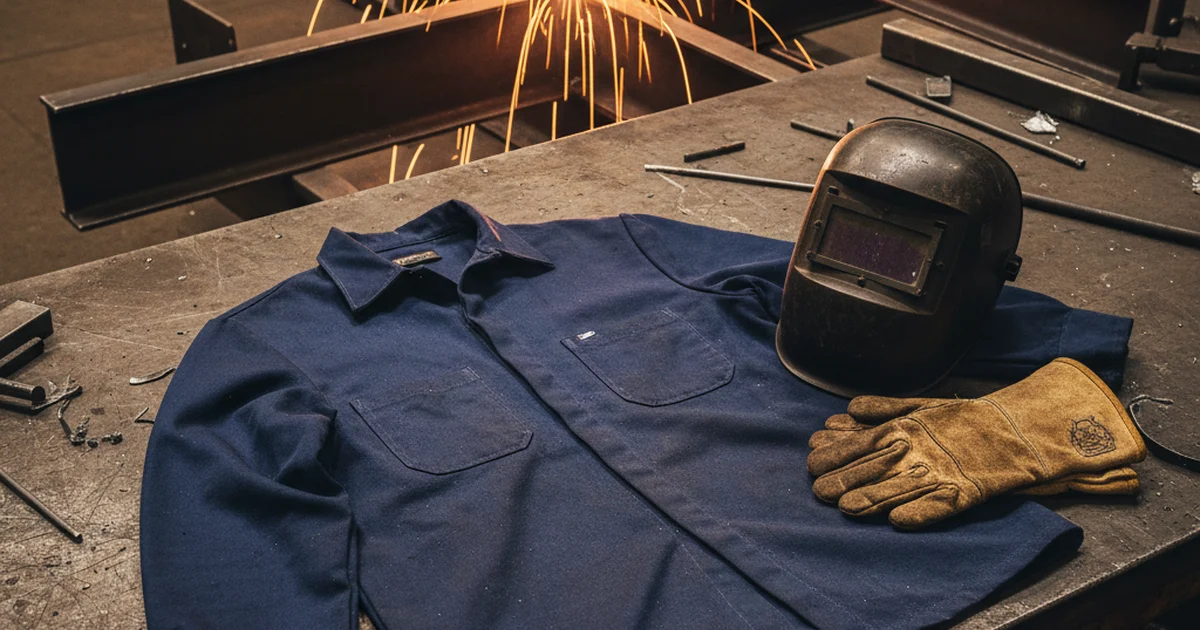
This is the one I'd put on my own back for everyday FR-cotton welding, and it's a documentation decision as much as a comfort one. The FN9-42C is 9 oz FR-treated cotton — mid-weight, breathable, launders like normal workwear — and it's the only jacket in this set whose listing actually states how long the FR lasts: the treatment is rated to survive 50 home wash cycles per ASTM F1506. With treated FR, that laundering-durability number is the whole ballgame, because the finish — not a fiber — is what's stopping ignition, and a finish you wash out is protection you've lost. Most pages just don't tell you, which means you're trusting the brand on faith; this one puts a number on the line.
Who it's for: the everyday welder who wants a jacket that'll still be protecting them after a year of weekly washes and isn't chasing the absolute cheapest tag. The real trade-off is that you pay a mid-range price for documentation rather than for armor — it's not tougher than the hybrid, it's just more honest about its lifespan. The VOC pain it solves is the recurring complaint that FR cotton "stops working" after a season; if you launder it right, the FN9-42C tells you exactly how long it's good for instead of leaving you guessing. The honest con beyond the single stingy pocket: it carries no published arc rating and no NFPA 2112 statement, so it's spatter and flash-spark protection only, and the navy shade shows scorch marks where lighter spatter kisses the weave.
- Pros: Documented FR durability (50 washes, ASTM F1506); breathable 9 oz cotton; launders normally; mid-range price.
- Cons: Only one pocket; no stated arc rating or NFPA 2112 on the page; navy shows spatter scorch.
Check price at Working Person's Store →
2. Black Stallion FRB9-30C-PS — best leather-hybrid for heavy spatter
If you want leather's spatter resistance without baking inside a full hide jacket, this is the pick. The FRB9-30C-PS puts grain pigskin across the front and split cowhide on the sleeves — exactly where overhead and out-of-position welding throws spatter — over a 9 oz FR-cotton body that still lets your back breathe. Pigskin is the smart choice for the front panel: it stays supple where stiff cowhide would crack, and it takes a spark glob that would burn a pinhole through cotton and just shrugs it off. The page states it's washable up to 50 home laundering cycles without losing FR properties and is ASTM compliant, though it stops short of an NFPA 2112 claim or an arc rating.
Who it's for: the welder doing heavy stick, gouging, or grinding right next to the weld, who's tired of patching pinholes in a cotton jacket but won't wear a full leather coat in a warm shop. The real trade-off is heat: you're carrying leather across your whole front and both arms, so this is the warmest jacket in the set, and at $95.99 it's also the most expensive — you're paying for armor placement, not for a rating. The VOC pain it solves is the classic "my cotton jacket is a colander after a month of overhead" gripe; the leather front simply doesn't perforate. The honest con: it runs hot, it's the priciest here, and like the rest it ships with no NFPA 2112 statement and no published arc rating — the leather buys you spatter protection, not an electrical spec.
- Pros: Pigskin front + cowhide sleeves take spatter where you get hit most; FR-cotton back breathes; 50-wash FR durability stated.
- Cons: Hottest jacket in this set; priciest at $95.99; no NFPA 2112 statement and no arc rating published.
Check price at Working Person's Store →
3. Black Stallion B9C BSX — best budget classic welder's collar
For under forty bucks, this is the most jacket-shaped jacket on the list — a true flip-up welder's collar that guards your neck and throat from overhead spatter, in the same 9 oz FR cotton as the rest. That collar is the reason to buy it: it's the single feature that separates a real welding jacket from a generic FR shirt, and the thing most cheap jackets skip to hit a price. My one gripe is the marketing. The page references NFPA 70E and slaps a "CAL 8+" label on it, but gives no precise ATPV value or CAT category — so I treat that arc number as a vibe, not a rating. Under NFPA 70E, an arc number only means something when it's a stated ATPV (or EBT) in cal/cm² tied to a PPE Category; "CAL 8+" with no value behind it tells you nothing you can put on an electrical job.
Who it's for: the new hire, the hobby welder, or the shop kitting out a rack of loaners who want a genuine welder's collar without spending real money. The real trade-off is that you're buying the collar and the 9 oz cotton, full stop — no documented durability, no honest rating. The VOC pain it solves is the under-$40 buyer's frustration that cheap "welding jackets" are really just FR shirts with no neck protection; this one actually has the collar. The honest con: that "CAL 8+" claim is the kind of vague number that gets a welder hurt if they read it as arc-flash protection — buy it for stick and MIG spatter and the collar, and ignore the arc label entirely.
- Pros: Genuine flip-up welder's collar; 9 oz FR cotton; cheapest welder's-collar option here at $36.99.
- Cons: "CAL 8+" page claim with no real ATPV/CAT — don't trust it as an arc rating; treated-FR type not specified.
Check price at Working Person's Store →
4. Black Stallion BXTN9C Stryker FR — cheapest, best for lap coverage
The Stryker FR is the budget entry, and what it's actually good at is coverage: it's cut extended length, so when you're seated or welding overhead it drapes over your lap instead of riding up and leaving a gap at your belt. That gap is where a lot of welders take their worst spatter burns — right at the waistline when they reach up — and the long cut closes it. It's a real, underrated benefit, and it comes in the same 9 oz FR cotton as the rest at the lowest price in the set.
Who it's for: the seated welder (bench, pipe, automotive) or the occasional welder who wants maximum coverage for minimum money. The real trade-off is disclosure — this is the thinnest spec sheet in the set, with no arc rating and no NFPA 2112 statement on the page, and bigger sizes step up in price. You're buying Black Stallion's FR-cotton reputation and the long cut, not a documented number. The VOC pain it solves is the lap-gap burn that short jackets leave when you're sitting or reaching overhead. The honest con: if you care about a paper trail on durability or rating, this jacket gives you the least of any here — for a backup jacket or an occasional welder, that's a fine trade at $32.99; for a daily driver, step up to the FN9-42C.
- Pros: Cheapest jacket here; extended length covers your lap when seated or overhead; same 9 oz FR cotton.
- Cons: Thinnest spec disclosure (no arc rating, no NFPA 2112 on page); larger sizes priced higher.
Check price at Working Person's Store →
How to choose an FR welding jacket
Five things actually decide this purchase. Work through them in order and the right jacket usually picks itself.
1. Process and position. Heavy stick, gouging, and overhead work throw the worst spatter, which pushes you toward leather or a leather-fronted hybrid like the FRB9-30C-PS. Flat or downhand MIG in a hot shop pushes you the other way — toward breathable FR cotton, because you'll wear it all day and the spatter is lighter. Be honest about what you actually run most: the jacket that protects is the one you keep on.
2. The collar. A real flip-up welder's collar is the difference between a welding jacket and an FR shirt with a jacket label. If you weld overhead at all, insist on one — the B9C BSX is here specifically because it has a genuine collar at a budget price.
3. Shop temperature. Weight and material decide how long you last before you shed the jacket. A 9 oz cotton jacket breathes; the same jacket fronted in leather runs noticeably hotter. If your shop hits triple digits in summer, lean cotton and lean light; if it's a cold structural-steel job in February, the warmth of the hybrid is a feature, not a bug.
4. Coverage and fit. Length matters more than people think — the extended-cut Stryker exists because the waistline gap is a real burn point when you're seated or reaching up. Buy for the position you weld in, not the position you stand in at the counter.
5. Laundering durability. All four here are treated FR — an FR finish on cotton — which is engineered to last the garment's useful life if you wash it right. Skip the chlorine bleach, the hydrogen-peroxide bleach, the fabric softener, and the starch; they strip the FR finish or leave flammable residue, and hard-water minerals can dull it over time. Wash inside-out, warm water helps flush welding oils out of the fibers, and always defer to the garment's own care label. That's exactly why the FN9-42C's stated 50-wash ASTM F1506 number matters: with treated FR, wash durability is the spec that determines how long the protection actually lasts.
One rule that overrides all five: match the jacket to the hazard, not the marketing. If your job has an arc-flash electrical exposure, none of these four is the answer no matter how good the price is — you need a garment with a stated ATPV or EBT in cal/cm² and the right NFPA 70E PPE Category.
Frequently Asked Questions
Is a leather or FR-cotton welding jacket better?
Neither wins outright. Leather (and pigskin/cowhide hybrids) resists heavy spatter and grinding sparks better and won't ignite, but it's heavier, stiffer, and hotter to wear. FR cotton breathes, weighs far less, and launders like normal workwear, but gives up some burn-through resistance. Choose leather for heavy stick and overhead work; choose FR cotton for all-day MIG in a hot shop. A pigskin-front hybrid splits the difference.
Are these FR welding jackets arc-rated?
No. Every jacket in this guide is a spatter and flash-spark garment, and none publishes an arc rating in cal/cm². All arc-rated clothing is flame-resistant, but not all FR clothing is arc-rated. If your job has an arc-flash electrical hazard governed by NFPA 70E, "FR" alone is not enough — you need a garment with a stated ATPV (or EBT) and the correct PPE Category. Match the garment to the hazard.
What does the "CAL 8+" label on the B9C BSX actually mean?
Not enough to rely on. Under NFPA 70E, an arc number only counts when it's a stated arc rating — an ATPV or EBT value in cal/cm² — tied to a PPE Category (CAT 1 needs at least 4 cal/cm², CAT 2 at least 8). A page that just says "CAL 8+" without a verified ATPV value hasn't given you a usable rating. I treat it as marketing, not protection, and rank the B9C BSX as a spatter jacket only.
Is treated FR cotton as safe as inherent FR?
Both can protect well — the difference is how they age. Inherent FR means the fiber itself (modacrylic or aramid) is flame-resistant and can't wash out. Treated FR is a flame-resistant finish on cotton; it lasts the garment's life if you launder it correctly, but it can be degraded by the wrong wash routine or hard water. Every jacket in this guide is treated FR cotton, which is why I weight laundering durability so heavily — and why the FN9-42C's published 50-wash figure stands out.
How do I wash an FR welding jacket without ruining it?
Home laundering is fine. Wash it inside-out with normal detergent, and avoid chlorine bleach, hydrogen-peroxide bleach, fabric softener, and starch — they degrade the FR or leave flammable residue. Many makers suggest warm water (around 140°F) to flush out oils, but defer to the garment's care label. Hard water can deposit minerals that reduce FR, so an extra rinse helps. The FN9-42C above states its FR survives 50 home wash cycles to ASTM F1506.
Does grease or oil on the jacket matter?
A lot. FR resists ignition, but grease and oil don't — a jacket saturated with petroleum can ignite and burn even though the fabric underneath is flame-resistant. A heavily soiled FR garment is a fire hazard, so clean it promptly or retire it. This is also why makers recommend warm-water washing: it helps flush oils out of the fibers before they build up. Per OSHA guidance, contaminated PPE shouldn't stay in service.
How long does an FR welding jacket last?
It depends on use and care, not a fixed date. Welders often report getting roughly 18 to 30 months out of a treated-FR cotton jacket before the finish or the fabric gives out — but that's an owner-report range, not a guarantee, and a jacket that's scorched through, oil-saturated, or has lost its FR finish should be retired immediately regardless of age. The FN9-42C is the only jacket here that publishes a durability figure (50 wash cycles to ASTM F1506); for the others you're going by feel and inspection.
Is an FR welding jacket fireproof?
No — "fireproof" isn't a real garment property. FR fabric resists ignition, self-extinguishes once the heat source is removed, and won't melt and drip onto your skin the way ordinary synthetics do. It can still scorch, char, or eventually burn under enough sustained heat. The point of an FR welding jacket is buying you time to get clear of sparks, spatter, or a flash — not making you immune to fire.
Why Trust This Guide
This guide is written and reviewed by Wes Calder, an independent flame-resistant-workwear reviewer. Every recommendation is built on the published standards (NFPA 2112, NFPA 70E, ASTM F1506), manufacturer spec sheets and garment tags, hands-on handling, and what tradespeople actually report — and we tell you when a number is a manufacturer claim versus an independent standard, and when a garment is FR but not arc-rated. We earn an affiliate commission if you buy through some of our links, at no extra cost to you, and we never rank by commission over safety — see our affiliate disclosure.