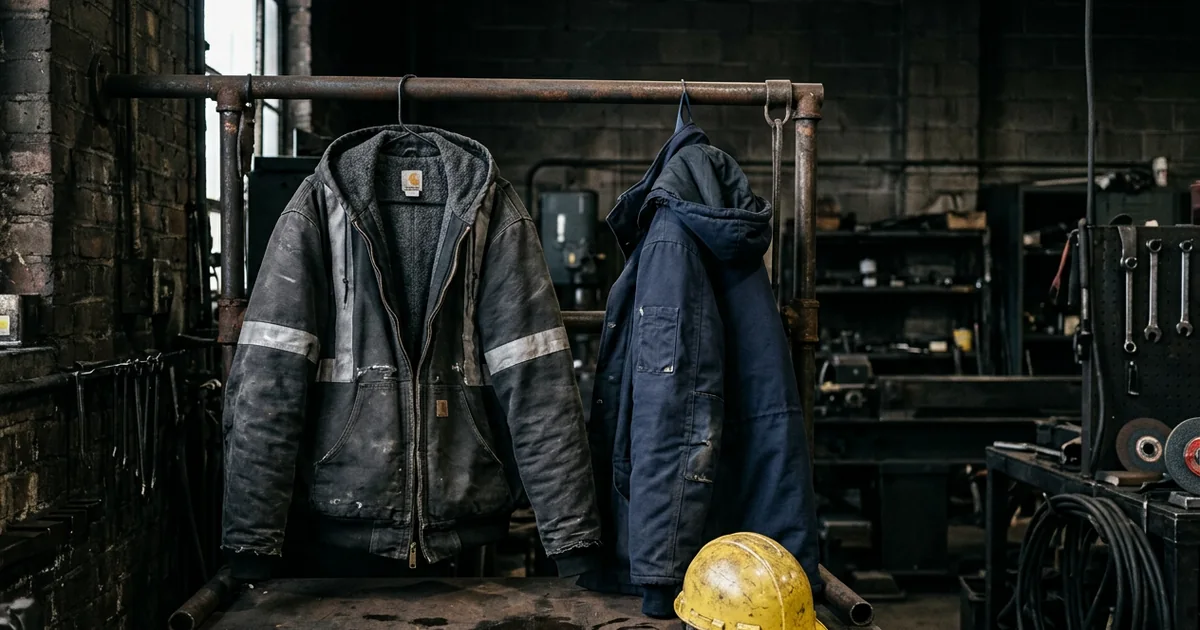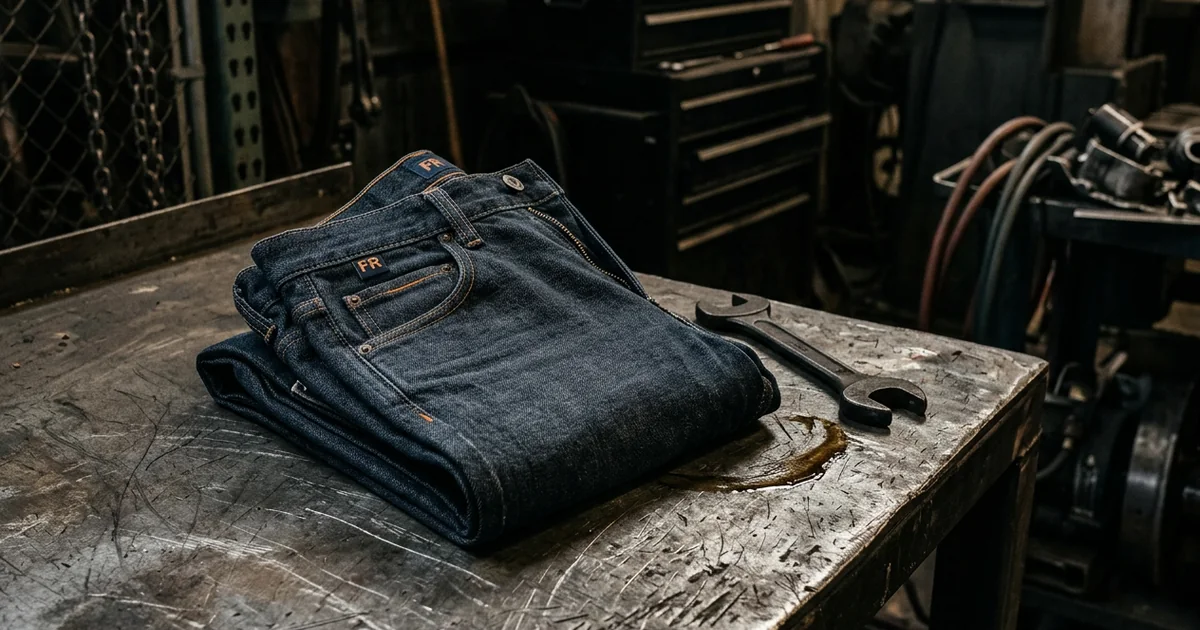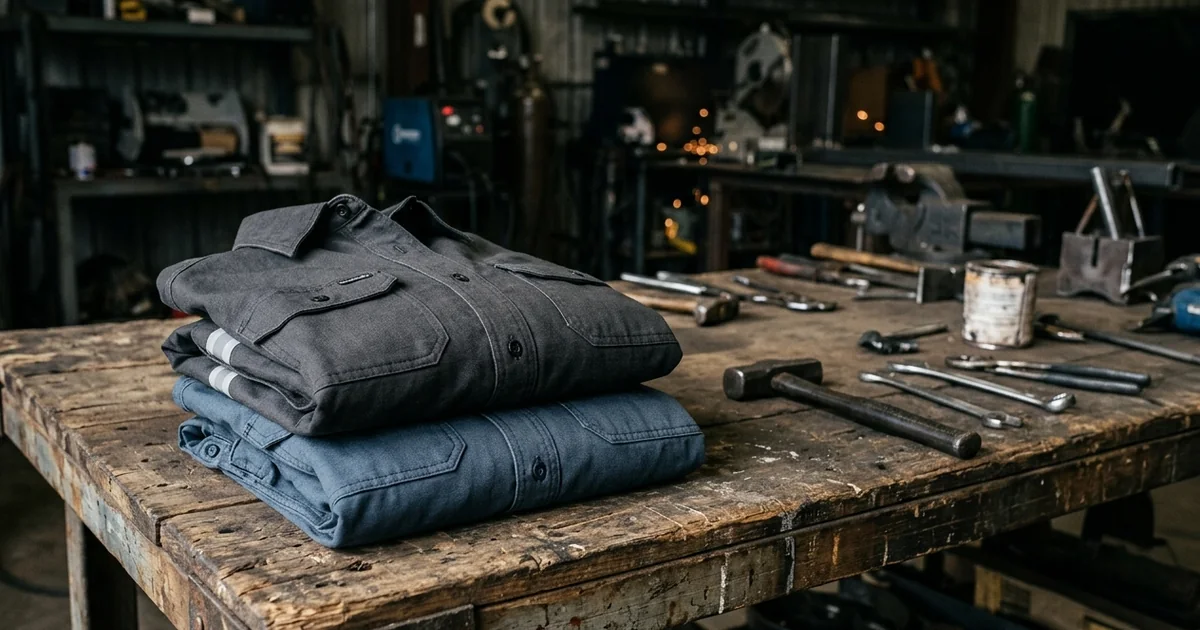

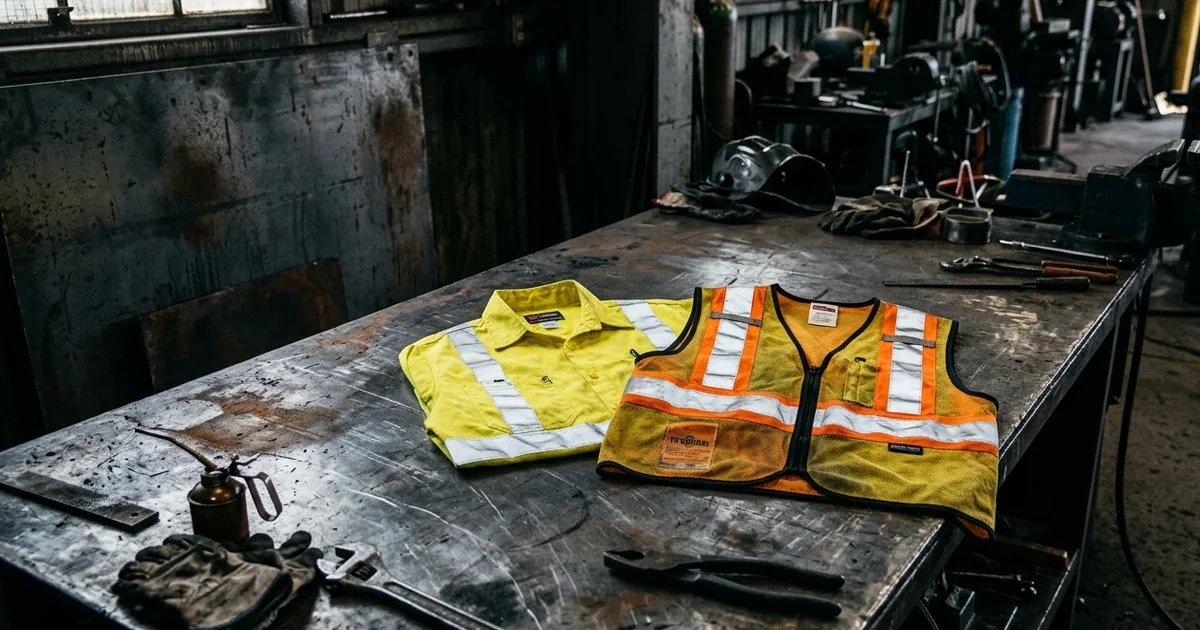
If you want one garment that does the most jobs, my top pick is the Carhartt 105784 Brite Lime Class 3 FR Shirt — it's the only piece in this guide that's UL classified to NFPA 2112 (flash fire) and rated ANSI/ISEA 107 Class 3 for visibility. But "best" depends on your hazard: arc flash, flash fire, or just being seen near traffic. FR clothing is fabric that resists ignition, self-extinguishes when the ignition source is removed, and won't melt onto your skin — it is not "fireproof." A standard polyester hi-vis vest does the opposite: it melts. That single difference is what this guide is about.
Key Takeaways
- Two standards, not one. Real FR hi-vis must clear ANSI/ISEA 107 for visibility AND a thermal standard (NFPA 2112 for flash fire, or an arc rating under NFPA 70E / ASTM F1506). See how the thermal side works in arc-rated vs. flame-resistant.
- NFPA 2112 ≠ an arc rating. NFPA 2112 is a flash-fire standard; cal/cm² (ATPV) is an arc-flash number. Only some listings publish a cal/cm² — and I never borrow one model's number for another.
- Inherent beats treated for longevity. Modacrylic/aramid blends are FR by fiber; FR-treated cotton relies on a finish you can degrade with bad laundering. Both are legitimate — see my best FR vests shortlist.
- A shirt protects; a vest layers. A Class 3 FR shirt is full coverage; a mesh FR vest is a visibility layer you wear over rated FR base layers. More on shirts in best hi-vis FR shirts.
- Class 2 vs Class 3. Class 3 has more background fabric and sleeves for highway-speed or low-light work; Class 2 suits lower-speed roadside and yard jobs.
How I ranked these (protection first, not commission)
I rank protection first, then value, then fit. I only quote a spec when the product listing actually states it — if a listing doesn't publish a cal/cm² ATPV, an NFPA 2112 classification, or a fabric weight, you'll see "not stated" or "—" rather than a number I made up. That rule matters most in FR, because a fabricated cal/cm² figure is the kind of mistake that gets someone burned. I don't borrow one garment's arc rating for another, and I don't imply NFPA 2112 where a listing only cites NFPA 70E or ASTM F1506. Where I rank a cheaper or lighter garment higher, it's on merit (inherent fiber, real coverage, a verified rating) — never on payout.
| Pick | Fabric / weight | Arc rating (if stated) | Best for | Price |
|---|---|---|---|---|
| 1. Carhartt 105784 Shirt (Class 3) | 6.5 oz inherent (modacrylic/aramid/lyocell) | — (UL classified to NFPA 2112) | Dual-standard daily wear | $152.99 |
| 2. Tingley S88122 Hoodie (Class 3) | 10.5 oz modacrylic/cotton blend | 16.0 cal/cm² | Cold-weather arc work | $195.99 |
| 3. Black Stallion VF1110 Vest (Class 2) | 9 oz FR-treated cotton | 8.2 cal/cm² (ARC 2) | Value arc-rated vest | $74.99 |
| 4. OccuNomix LUX SSBRPFR Vest (Class 2) | Inherent modacrylic (wt. —) | 5.5 cal/cm² | Break-away / snag hazards | $115.00 |
| 5. Ergodyne 8260 FRHL Vest (Class 2) | 5.4 oz inherent modacrylic mesh | 5.1 cal/cm² | Hot-weather breathability | $89.99 |
| 6. Carhartt 105787 Vest (Class 2) | 4.5 oz inherent FR mesh | — | Lightest FR layer-over | $79.99 |
1. Carhartt 105784 Brite Lime Class 3 FR Shirt — best for dual-standard daily wear
This is the cleanest answer to "FR hi-vis clothing," because it's the only garment here that pairs a flash-fire standard with top-tier visibility. The listing states it's UL classified to NFPA 2112, meets NFPA 70E and ASTM F1507, and meets ANSI/ISEA 107 Class 3, Type R. The 6.5 oz blend (48% TENCEL lyocell / 40% modacrylic / 12% aramid) is inherent FR, so the protection is in the fiber. The honest trade-off: no cal/cm² ATPV is stated, so it's not the pick if a specific arc rating is what your site requires.
- Pros: Only pick with both NFPA 2112 and ANSI Class 3; inherent FR blend; full-coverage long sleeve; breathable knit for all-day wear.
- Cons: No published cal/cm² arc rating; most expensive shirt here; it's a shirt, not a layering vest.
Check price at Working Person's Store →
2. Tingley S88122 Hi-Vis FR Hooded Sweatshirt — best for cold-weather arc work
If a published arc number is what you need, this is the strongest one in the guide: the listing states an arc rating of 16.0 cal/cm², NFPA 70E HR2, ASTM F1506, and ANSI/ISEA 107 Class 3. The 10.5 oz 55% modacrylic / 45% cotton blend resists burning, scorching, and melting, and the hood plus Class 3 coverage make it a genuine cold-weather layer. The catch: NFPA 2112 is not stated, so treat this as an arc/70E garment, not a verified flash-fire one.
- Pros: Highest stated arc rating here (16.0 cal/cm²); Class 3 visibility; hooded for cold work; thick, durable fabric.
- Cons: NFPA 2112 not stated; heaviest at 10.5 oz; priciest pick overall; warm for summer.
Check price at Working Person's Store →
3. Black Stallion VF1110 TruGuard 250 FR Vest — best value arc-rated vest
This is the most affordable arc-rated piece in the guide and still posts a useful number: the listing states an 8.2 cal/cm² ATPV (ARC 2), NFPA 70E, ASTM F1506, and ANSI/ISEA 107 Type R Class 2. That 8.2 puts it in CAT 2 territory (≥8 cal/cm²). The honest trade-off is the fabric: it's 9 oz FR-treated cotton, not inherent, so the FR depends on a finish — launder it to spec and inspect for wear over time. NFPA 2112 is not stated.
- Pros: Best arc rating per dollar (8.2 cal/cm², CAT 2); ASTM F1506 and NFPA 70E compliant; comfortable cotton hand.
- Cons: FR-treated, not inherent; heaviest vest at 9 oz; Class 2 only; NFPA 2112 not stated.
Check price at Working Person's Store →
4. OccuNomix LUX SSBRPFR Break-Away FR Vest — best for snag hazards
This one earns its spot on the fabric and the break-away design. The listing states inherently flame-resistant modacrylic, FR 3M Scotchlite reflective stripes, a 5.5 cal/cm² ATPV, NFPA 70E, ASTM F1506, and ANSI/ISEA 107 Class 2. Break-away panels at the shoulders, sides, and front let the vest release if it snags on equipment — a real safety feature around moving machinery. The 5.5 cal/cm² is honest CAT 1 protection, weight isn't stated, and NFPA 2112 isn't stated.
- Pros: Inherent modacrylic FR; break-away panels for snag safety; FR reflective striping; ASTM F1506 and NFPA 70E.
- Cons: Modest 5.5 cal/cm² (CAT 1); weight not stated; NFPA 2112 not stated; Class 2 only.
Check price at Working Person's Store →
5. Ergodyne 8260 FRHL Class 2 FR Vest — best for hot-weather breathability
If heat is your enemy, this is the vest you'll actually keep on. The listing states 5.4 oz inherent modacrylic mesh, a 5.1 cal/cm² ATPV, NFPA 70E, ASTM F1506, and ANSI/ISEA 107 Class 2. The open mesh breathes well and the inherent fiber means the FR doesn't wash out. Be clear-eyed about the number, though: 5.1 cal/cm² is a thin CAT 1 margin, so this is a visibility-and-light-protection layer over rated FR clothing, not standalone arc protection. NFPA 2112 is not stated.
- Pros: Lightest arc-rated vest (5.4 oz); breathable inherent modacrylic mesh; ASTM F1506 rated; comfortable in heat.
- Cons: Lowest stated cal/cm² (5.1, thin CAT 1); Class 2 only; NFPA 2112 not stated; mesh offers less coverage.
Check price at Working Person's Store →
6. Carhartt 105787 Brite Lime Class 2 Mesh FR Vest — best lightweight layer-over
The lightest inherent-FR vest here and the easiest one to throw over an FR base layer. The listing states 4.5 oz inherent FR mesh (50% modacrylic / 30% lyocell / 10% aramid / 10% nylon), meets NFPA 70E and ASTM F1506, and meets ANSI/ISEA 107 Class 2, Type R. The honest limitation: no cal/cm² and no NFPA 2112 are stated, so its protection is "FR-compliant mesh," not a verified arc number. Buy it as a visibility layer over rated FR clothing — not as your only protection.
- Pros: Lightest pick (4.5 oz); inherent FR mesh blend; NFPA 70E and ASTM F1506; pairs cleanly over an FR shirt.
- Cons: No published cal/cm²; NFPA 2112 not stated; Class 2 only; not standalone arc protection.
Check price at Working Person's Store →
Why does a normal hi-vis vest fail in a fire?
Most everyday hi-vis vests are polyester. Polyester is a thermoplastic — under flash-fire or arc-flash heat it doesn't just burn, it melts and drips, and molten fabric on skin causes deeper burns than the flame alone. FR hi-vis clothing is built from materials that self-extinguish and won't melt: inherent fibers like modacrylic and aramid, or FR-treated cotton. The "dual-compliance" point is simple — a garment has to be visible enough to keep you from getting hit (ANSI/ISEA 107) and thermally rated for the energy hazard you face (NFPA 2112 for flash fire, or a cal/cm² arc rating under NFPA 70E / ASTM F1506). A vest that only does one of those isn't FR hi-vis; it's half the protection.
Frequently Asked Questions
What's the difference between FR hi-vis and regular hi-vis clothing?
Regular hi-vis clothing is usually polyester, which melts and drips under fire or arc-flash heat. FR hi-vis clothing is made from flame-resistant materials that self-extinguish and won't melt, while still meeting ANSI/ISEA 107 visibility requirements.
Is NFPA 2112 the same as an arc rating?
No. NFPA 2112 is a flash-fire standard, while an arc rating (measured in cal/cm² as ATPV) covers electrical arc flash under NFPA 70E and ASTM F1506. A garment can carry one, the other, or both, and only some listings publish a cal/cm² number.
How many cal/cm² do I need?
It depends on your incident-energy assessment. As a reference, the arc category bands are roughly CAT 1 at 4 cal/cm², CAT 2 at 8, CAT 3 at 25, and CAT 4 at 40. In this guide the Tingley hoodie states 16.0 cal/cm² and the Black Stallion vest states 8.2 cal/cm²; always match the garment to your site's hazard analysis.
Is inherent FR better than FR-treated?
Inherent FR is built into the fiber and won't wash out, which generally means longer-lasting protection. FR-treated cotton relies on a chemical finish that can degrade with improper laundering. Both are legitimate when used and cared for correctly; inherent simply needs less worry over the garment's life.
Do I need Class 2 or Class 3 FR hi-vis?
Class 3 provides more background fabric and sleeve coverage for high-speed traffic, low light, or poor visibility. Class 2 is suited to lower-speed roadside and yard work. The Carhartt 105784 shirt and Tingley hoodie here are Class 3; the four vests are Class 2.
Why Trust This Guide
This guide was written and reviewed by Wes Calder, an independent flame-resistant-workwear reviewer. I quote only the specs a product listing actually states, mark everything else "—," and never borrow one garment's arc rating for another — in FR safety gear, a fabricated number can get someone hurt. FR Gear Lab earns a commission on some links, but we never rank by commission over safety. See our affiliate disclosure for details.