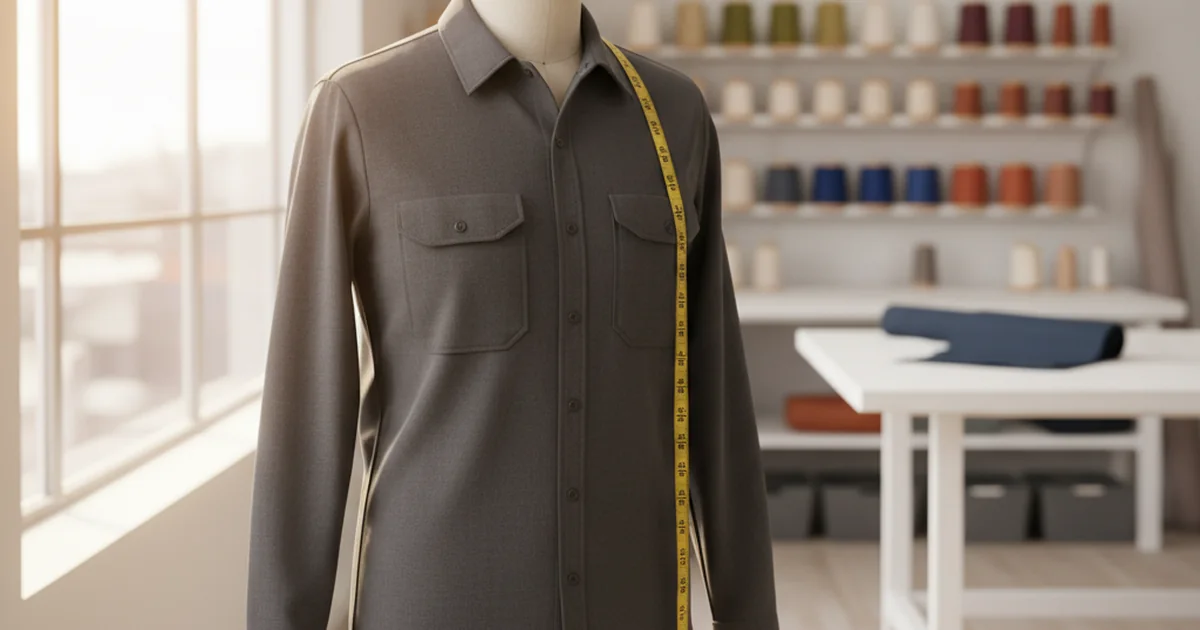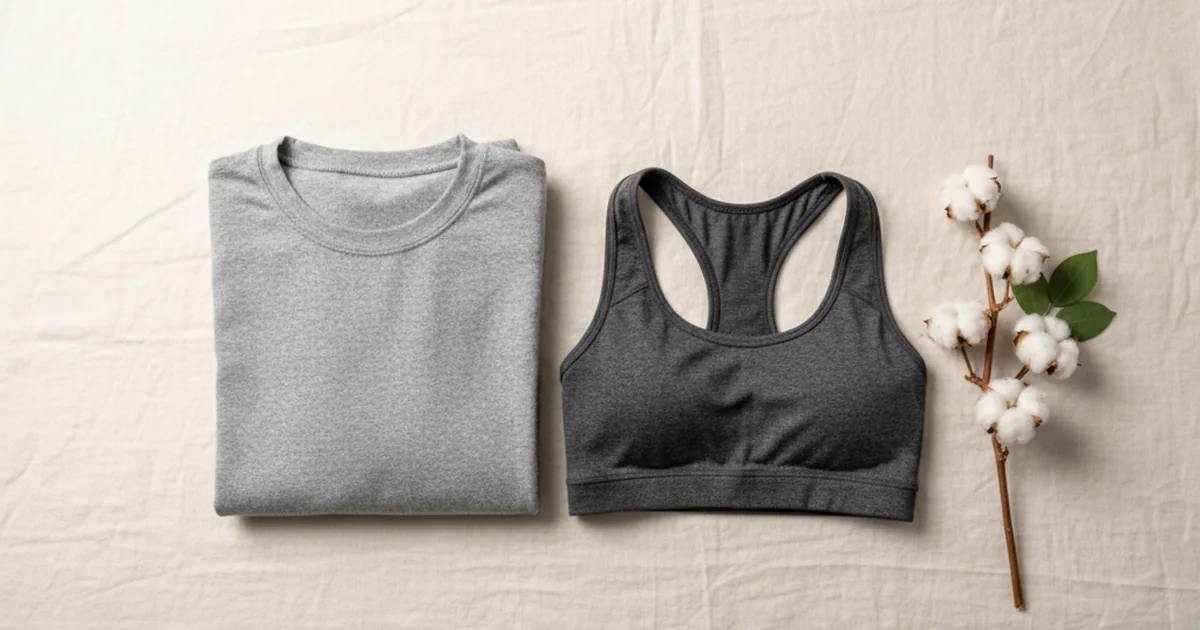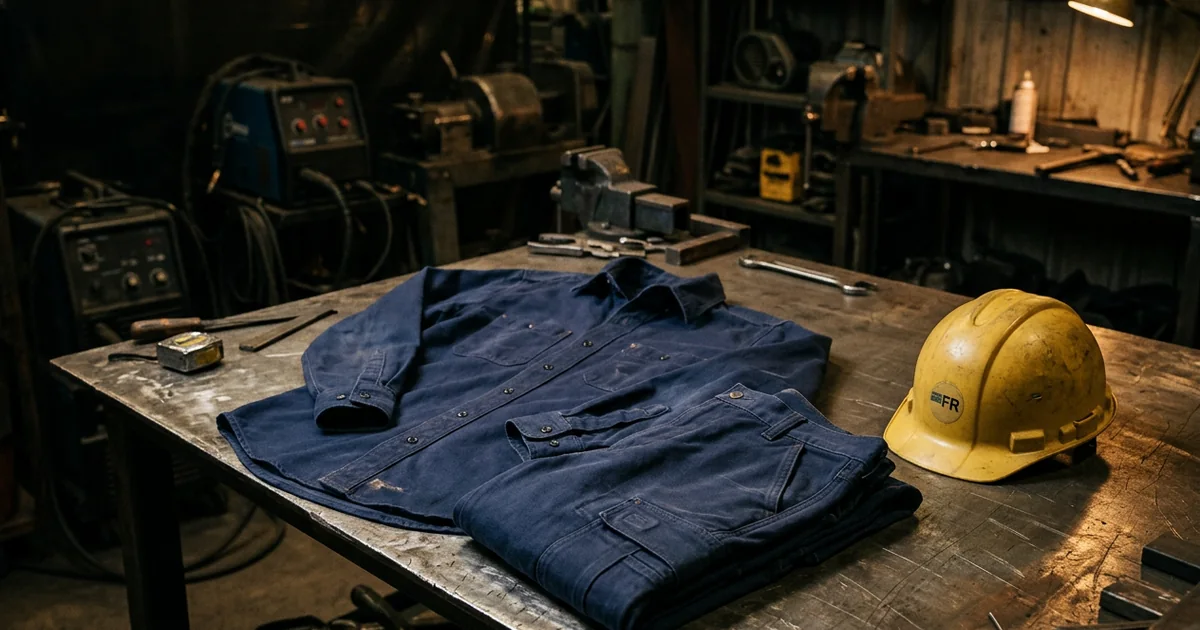

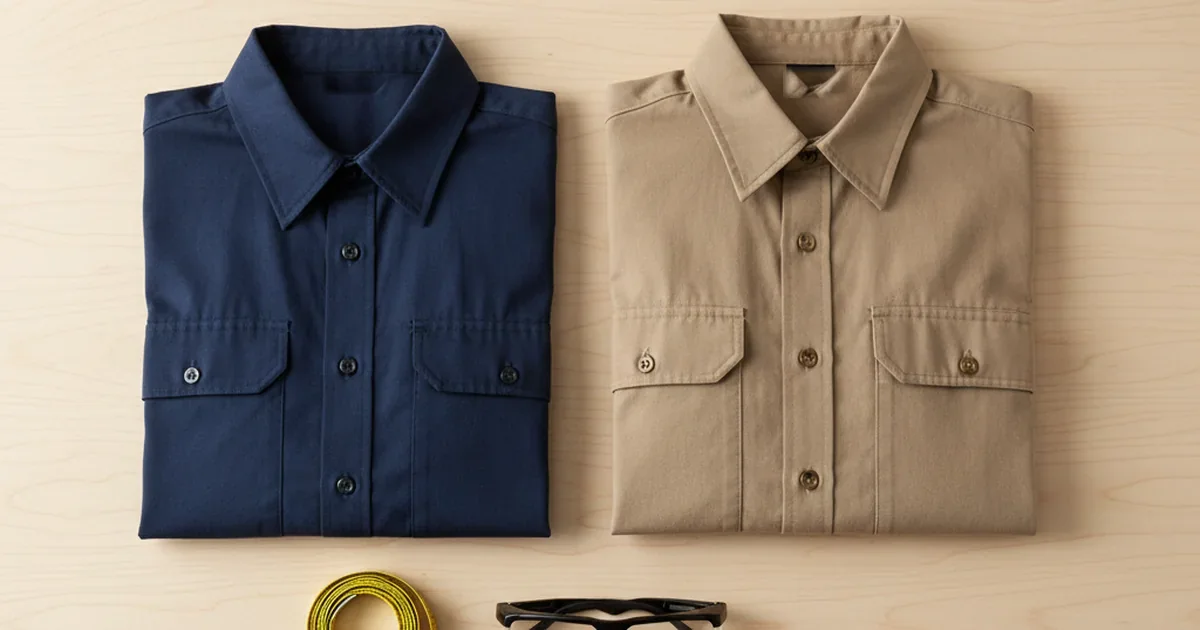
Do women need women's-specific FR clothing, or can you just buy a smaller men's size? For most women working in flame-resistant trades, the honest answer is yes — and it's a safety answer, not a style one. A men's-cut FR garment fails a woman's body in two directions at the same time: too tight where it collapses the protective air gap, and too loose where it snags, rides up, and leaves skin exposed. Flame-resistant (FR) clothing is fabric that resists ignition, self-extinguishes, and won't melt onto skin — it is not "fireproof," and it only protects the skin it actually covers, in the fit it was tested in.
Key Takeaways
- A men's cut fails two ways at once: too tight at the bust and hips (which collapses the insulating air gap FR relies on, so heat reaches skin faster) and too loose at the torso, sleeves, and inseam (which snags, rides up, and exposes skin).
- Proper fit is the law, not a preference: OSHA requires employers to "select PPE that properly fits each affected employee," and the construction PPE rule was amended to spell out "properly fits" effective January 13, 2025.
- "Shrink it and pink it" doesn't fix it: a real women's block moves the shoulder seam inboard, adds bust room, raises the back rise, and re-grades the hip-to-waist ratio — things a smaller men's size never does.
- The surveys back it up: a CSA Group study of thousands of women found about half said their PPE doesn't fit properly and roughly 40% tied an injury or incident to it — with nearly 40% resorting to improvised fixes like rolling, pinning, or taping their gear.
This is a safety problem, not a comfort problem
FR clothing doesn't work by being magic fabric — a big part of how it protects you is the thin insulating air gap between the garment and your skin. As the FR maker Tyndale explains, that clothing "should create an insulating air gap. This air gap enhances the garment's protective performance if exposed to heat or flame." Get the fit wrong and you lose it in one of two ways.
Too tight — where a men's cut pulls across a woman's bust or hips — "minimiz[es] the insulating air gap between your skin and the garment," so, in Tyndale's words, "heat transfers more rapidly to your skin, increasing the likelihood and severity of burns." Too loose — the excess torso length, long sleeves, and long inseam a men's garment leaves on most women — "can catch on equipment or machinery, creating a risk of entanglement or tripping," and "may shift or ride up, leaving areas of your body exposed to thermal hazards."
That's the part most articles miss: a men's garment on a woman is usually both at once — squeezing out the air gap in the chest and hips while flapping loose everywhere else. Sizing up fixes the tight spots but makes the loose spots worse; sizing down does the reverse. Neither is a fix, because the pattern is drawn for a different body.
What the surveys actually say
You don't have to take a brand's word for it — independent research says the same thing. Present these as what the researchers found, not as our own testing:
- A CSA Group study of nearly 3,000 Canadian women workers found about half reported their PPE does not fit properly, roughly 40% attributed an injury or incident to ill-fitting PPE, and nearly 40% used improvised workarounds (rubber bands, duct tape, safety pins) — which, as safety pros point out, can void the gear's certification.
- A CPWR (Center for Construction Research and Training) survey of tradeswomen, reported by Construction Dive, found 77% said they'd been exposed to a hazard because of ill-fitting PPE, and nearly nine in ten reported difficulty getting PPE that fits — attributed to CPWR research-to-practice director Jessica Bunting.
- BLS data puts women at only about 5–6% of welders in the U.S. — a small but real and growing group that the men's-default supply chain was never built for.
The through-line: this isn't a niche preference. A large share of the women already wearing FR every day are wearing gear that doesn't fit — and getting hurt or working around it.
What a "true women's cut" actually changes
A genuine women's garment is drafted from a woman's pattern, not scaled down from a men's one. The concrete changes — and what each one fixes:
| Change on a women's block | What it fixes |
|---|---|
| Contoured waist + higher back rise | Closes the "back gap" that exposes skin when you bend, reach, or kneel |
| Re-graded hip-to-waist ratio | Stops the men's straight cut from pulling at the hips while gaping at the waist |
| Bust darts / princess seams, crotch gussets | Adds room over the chest and mobility without extra loose fabric |
| Shorter, graded sleeve & inseam (Short/Reg/Tall) | Ends the rolled cuffs and drag-length legs that expose skin and snag |
| Shoulder seam moved inboard | Keeps the garment from shifting and opening gaps at the collar and wrist |
Put plainly: a smaller version of a men's FR shirt still has shoulder seams in the wrong place, chest room that pulls across the front, and a torso length that doesn't account for a different hip-to-waist ratio. That's why "shrink it and pink it" — take the men's garment, scale it down, dye it — has become the industry's own shorthand for what doesn't work.
It's not optional: what OSHA and NFPA 70E require
Proper fit isn't a nice-to-have. Under general industry rules, OSHA 29 CFR 1910.132(d)(1)(iii) requires employers to "Select PPE that properly fits each affected employee." OSHA amended the construction PPE standard (1926.95) to state the same "properly fits" requirement explicitly, effective January 13, 2025 — a change driven largely by the fit problems women reported. OSHA's own reasoning: improperly fitting PPE "may fail to provide any protection to an employee, reduce the effectiveness of protection, present additional hazards, or discourage employees from using such equipment."
For arc-flash work, NFPA 70E makes the same point in its care-and-use provisions: "Tight-fitting clothing shall be avoided. Loose-fitting clothing provides additional thermal insulation because of air spaces. Arc-rated apparel shall fit properly such that it does not interfere with the work task." In plain terms — the standard assumes the garment is worn in a proper fit, closed up and unmodified. A garment you have to roll, pin, or cuff to wear isn't being worn the way it was tested.
Quick self-audit: is your men's FR a hazard?
You don't need a lab for this. If any of these is true, your current FR is compromising the protection it's rated for:
- Skin or a base layer shows at your lower back when you bend or kneel.
- The sleeves run past your wrist bone and you roll the cuffs to work.
- The shoulder seam sits out past the point of your shoulder.
- You bunch, belt, or tuck a lot of excess fabric at the waist or torso.
- The pant legs drag or you cuff them (a cuff is also a spark trap for welding).
- It pulls tight across the bust or hips even when the rest is baggy.
Rolled cuffs and excess fabric are exactly what the research flags: as safety consultant Amy Roosa put it about oversized gear, "If, for example, my gloves are too big on me, I am more likely to remove them to complete my job, thus putting myself at risk for injury that the gloves could have prevented." Or, as one tradeswoman told Ergodyne, "We just want to look like everyone else but have it fit us better."
Where to find true women's-cut FR
The good news: real women's-cut FR exists across the price range — you no longer have to choose between "men's gear" and "nothing." Brands that draft an actual women's block include Carhartt Women's FR, Ariat Women's FR, and Bulwark's women's line (princess seams, crotch gussets, contoured waistbands). For picks by garment — and the honest note on which "women's" pieces are actually certified versus just FR — start with our guides:
- Women's FR clothing: the full buyer's guide — shirts, pants, and outerwear that meet NFPA 2112 in a real women's fit.
- Best women's FR pants and best women's FR jeans.
- Best women's FR shirts.
Whatever you buy, the fit rule is the same for everyone: contoured to your body but never compressive, with full coverage at the wrists, waist, and ankles. See FR clothing for welders for the head-to-toe version, and inherent vs treated FR for how the fabric itself is made flame-resistant.
Frequently Asked Questions
Can't a woman just buy a smaller men's FR size?
Not safely, in most cases. A smaller men's garment still has the shoulder seam, chest room, torso length, and hip-to-waist proportions of a men's pattern. Sizing down tightens the loose areas but makes the bust and hips tighter — collapsing the insulating air gap — while sizing up does the reverse. A true women's cut re-draws the pattern instead of just scaling it.
Is women's FR really a safety issue, or just marketing?
It's a genuine safety issue. Ill-fitting FR loses the insulating air gap where it's too tight and exposes skin or snags where it's too loose. Independent surveys (CSA Group surveyed women workers; CPWR surveyed tradeswomen) found large shares reporting improper-fitting PPE and injuries tied to it, and OSHA requires PPE that "properly fits each affected employee."
Does OSHA require FR clothing to fit?
Yes. OSHA 29 CFR 1910.132(d)(1)(iii) requires employers to select PPE that "properly fits each affected employee," and the construction standard (1926.95) was amended to state the same requirement explicitly, effective January 13, 2025. NFPA 70E also directs that arc-rated apparel fit properly and not be tight-fitting.
What actually makes a garment a "women's cut"?
A women's block re-draws the pattern: a higher back rise to close the lower-back gap, a re-graded hip-to-waist ratio, bust room (darts or princess seams), shorter and graded sleeves and inseams, and a shoulder seam moved inboard. A garment that's only been scaled down and recolored isn't a women's cut.
Are women's FR garments actually certified to the same standards?
The good ones are — look for NFPA 2112 (flash fire) or ASTM F1506 with an arc rating (cal/cm²) stated on the tag, exactly as you would for men's FR. But be careful: some garments sold as "women's" welding jackets are FR cotton with no NFPA 2112 or arc rating published at all. Check the tag or listing for the standard, not just the word "flame-resistant."
Why Trust This Guide
This guide is written and reviewed by Wes Calder, an independent flame-resistant-workwear reviewer. Every recommendation is built on the published standards (NFPA 2112, NFPA 70E, ASTM F1506), manufacturer spec sheets and garment tags, hands-on handling, and what tradespeople actually report — and we tell you when a number is a manufacturer claim versus an independent standard, and when a garment is FR but not arc-rated. We earn an affiliate commission if you buy through some of our links, at no extra cost to you, and we never rank by commission over safety — see our affiliate disclosure.