
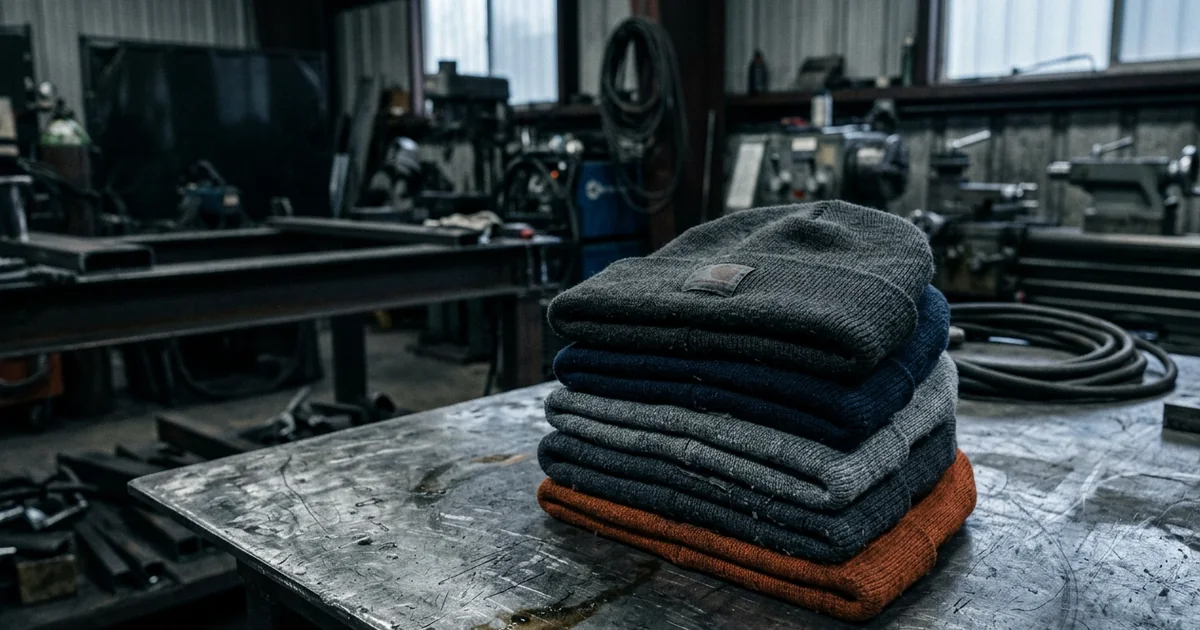
Key Takeaways
- Only one beanie here lists an arc rating. The Ariat Iron Gray Polartec beanie states ATPV 15 cal/cm² (CAT 2) and NFPA 2112. The black colorway uses the same fabric but doesn't republish those numbers.
- NFPA 2112 ≠ an arc rating. 2112 is a flash-fire standard; arc rating (ATPV in cal/cm²) is separate and only some garments publish it — never assume a cal/cm² number a listing doesn't print.
- Fiber tells you a lot. Modacrylic/aramid knits (Ariat, Carhartt Force) are inherent-type FR; the PIP piece is cotton-based AR/FR. For the standards behind these, see my FR balaclava guide.
- A balaclava beats a beanie in real wind. Two of these (Carhartt, PIP) cover the face and neck — warmer and more protective in extreme cold.
- FR knits need FR-safe washing. No fabric softener, no chlorine bleach — follow my how to wash FR clothing guide so the protection lasts.
How I ranked these (protection first, not commission)
I quote a spec only if that product's own listing states it. Where a listing is silent — fabric weight, inherent-vs-treated, an arc rating — I write "not stated" or use a dash. I never borrow a number from one model and apply it to another, and I never invent a cal/cm² figure to make a hat look better. That's especially important here because two of these share a fabric but publish different certifications: same knit, different paperwork, different rank.
The order runs protection → value → fit. A piece that documents NFPA 2112 plus a stated ATPV outranks an identical fabric that doesn't republish those ratings, because in an audit or an incident, the documented number is what counts. Price breaks ties. Nothing here is ranked by payout — for the full picture on how the contenders compare, see my Carhartt vs Ariat vs Dragonwear FR beanie head-to-head.
| Pick | Fabric / weight | Arc rating (if stated) | Best for | Price |
|---|---|---|---|---|
| 1. Ariat FR Polartec Beanie (Iron Gray) | 39% modacrylic / 14% aramid / 43% rayon / 4% spandex; weight — | ATPV 15 cal/cm² (CAT 2); NFPA 2112 + 70E stated | One rated, warm beanie for most workers | $39.95 |
| 2. Ariat FR Polartec Beanie (Black) | 39% modacrylic / 14% aramid / 43% rayon / 4% spandex; weight — | — (not republished on this color page) | Same knit in black | $39.95 |
| 3. Carhartt FR Force Balaclava | 45% modacrylic / 35% lyocell / 20% aramid pique knit; 6.75 oz | — (NFPA 2112 + 70E stated; no ATPV) | Wind/face coverage, flash-fire crews | $42.99 |
| 4. PIP AR/FR Ultrasoft Balaclava | 86% cotton / 12% nylon / 2% spandex; 6.5 oz single layer | ATPV 12.1 cal/cm² (HRC2); ASTM F1506 + 70E stated | Arc-flash dress codes needing a stated cal number | $49.99 |
| 5. Carhartt FR Force Neck Gaiter | 45% modacrylic / 35% lyocell / 20% aramid pique knit; 6.75 oz | — (NFPA 70E stated; no 2112, no ATPV) | FR neck layer under any beanie | $29.99 |
1. Ariat Work FR Polartec Beanie (10027909, Iron Gray) — best for most workers
This is the one I'd hand a new crew member who wants a single warm FR hat that holds up to an audit. The Polartec Power Grid knit is 39% modacrylic and 14% aramid (with rayon and a touch of spandex for stretch), and the Iron Gray listing is the only beanie here that prints the full sheet: NFPA 2112 certified, NFPA 70E certified, and an ATPV of 15 cal/cm² putting it at CAT 2. The honest caveat: the listing calls it "permanently flame-resistant" but doesn't explicitly say inherent vs treated, and it doesn't state a fabric weight.
- Pros: Only beanie here with a stated arc rating (ATPV 15 cal/cm², CAT 2); NFPA 2112 + 70E both stated; modacrylic/aramid Polartec knit is warm and stretchy; one size fits most.
- Cons: Inherent-vs-treated not spelled out; fabric weight not stated; one-size fit won't suit every head.
Check price at Working Person's Store →
2. Ariat Work FR Polartec Beanie (10018117, Black) — best if you need black
Physically this is the same hat as my #1 pick — identical 39% modacrylic / 14% aramid Polartec Power Grid construction — just in black. The reason it ranks second is purely documentation: this color page does not republish the NFPA 2112, NFPA 70E, ATPV, or CAT numbers that the Iron Gray listing carries. I'm not going to copy the gray hat's 15 cal/cm² onto this page, because the black listing doesn't state it. The fabric is the same; the paperwork is thinner.
- Pros: Same warm modacrylic/aramid Polartec knit as the top pick; black colorway; same $39.95 price; described as permanently flame-resistant.
- Cons: Listing doesn't republish NFPA 2112 / 70E / ATPV / CAT — if you need ratings on paper, buy the Iron Gray; weight and inherent-vs-treated not stated.
Check price at Working Person's Store →
3. Carhartt FR Force Balaclava (103520) — best for wind and face coverage
This isn't a beanie — it's a pull-down balaclava with a face mask — but in genuinely cold, windy work it protects more than any watch cap because it covers the face and neck too. The fabric is a 45% modacrylic / 35% lyocell / 20% aramid pique knit at a stated 6.75 oz, UL classified to NFPA 2112 and meeting NFPA 70E. That modacrylic/aramid blend is the inherent-type fiber family, though the listing doesn't use that word. Crucially, it does not publish an ATPV, so don't read a cal/cm² number into it.
- Pros: Covers face + neck for serious wind; UL classified to NFPA 2112; meets NFPA 70E; stated 6.75 oz weight; inherent-type modacrylic/aramid knit.
- Cons: No published arc rating (don't assume cal/cm²); it's a balaclava, not a beanie; inherent-vs-treated not explicitly stated.
Check price at Working Person's Store →
4. PIP AR/FR Ultrasoft Balaclava (9100 HDFR12) — best for a stated arc number
If your site's electrical dress code wants a specific cal/cm² and a standard on the label, this is the easiest match in the group. The PIP single-layer balaclava states ASTM F1506, meets NFPA 70E, and publishes an ATPV of 12.1 cal/cm² at HRC2. The trade-offs are real: it's cotton-based AR/FR (86% cotton / 12% high-tenacity nylon / 2% spandex) rather than a modacrylic knit, it's single-layer at 6.5 oz so it's not the warmest thing here, and the listing doesn't state NFPA 2112 — so don't lean on it for flash-fire if 2112 is what your job requires.
- Pros: Publishes ATPV 12.1 cal/cm² (HRC2) and ASTM F1506; meets NFPA 70E; clean spec-sheet match for arc-flash compliance.
- Cons: Cotton-based AR/FR, not modacrylic; single-layer 6.5 oz = less warmth; NFPA 2112 not stated; inherent-vs-treated not specified; priciest pick at $49.99.
Check price at Working Person's Store →
5. Carhartt FR Force Neck Gaiter (105092) — best FR layer to pair under a beanie
Also not a hat — but I'm including it because the cheapest way to extend FR coverage to your neck and lower face is a gaiter under whichever beanie you pick. It's the same 45% modacrylic / 35% lyocell / 20% aramid Force pique knit as the Carhartt balaclava, at a stated 6.75 oz. It meets NFPA 70E, but the listing does not state NFPA 2112 and does not publish an ATPV — so treat it as a supplementary FR layer, not a standalone head solution.
- Pros: Cheapest pick at $29.99; same inherent-type Carhartt Force knit; stated 6.75 oz; meets NFPA 70E; pairs under any beanie above.
- Cons: Not a hat; NFPA 2112 and ATPV not stated; covers neck only, so you still need head protection.
Check price at Working Person's Store →
Modacrylic knit or cotton AR/FR — which fiber should a beanie be?
The two Ariat beanies and the Carhartt pieces use modacrylic/aramid knits — the inherent-type fiber family, where flame resistance is built into the fiber itself. The PIP balaclava is cotton-based AR/FR, where a treatment or fiber-construction approach delivers the rating. Neither is automatically "better": what matters is the published standard for your hazard. Modacrylic knits in this group are the ones carrying NFPA 2112; the cotton-based PIP is the one carrying a stated ATPV and ASTM F1506. Match the fiber to the paperwork your job demands, not to a marketing word.
Frequently Asked Questions
What is the best FR beanie?
The Ariat Work FR Polartec Beanie in Iron Gray (10027909) is the best pick for most workers because its listing states both NFPA 2112 and an arc rating of ATPV 15 cal/cm² (CAT 2) — the only true beanie here that publishes an arc number. The same hat in black uses identical fabric but doesn't republish those ratings.
Do FR beanies have an arc rating?
Only some do. Of the pieces here, the Ariat Iron Gray beanie states ATPV 15 cal/cm² and the PIP balaclava states ATPV 12.1 cal/cm². The Carhartt pieces and the black Ariat colorway do not publish an arc rating, so you should not assume a cal/cm² number for them.
Is NFPA 2112 the same as an arc rating?
No. NFPA 2112 is a flash-fire standard, while an arc rating (ATPV, measured in cal/cm²) covers arc-flash exposure and is governed separately. A garment can be NFPA 2112 certified without publishing an arc rating, and vice versa — always check which one your hazard requires.
Should I get an FR beanie or a balaclava?
Get a beanie for ordinary cold and a balaclava for real wind or extreme cold, since a balaclava also covers the face and neck. The Carhartt Force and PIP balaclavas here add face coverage; the Ariat beanies are simpler watch-cap style. A neck gaiter can bridge the gap under a beanie for less money.
How do I wash an FR beanie without ruining the protection?
Wash FR knits in warm water with no fabric softener and no chlorine bleach, since both can coat or degrade the fiber and reduce flame resistance. Follow the garment tag and our FR laundering guide; inherent-type modacrylic knits keep their protection through normal home washing when you avoid softeners and bleach.
Why Trust This Guide
This guide was written and reviewed by Wes Calder, an independent flame-resistant-workwear reviewer. I rank FR headwear by what each product listing actually states — quoting a spec only when the listing publishes it, and marking everything else "—" rather than guessing. I never invent a cal/cm² figure or borrow one model's rating for another. FR Gear Lab earns a commission on some links, but we never rank by commission over safety — see our affiliate disclosure for details.