
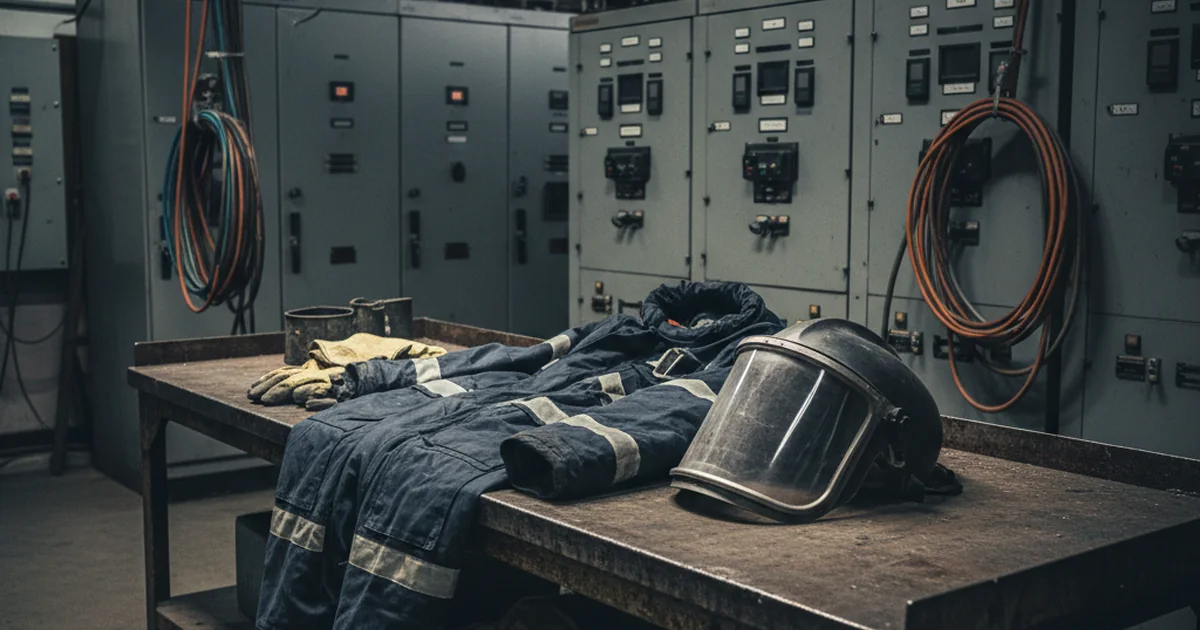
If you need an arc flash suit you can match to a real task, the right pick is the one whose listing states both a cal/cm² arc rating and an NFPA 70E PPE Category — and the level your incident-energy study (or the NFPA 70E PPE-category table) tells you to use. For most CAT 2 electrical work my pick is the NSA Enespro ArcGuard 12 Cal kit (KIT2SC11) because it states a real 12 cal/cm² ATPV and includes the rubber voltage gloves; for CAT 4 (40 cal/cm²) work my pick is the Salisbury PRO-WEAR PLUS SK40RG. An arc flash suit is a full higher-tier ensemble — an arc-rated coat or jacket plus a bib overall or pants, an arc-rated hood or faceshield, and often gloves and a gear bag — used for higher-energy electrical tasks, distinct from a single layer of everyday FR clothing. The one rule I held to across this guide: a kit only earns a spot if its own listing states a cal/cm² figure and a CAT level. No implied ratings, no borrowed numbers.
Key Takeaways
- An arc flash suit is for the multi-layer tiers, not everyday FR. Per Enespro PPE's reading of NFPA 70E, PPE Categories 1-2 can likely be met with a single layer of arc-rated PPE, while Categories 3-4 require multiple layers including a flash-suit jacket and pants/coverall, an arc-rated hood, and arc-rated or rubber insulating gloves — which is why higher tiers are sold as a full hood + coat + bib SUIT kit. See CAT 2 FR clothing for the single-layer side.
- The NFPA 70E PPE Category minimums are fixed numbers. CAT 1 = min 4 cal/cm², CAT 2 = min 8 cal/cm², CAT 3 = min 25 cal/cm², CAT 4 = min 40 cal/cm² (Enespro PPE; independently confirmed by C&H Electric). These are set in NFPA 70E Table 130.7(C)(15)(c).
- A garment's printed cal/cm² is a manufacturer-stated arc rating, not the same thing as the NFPA 70E category minimum. The minimum is the bar the standard sets; the kit's stated number is what that specific kit tested to. Both are reported in cal/cm² — read how ATPV / arc rating works.
- The label shows the LOWER of ATPV or EBT. Per Arcwear, both ATPV and EBT are expressed in cal/cm² and only the lowest can be used as the arc rating under ASTM F1506 — so a kit labeled "40 cal" reflects whichever value is lower.
- Same cal rating can mean very different kits. Oberon sells a 40 cal economy CAT 4 set (FR treated cotton, $1,078.86) and a 40 cal TCG Deluxe ($2,369.76) — the difference is hood-window clarity, fabric, and donning features, not the headline arc rating.
How I ranked these (the stated number first, not commission)
I ranked these on the protection a listing actually publishes, then on what comes in the kit, then on value — not on what pays the most. The discipline: I only quote a cal/cm² or a CAT level when the product page states it, and I never carry one kit's number over to another. I also keep a hard line a lot of buying guides blur — the difference between a manufacturer-stated cal/cm² (the number a specific kit tested to and prints on its label) and the NFPA 70E PPE Category minimum (the floor the standard sets for that category). A kit can state a 20 cal/cm² rating and still be sold as "CAT 2," because 20 clears the 8 cal/cm² CAT 2 minimum with room to spare; that's a real listing here, not a contradiction. Crucially, the category and cal level you actually need come from an incident-energy analysis or the NFPA 70E PPE-category table for your specific task and equipment — you don't pick it arbitrarily, and no buying guide can pick it for you.
| Pick | Stated arc rating + CAT | Format / fabric | Best for | Price |
|---|---|---|---|---|
| 1. NSA Enespro ArcGuard KIT2SC11 | 12 cal/cm² ATPV — CAT 2 | Short coat + bib + gloves / Westex UltraSoft | CAT 2 electrical work with gloves | $845.64 |
| 2. Oberon LAN 12 Cal Suit Set | 12 cal/cm² ATPV — CAT 2 | Hood + coat + bib / inherent FR blend | CAT 2 with a full hood | $1,329.04 |
| 3. Chicago Protective AG20-JP | 20 cal/cm² — CAT 2 | Jacket + pants + hood + gloves / UltraSoft | Value; headroom over CAT 2 min | $739.29 |
| 4. Salisbury PRO-WEAR PLUS SK40RG | 40 cal/cm² — CAT 4 | Hood + jacket + bib / GlenGuard inherent | CAT 4 from an electrical-PPE name | $1,308.90-$1,673.21 |
| 5. Oberon TCG 40 Cal Deluxe | 40 cal/cm² ATPV — CAT 4 | Hood + coat + bib / inherent aramid blend | CAT 4 with True Color Grey window | $2,369.76 |
| 6. Oberon CAT 40 Cal Suit Set | 40 cal/cm² ATPV — CAT 4 | Hood + coat + bib / FR treated cotton | Lowest-cost 40 cal; widest sizes | $1,078.86 |
Want a single monetized starting point to shop the wider arc-flash and FR category while you confirm the rating your task needs? Shop FR & arc-rated clothing at Working Person's Store →
1. NSA Enespro ArcGuard 12 Cal Kit (KIT2SC11) — best CAT 2 kit for electrical work
This is the one I'd reach for at CAT 2 energy on actual electrical tasks. Its listing states a 12 cal/cm² ATPV and labels it NFPA 70E CAT 2, and unlike most suit sets it bundles the electrical pieces you genuinely need: Class 0 rubber voltage gloves with 10" leather protectors, plus a PureView faceshield with hard hat, safety glasses, and bags, over a 9 oz Westex UltraSoft short coat and bib overall. At $845.64 (against a listed $1,353.02 MSRP) it's the most complete CAT 2 kit here. The honest trade-offs: it uses a short coat rather than a full coat, and the rubber voltage gloves carry their own electrical test-and-retest schedule the kit price doesn't cover.
- Pros: States 12 cal/cm² ATPV (CAT 2); includes Class 0 rubber voltage gloves + leather protectors (most kits don't); well-documented 9 oz Westex UltraSoft fabric; faceshield + hard hat + bags included; priced well under MSRP.
- Cons: Short coat, not a full coat; ships in 1-2 weeks rather than off the shelf; rubber gloves need periodic dielectric retesting you must manage; faceshield gives less neck coverage than a full hood.
Source: NSA Enespro ArcGuard 12 Cal Kit (KIT2SC11) listing
2. Oberon LAN 12 Cal Suit Set — best CAT 2 kit with a full hood
If you want a true hood-and-coat suit at CAT 2 rather than a coat-plus-faceshield kit, this is my pick. Its listing states a 12 cal/cm² ATPV and NFPA 70E PPE Category 2, in a hood + coat + bib overall built from an inherently FR blend (the FR is in the fiber, so it won't wash out). The LAN hood window gives better head and neck coverage than a faceshield, the hood is set up to accept an optional ventilation system and/or LED light, and there are no hook-and-loop closures to wear out, which makes laundering simpler. The trade-offs are price and contents: at $1,329.04 it costs more than the NSA kit and includes no gloves, and because it's built to order it ships in about 10 business days.
- Pros: States 12 cal/cm² ATPV (CAT 2); full LAN hood for better head/neck coverage; inherent FR blend (won't wash out); hood accepts optional ventilation/LED; no hook-and-loop closures to fail.
- Cons: Costs more than the NSA CAT 2 kit; no gloves included; not held in stock (~10 business days); navy-only as captured.
Source: Oberon LAN 12 Cal Arc Flash Suit Set listing
3. Chicago Protective Apparel AG20-JP — best value, with headroom over the CAT 2 minimum
This is the value pick, and it's an instructive one for understanding ratings. It's the lowest price in the guide — $739.29 for the 2XL with size 12 gloves, $730.89-$803.99 across sizes — yet its listing states a 20 cal/cm² rating while being labeled NFPA 70E PPE Category 2. That's not a contradiction: 20 cal/cm² clears the 8 cal/cm² CAT 2 minimum with a wide margin. The jacket-and-pant UltraSoft kit also bundles Class 0 rubber gloves with leather protectors, a Nomex hood, hard cap, face shield with chin cup, glasses, ear plugs, and a gear bag. Trade-offs: the page doesn't state stock, it uses a Velcro closure (easy to don but a wear part), and as with any electrical kit the Class 0 gloves carry their own test schedule.
- Pros: Lowest price here; listing states 20 cal/cm² (well above the CAT 2 minimum); jacket + pants format with rubber gloves, Nomex hood, faceshield, and bag included; wide kit contents for the money.
- Cons: Stock not stated on the page; Velcro closure is a wear part; Class 0 gloves need periodic retesting; UltraSoft inherent-vs-treated specifics beyond "UltraSoft" not detailed on the listing.
Source: Chicago Protective Apparel AG20-JP listing
4. Salisbury PRO-WEAR PLUS SK40RG — best CAT 4 (40 cal) kit overall
When the task lands at CAT 4, this is my pick. The Salisbury (Honeywell) PRO-WEAR PLUS SK40RG states a full 40 Cal/cm², and its page describes coverage across "NFPA 70E PPE Categories 1, 2, 3 & 4" — i.e., it meets the CAT 4 threshold. The kit bundles a 40 cal hood, jacket, and bib overall, plus a hard hat, safety glasses, and storage bag, with a GlenGuard outer shell that provides inherent (not treated) AR/FR protection. Salisbury is a long-established electrical-PPE name, which is part of why it's my top CAT 4 choice. The honest catch is price-by-size: protection is identical across the run, but cost climbs from $1,308.90 to $1,673.21 as sizes go up, and like most suit kits it doesn't include rubber voltage gloves.
- Pros: States a full 40 cal/cm² (CAT 4); inherent GlenGuard shell (won't wash out); complete hood + jacket + bib + hard hat kit; from a long-standing electrical-PPE brand; wide size run (S-4XL).
- Cons: Price climbs steeply at larger sizes; no rubber voltage gloves included; per-size inventory means your size may lag.
Source: Salisbury PRO-WEAR PLUS SK40RG listing
5. Oberon TCG 40 Cal Deluxe — best CAT 4 kit for hood-window clarity
This is the premium 40 cal option. Its listing states a 40 cal/cm² ATPV and NFPA 70E PPE Category 4 — the same CAT 4 threshold as the others — but adds features built around visibility and donning: Oberon's TCG (True Color Grey) hood window technology for truer color through the lens, an escape strap on the coat, and 26" leg zippers on the bib-overall so you can get it on over boots. The ensemble uses an inherently FR aramid blend in black, sizes M-2XL. The honest reality at $2,369.76: you're paying roughly double the economy 40 cal kits for the window technology and the donning/escape features — not for any additional arc protection, since the headline rating is the same.
- Pros: States 40 cal/cm² ATPV (CAT 4); True Color Grey hood window for better color recognition; escape strap on coat; 26" leg zippers ease donning over boots; inherent aramid blend (won't wash out).
- Cons: Most expensive kit here by a wide margin; the extra cost buys window/donning features, not more arc rating; narrower size run (M-2XL); built to order (~10 business days).
Source: Oberon TCG 40 Cal Deluxe Arc Flash Suit Kit listing
6. Oberon CAT 40 Cal Suit Set — lowest-cost 40 cal, but treated cotton
This is the cheapest route to a stated 40 cal/cm² CAT 4 suit, and it has the widest size run in the guide (S-5XL). Its listing states a 40 cal/cm² ATPV and NFPA 70E CAT 4 in a hood + coat + bib set, khaki, at $1,078.86 — the headline number matches the deluxe kit above. The decisive trade-off is the fabric: this is FR treated cotton, meaning the flame resistance is a finish on cotton rather than built into the fiber, so it must be laundered exactly per the manufacturer's instructions to keep its rating over the garment's life. It also uses Oberon's standard hood window rather than True Color Grey. If your laundering is controlled and you want maximum size range at the lowest 40 cal price, it's a legitimate pick — just go in knowing it's treated, not inherent.
- Pros: Lowest-cost 40 cal/cm² (CAT 4) kit here; widest size run (S-5XL); full hood + coat + bib set; same stated arc rating as the deluxe Oberon kit.
- Cons: FR treated cotton, not inherent — protection depends on correct laundering over the garment's life; standard hood window (not True Color Grey); built to order (~10 business days).
Source: Oberon CAT 40 Cal Hood, Coat, and Bib Suit Set listing
Manufacturer-stated cal/cm² vs the NFPA 70E minimum — read this before you buy
This is the distinction that keeps a buyer safe, so I'll state it plainly. The NFPA 70E PPE Category minimums are fixed: CAT 1 requires a minimum arc rating of 4 cal/cm², CAT 2 a minimum of 8 cal/cm², CAT 3 a minimum of 25 cal/cm², and CAT 4 a minimum of 40 cal/cm² (Enespro PPE; independently confirmed by C&H Electric). Those are the floors the standard sets, defined in NFPA 70E Table 130.7(C)(15)(c). The number printed on a specific kit's label is a separate thing: it's the manufacturer-stated arc rating that exact kit tested to, and per ASTM F1506 it's the lower of the kit's ATPV and EBT — both reported in cal/cm² (Arcwear). That's why a kit can state "20 cal/cm²" and still be sold as CAT 2: 20 clears the 8 cal/cm² CAT 2 floor. The level you actually need is not something you or a buying guide can choose for you — it comes from an incident-energy analysis or the NFPA 70E PPE-category table for your specific equipment and task. Never assume a single number is universally "enough."
Frequently Asked Questions
What is an arc flash suit, and how is it different from everyday FR clothing?
An arc flash suit (or kit) is a full higher-tier ensemble — typically an arc-rated coat or jacket plus a bib overall or pants, an arc-rated hood or faceshield, and often gloves and a gear bag — used for higher-energy electrical tasks. Everyday FR clothing (a single arc-rated shirt and pants, or a coverall) covers NFPA 70E PPE Categories 1-2 (minimum 4-8 cal/cm²). Per Enespro PPE's reading of NFPA 70E, Categories 3-4 require multiple layers, which is why higher-energy protection is sold as a full hood + coat + bib suit kit.
What cal/cm² rating do I need for each NFPA 70E PPE Category?
The published minimum arc ratings are: CAT 1 = 4 cal/cm², CAT 2 = 8 cal/cm², CAT 3 = 25 cal/cm², and CAT 4 = 40 cal/cm² (Enespro PPE; confirmed by C&H Electric). But the category and cal level required for your job come from an incident-energy analysis or the NFPA 70E PPE-category table for that specific task and equipment — the worker does not pick it arbitrarily. Match the suit to the analysis, not to a number you assume.
Is a 40 cal arc flash kit enough for any task?
No — 40 cal/cm² is the NFPA 70E Category 4 minimum, not a universal ceiling. Some incident-energy studies yield values above 40 cal/cm², which is why higher-rated kits (65, 100, 140 cal) exist. A 40 cal kit covers up to the CAT 4 threshold; if your study returns a value above that, you need a higher-rated suit. Don't treat any single number as universally "enough" without the analysis for your equipment.
What does ATPV mean on an arc flash suit label, and is a higher number always better?
ATPV is the Arc Thermal Performance Value — the incident energy (cal/cm²) at a 50% probability of the onset of a second-degree burn per the Stoll curve (Arcwear). The label shows the lower of ATPV or EBT (Energy Breakopen Threshold) under ASTM F1506. A higher arc rating means more thermal protection, but the correct rating is the one matching your task's incident energy; an over-spec'd suit is heavier and reduces dexterity, which is its own hazard.
What's the difference between Oberon's TCG, LAN, and CAT kit series at the same cal rating?
At the same arc rating, the differences are features, not protection. From the captured listings, Oberon's economy CAT-series 40 cal set is FR treated cotton at $1,078.86, while the TCG Deluxe 40 cal is an inherent FR aramid blend with an escape strap and a True Color Grey hood window at $2,369.76. The LAN series uses a LAN-series hood window. So you're choosing on hood-window clarity, fabric (inherent vs treated), and extras like escape straps or ventilation — the headline cal rating can be identical.
What typically comes in a complete arc flash kit?
Most full kits bundle a coat or jacket plus a bib overall or pants, an arc-rated hood (or a faceshield with a hard hat), safety glasses, and a gear bag. Higher-end electrical kits add Class 0 or Class 2 rubber voltage gloves with leather protectors and a glove bag — for example, the NSA Enespro KIT2SC11 and the Chicago Protective AG20-JP both include rubber gloves, while suit-only sets like the Oberon ensembles do not. Components vary by brand and SKU, so check exactly what each kit page lists rather than assuming a fixed contents set.
Why Trust This Guide
This guide is written and reviewed by Wes Calder, an independent flame-resistant-workwear reviewer. Every recommendation is built on the published standards (NFPA 2112, NFPA 70E, ASTM F1506), manufacturer spec sheets and garment tags, hands-on handling, and what tradespeople actually report — and we tell you when a number is a manufacturer claim versus an independent standard, and when a garment is FR but not arc-rated. We earn an affiliate commission if you buy through some of our links, at no extra cost to you, and we never rank by commission over safety — see our affiliate disclosure.